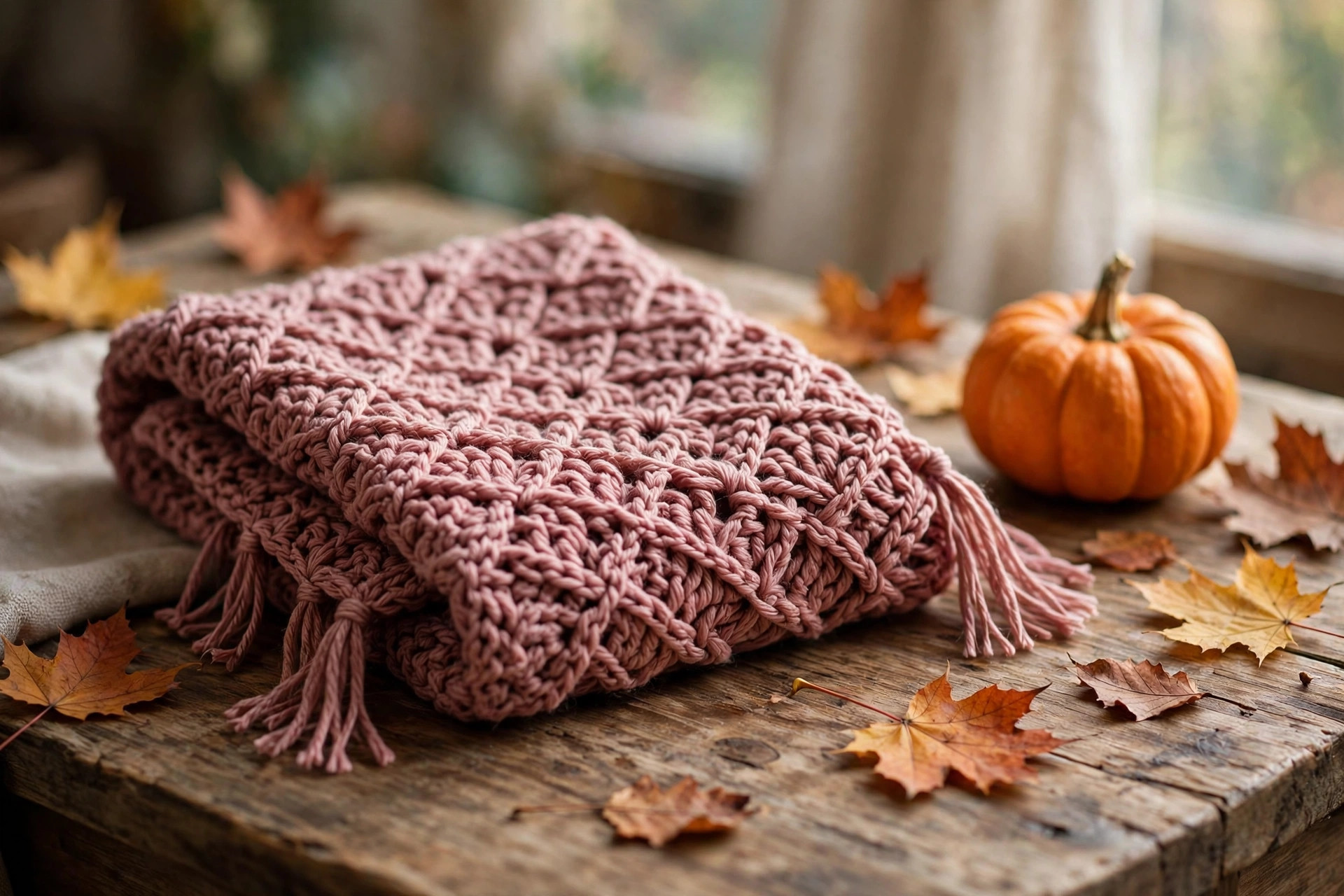
Basic Crochet Scarf Patterns: Easy Scarves for Beginners
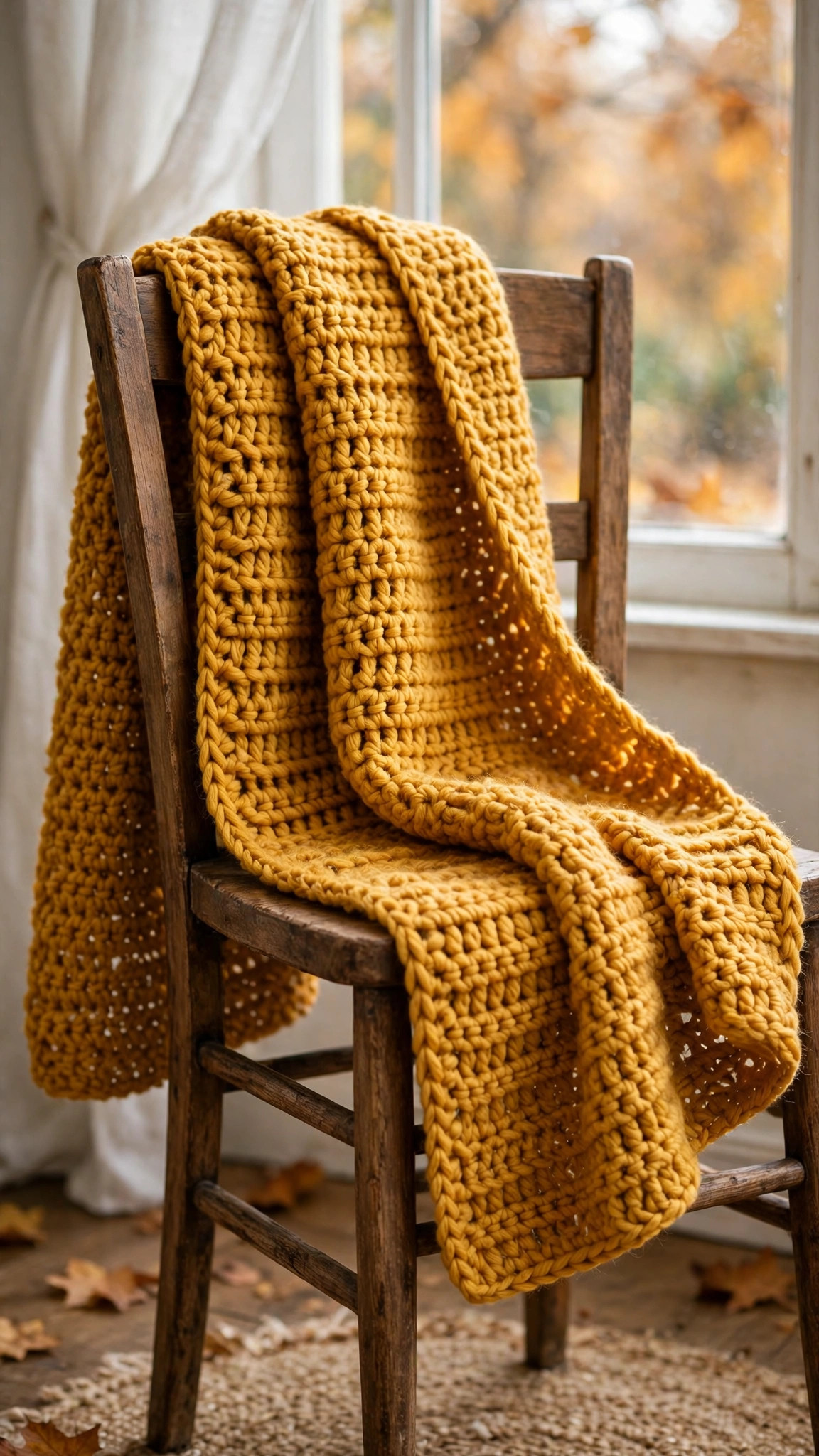
Three original beginner scarf patterns in US terms: a classic double crochet scarf, a ribbed single crochet scarf, and a chunky half double crochet scarf.
Scarves · Crochet
- Finished size
- 55-60 in long, 6.5-8 in wide
- Making time
- About 3 to 6 hours each
- Hook
- 5.5-8.0 mm, by pattern
- Set
- 3 patterns, original designs
- Skill
- Beginner
In this post
- Table of contents
- Why you'll love these basic crochet scarf patterns
- Materials you'll need
- Size, gauge and skill level
- Abbreviations, US terms
- Basic crochet scarf patterns (US terms)
- Finishing touches and fringe
- Tips and tricks
- Variations to try next
- Troubleshooting tips
- Frequently asked questions
- More free patterns to try
The scarf is where every crocheter truly starts. These basic crochet scarf patterns return to that beautiful beginning: three original designs using only the most fundamental stitches, and they turn out scarves you will actually want to wear.
This post gives you three free patterns in one place: the Classic Double Crochet Scarf, the Ribbed Single Crochet Scarf, and the Chunky Half Double Crochet Scarf. All three are original designs in US terms, and working them in order teaches you the complete beginner toolkit.
Table of contents
- Why you'll love these basic crochet scarf patterns
- Materials you'll need
- Size, gauge and skill level
- Abbreviations, US terms
- Basic crochet scarf patterns (US terms)
- Finishing touches and fringe
- Tips and tricks
- Variations to try next
- Troubleshooting tips
- Frequently asked questions
- More free patterns to try
Why you'll love these basic crochet scarf patterns
A scarf is the most honest project in crochet. No shaping to get wrong, no gauge swatch to fuss over. You chain a starting length, work the same row again and again, and stop when it looks right. For a true beginner, that simplicity is a gift: every row builds muscle memory, and the finished scarf proves you can actually do this.
These three patterns are designed as a ladder. The Classic teaches chain and double crochet, the two skills every pattern assumes you know. The Ribbed adds back loop only work, which unlocks dozens of textured patterns. The Chunky teaches half double crochet and shows how yarn weight changes everything.
They are also brilliant gifts: a handmade scarf says thoughtfulness in a way a gift card never will, and each one works up fast enough to make one for every person on your list. For more starter ideas, our crochet scarf patterns for beginners rounds up extra easy projects, and the neck warmer crochet pattern is the natural next step after a straight rectangle.
One more thing: scarves are the perfect TV project. No counting after the first few rows, no charts. Pick up your hook, settle in, and let the rows pile up.
Materials you'll need
The three scarves use different yarns so you can feel how hook and yarn choices change a project. You only need one set to start.
| Supply | Classic Double Crochet Scarf | Ribbed Single Crochet Scarf | Chunky Half Double Scarf |
|---|---|---|---|
| Yarn | Worsted-weight (#4) acrylic or wool blend, 300 yds / 274 m | Worsted-weight (#4) soft acrylic, 280 yds / 256 m | Bulky-weight (#5) chenille or wool blend, 220 yds / 201 m |
| Crochet hook | 6.0 mm (J) | 5.5 mm (I) | 8.0 mm (L) |
| Tapestry needle | For weaving in ends | For weaving in ends | For weaving in ends |
| Notions | Scissors, stitch markers for row counting | Scissors, measuring tape | Scissors, measuring tape |
Choose a light or medium colour for your first scarf: cream, mustard, sage, dusty rose, or soft grey all show your stitches clearly, which helps enormously when you are learning. Dark yarn hides mistakes but also hides the stitch structure you are trying to learn.
A note on the hooks: the 6.0 mm hook with worsted yarn gives the classic scarf a soft drape instead of a stiff board. The 5.5 mm hook keeps the ribbed scarf's back-loop stitches tidy. The 8.0 mm hook with bulky yarn is what makes the chunky scarf fly by in an evening. If you crochet very tightly, go up half a hook size on any of them.
Size, gauge and skill level
Scarves are forgiving on size, but these finished measurements give you targets to aim for.
| Pattern | Finished width | Finished length | Approx. time |
|---|---|---|---|
| Classic Double Crochet Scarf | 7 in / 18 cm | 60 in / 152 cm | About 5 hours |
| Ribbed Single Crochet Scarf | 6.5 in / 16.5 cm | 58 in / 147 cm | About 6 hours |
| Chunky Half Double Crochet Scarf | 8 in / 20 cm | 55 in / 140 cm | About 3 hours |
- Finished sizes: the ribbed scarf stretches a little in wear. Lengths are measured before fringe; fringe adds about 5 in / 13 cm to each end.
- Gauge: Classic: 13 dc and 8 rows = 4 in (10 cm) with worsted yarn and a 6.0 mm hook. Ribbed: 15 sc and 18 rows = 4 in (10 cm) with worsted yarn and a 5.5 mm hook. Chunky: 10 hdc and 7 rows = 4 in (10 cm) with bulky yarn and an 8.0 mm hook. For a scarf, gauge only controls the finished size: if yours differs, work more or fewer rows to reach the target length.
- Skill level: beginner. You need chain, single crochet, half double crochet, and double crochet. Every pattern below explains where the hook goes for each row, so you can follow along even on your very first project.
If this is your first time holding a hook, start with the Classic: work the first five rows slowly, count after every row, and the rhythm will click.
Abbreviations, US terms
| Abbreviation | Meaning |
|---|---|
| ch | chain |
| sc | single crochet |
| hdc | half double crochet |
| dc | double crochet |
| sl st | slip stitch |
| blo | back loop only: work into the back loop of the stitch |
| st(s) | stitch(es) |
| turn | turn your work to start the next row |
| FO | fasten off |
| [ ] | total stitch count at the end of the row |
A note on turning chains: in these patterns, the turning chain sometimes counts as a stitch and sometimes does not. Follow the row instructions exactly: when it says the turning chain counts as the first dc, skip the first stitch of the row. Getting this right is the single biggest key to straight scarf edges.
Basic crochet scarf patterns (US terms)
Three original scarf patterns, simplest first. Each one is worked in straight rows, and each section ends with its own stitch count so you can check your work as you go.
Scarf 1: The Classic Double Crochet Scarf
The foundation scarf. One stitch, repeated with a steady rhythm, makes a soft scarf with beautiful drape. Use worsted-weight (#4) yarn and a 6.0 mm hook.
Starting chain: Chain 24. (This gives about 7 in / 18 cm of width. For a wider scarf, chain any multiple that gives your preferred width; the pattern works with any stitch count.)
- Row 1: dc in the 4th ch from the hook, dc in each ch across. [21]
- Row 2: ch 3 (counts as first dc), turn, dc in each st across. [21]
- Rows 3 onward: repeat Row 2 until the scarf measures 60 in / 152 cm long, or your preferred length. Do not FO yet: continue to the fringe instructions below, or FO and weave in the end for a clean edge.
The chain 3 at the start of each row counts as your first double crochet, so skip the very first stitch and work into the second. The last dc goes into the top of the turning chain from the row below.
Counting tip: count after every row for the first ten rows. You should have 21 every time. If you have 22, you worked into the first stitch as well as the turning chain. If you have 20, you missed the last stitch. Fix it now, while it is one row, not fifty rows later.
Scarf 2: The Ribbed Single Crochet Scarf
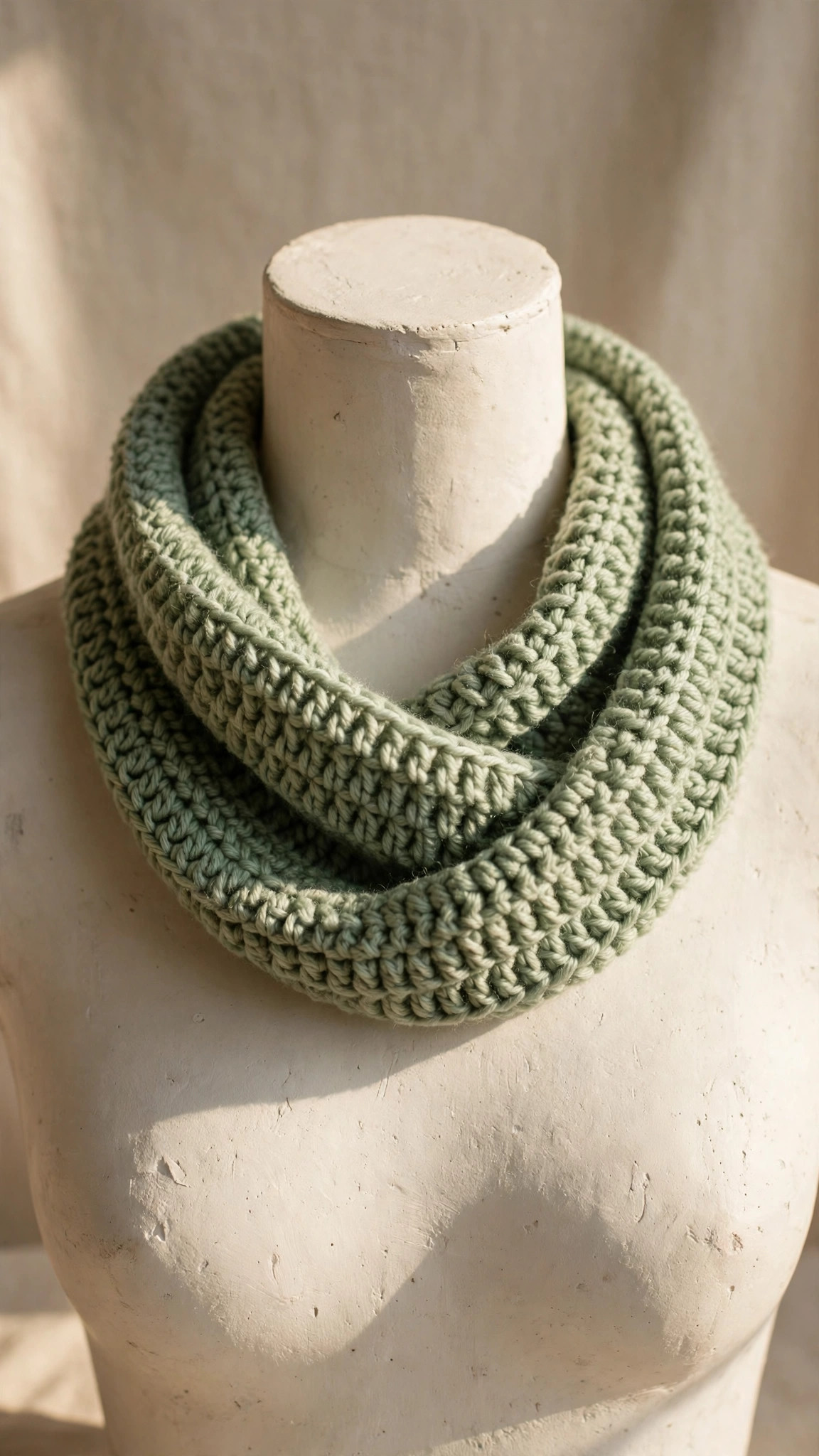
Worked entirely in the back loop only, this scarf develops a lovely ribbed texture that looks knitted and stretches beautifully. Use worsted-weight (#4) yarn and a 5.5 mm hook.
Starting chain: Chain 26.
- Row 1: sc in the 2nd ch from the hook, sc in each ch across. [25]
- Row 2: ch 1 (does not count as a stitch), turn, sc in the blo of each st across. [25]
- Rows 3 onward: repeat Row 2 until the scarf measures 58 in / 147 cm long. FO and weave in the end, or add fringe.
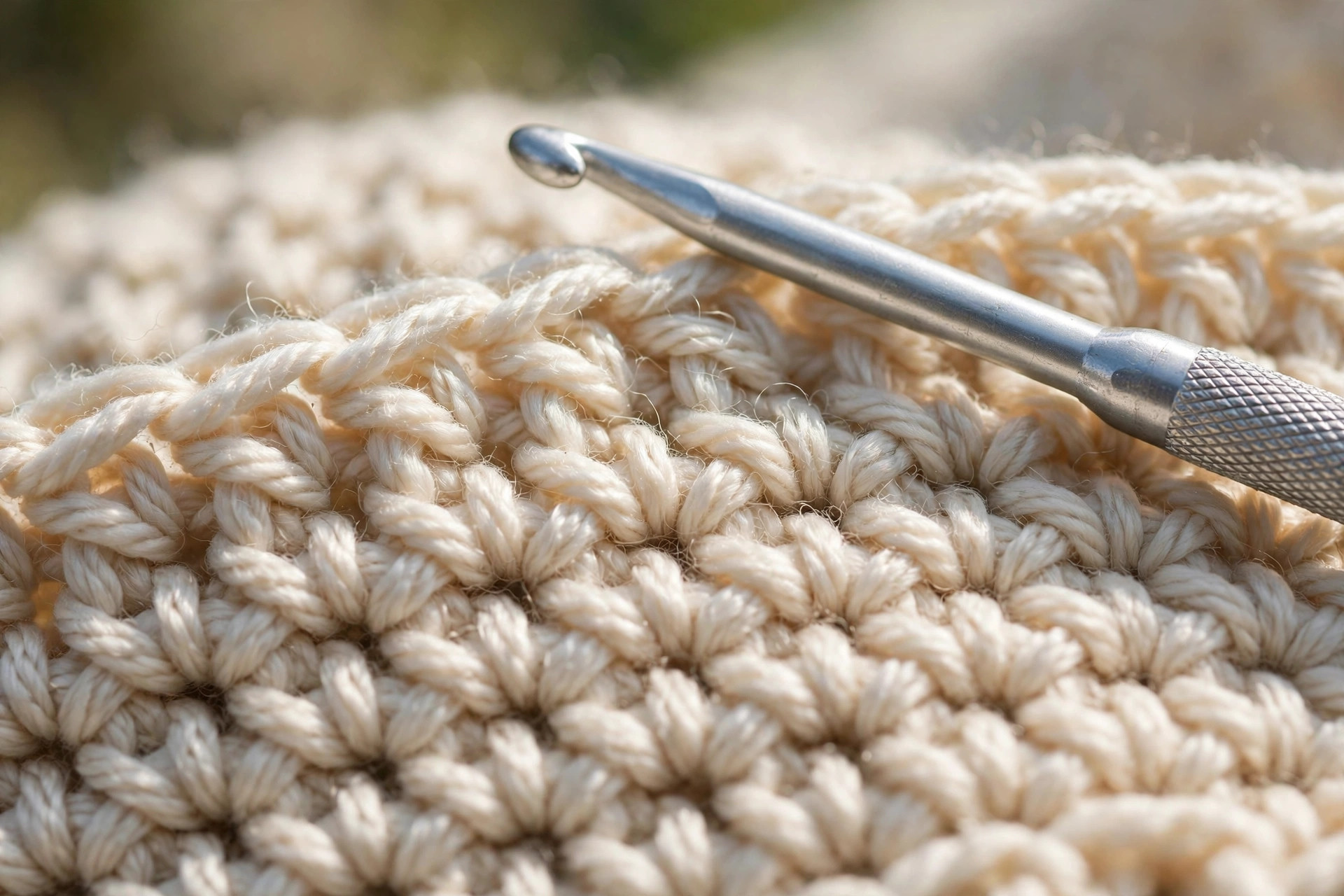
Working in the back loop only means inserting your hook under just the loop farthest from you. Those unworked front loops form the raised ribs on the finished scarf, and both sides look identical.
The first three rows feel strange. Back loop only fabric curls and looks messy at first; the ribs emerge around row five or six. Trust the process and keep your tension relaxed: tight back-loop stitches are hard on your hands.
Scarf 3: The Chunky Half Double Crochet Scarf
Big yarn, big hook, big speed. The half double crochet is taller than a single but shorter than a double, giving a dense, warm fabric that works up astonishingly fast. Use bulky-weight (#5) yarn and an 8.0 mm hook.
Starting chain: Chain 22.
- Row 1: hdc in the 3rd ch from the hook, hdc in each ch across. [20]
- Row 2: ch 2 (does not count as a stitch), turn, hdc in each st across. [20]
- Rows 3 onward: repeat Row 2 until the scarf measures 55 in / 140 cm long. FO and weave in the end, or add fringe.
Because the turning chain does not count as a stitch here, work the first hdc of each row into the very first stitch. Count to 20 after each row for the first few rows until the rhythm is automatic.
Why this one is so fast: bulky yarn plus half double crochet means each row covers real ground. Most crocheters finish it in a single relaxed evening, which makes it the perfect last-minute gift.
Finishing touches and fringe
All three scarves look finished with plain ends, but a simple fringe elevates them. Here is the classic method.
Cut the strands. Cut yarn strands 10 in / 25 cm long, about 3 per stitch across each end. For the Classic scarf with 21 stitches, that is about 126 strands (63 per end). Winding the yarn around a 5 in / 13 cm wide book and cutting one side gives you perfect 10 in strands fast.
Attach with a lark's head knot. Fold one strand in half to make a loop. Insert your hook through the first stitch of the scarf end from front to back, catch the loop, and pull it through about 2 in / 5 cm. Pull the two loose ends through the loop and tug gently to tighten. Repeat across the end, one knot per stitch.
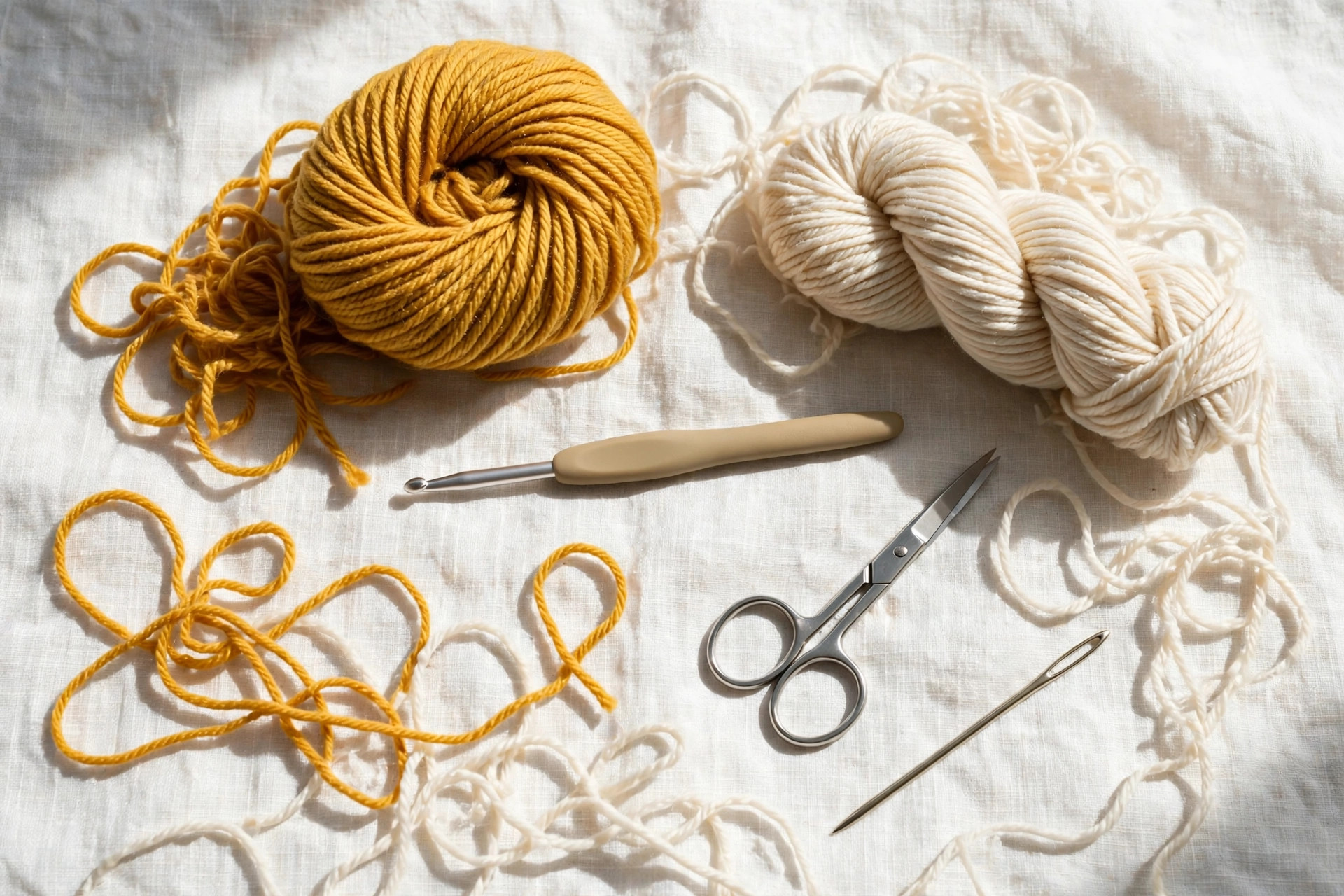
Trim evenly. Lay the scarf flat and trim the fringe straight across with sharp scissors. Slightly uneven, hand-cut fringe looks natural; aim for tidy, not perfect.
Weave in the starting tail. Thread the tail onto the tapestry needle and run it through nearby stitches for at least 2 in / 5 cm, changing direction once so it locks in. Trim flush.
Optional light blocking. If your edges wave a little, lay the scarf flat, mist lightly with water, smooth it with your hands, and let it dry completely.
Tips and tricks
Small habits that make a big difference in basic scarf patterns:
Count the first ten rows, then relax. The edges of a scarf are made or broken in the early rows. Count after every row until the rhythm is locked in, then spot-check every ten rows. This one habit prevents 90 percent of beginner scarf problems.
Mark the right side. Clip a stitch marker to the front of row 1. When you pick the project up after a break, you will know instantly which way is up, and your turning chains will always land on the same edge.
Keep the turning chain tension snug. A loose turning chain leaves a wobbly edge. Give the yarn a gentle tug after making the chain, before the first real stitch of the row.
Switch colours with a stripe plan. When you are ready for stripes, plan them in writing first: for example, 10 rows mustard, 4 rows cream, 10 rows mustard. Join the new colour in the last yarn-over of the final stitch of the old colour, and weave the tails in as you go so finishing takes minutes.
Store works in progress flat. Roll the scarf loosely around the yarn ball between sessions.
Variations to try next
One basic scarf teaches you the formula: now bend it.
- Extra long wrap scarf. Work the Classic to 80 in / 203 cm for a scarf that wraps twice. Add about 100 yds / 91 m of yarn.
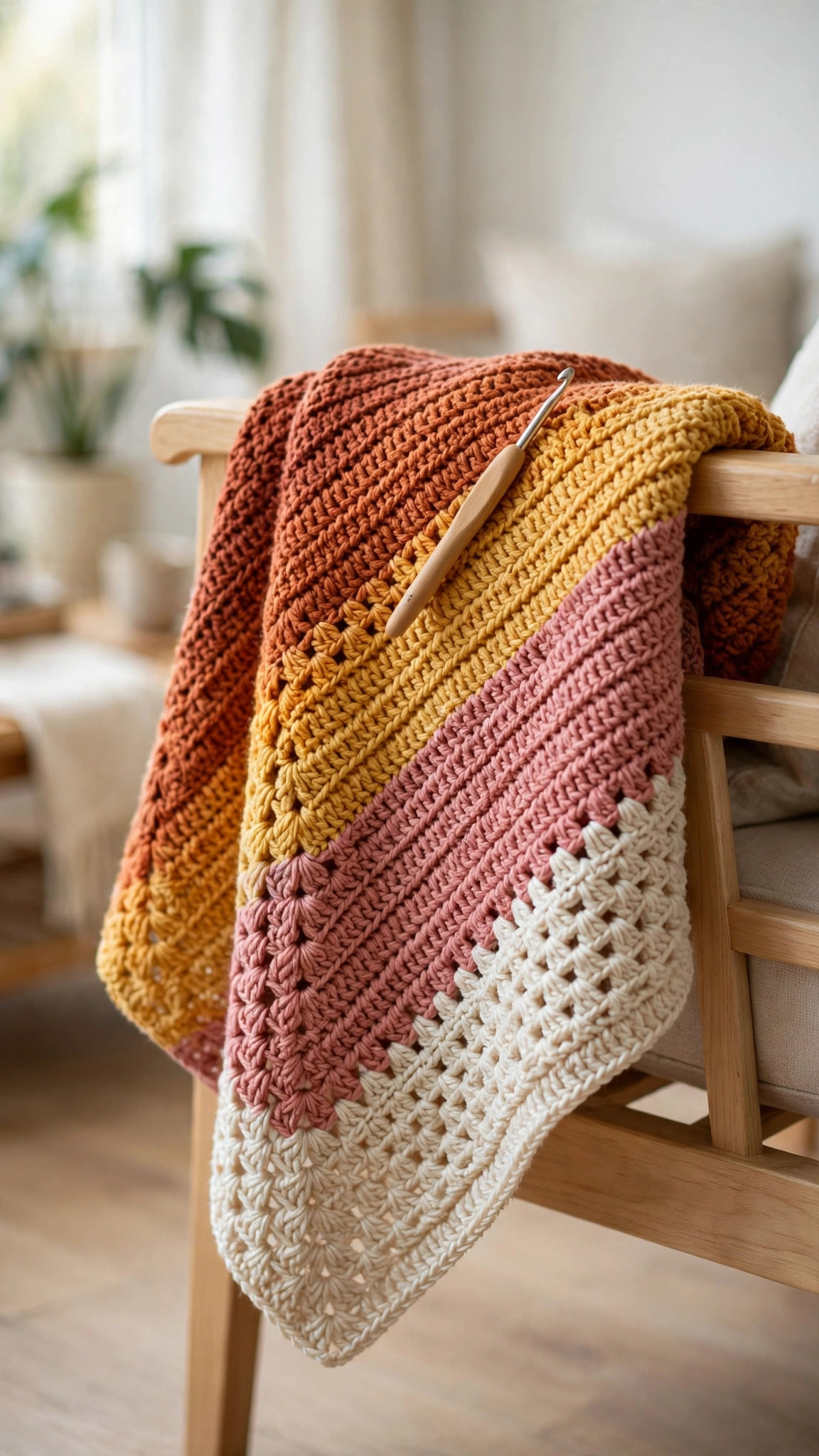
- Two-tone stripes. Alternate two colours every 6 rows on the Classic. Stripes hide small tension wobbles, so this is secretly the most forgiving version.
- Infinity loop. Work the Ribbed scarf to 64 in / 163 cm, then sew the ends together with a whipstitch. Twist once before sewing for a mobius style loop.
- Pocket scarf. Work the Classic wider (chain 36) and shorter (48 in / 122 cm), fold up 8 in / 20 cm at each end, and sew the sides to form pockets. Our crochet pocket scarf pattern free shows the pocket construction in detail.
- His-and-hers set. Make the Chunky scarf in neutral grey and dusty rose, both 55 in / 140 cm. The mens crochet scarf pattern free has more masculine styling ideas for gifting.
- Lacy open scarf. Replace the Classic's plain rows with alternating rows of dc and ch-1 spaces for an open fabric that uses less yarn and works up even faster.
Troubleshooting tips
- The scarf gets wider as you go. You are working into the first stitch AND counting the turning chain as a stitch. When the turning chain counts as the first dc, skip the first stitch.
- The scarf gets narrower as you go. You are skipping the last stitch into the top of the turning chain. Mark the turning chain with a stitch marker so you can find it.
- The starting chain is too tight to work into. Chain with a hook one size larger than the pattern calls for, then switch to the pattern hook for Row 1.
- The fabric curls like a tube. Normal for the first few rows of back loop only work; it flattens as the scarf grows. If plain rows curl, your tension is too tight: loosen your grip for a few rows.
- One edge is longer than the other. Your turning chains have different tensions on each side. The stitch marker on the right side helps you spot this early.
- The fringe knots look bulky. Use 2 strands per knot instead of 3, or trim the fringe shorter. Chunky yarn needs only 2 strands per knot to look full.
Frequently asked questions
What is the easiest crochet scarf pattern for a complete beginner?
The Classic Double Crochet Scarf in this post. It uses only chain and double crochet, and any stitch count works, so there is nothing to memorise beyond the row repeat.
How many chains do I need for a basic crochet scarf?
For an adult scarf about 7 in / 18 cm wide, chain 24 with worsted yarn and a 6.0 mm hook (the pattern accounts for the turning chain). For a wider scarf, add chains: roughly 3 chains per extra inch of width in worsted weight.
How long should a crochet scarf be?
A standard adult scarf is 55 to 65 in / 140 to 165 cm long before fringe. Shorter (45 in / 114 cm) suits kids; longer (70 to 80 in / 178 to 203 cm) gives a dramatic wrap. When in doubt, make it as long as the wearer is tall.
How much yarn do I need for a basic crochet scarf?
About 250 to 300 yds / 229 to 274 m of worsted-weight yarn for a standard adult scarf, or about 200 to 220 yds / 183 to 201 m of bulky yarn for the chunky version. One extra skein beyond the estimate covers fringe and swatching.
Why are my scarf edges uneven?
Almost always a turning chain issue: either working into the first stitch when the turning chain already counts as one, or skipping the last stitch into the turning chain. Count your stitches every row until both edges are straight.
Can I make a scarf with only single crochet?
Yes, and the Ribbed Single Crochet Scarf in this post is exactly that, with the back loop only twist for texture. Plain single crochet rows also work; they just take longer because the stitch is short. Expect about 8 hours for a full-length plain single crochet scarf in worsted yarn.
Can I sell scarves made from these patterns?
Yes! You may sell finished scarves made from these original patterns in small batches (craft fairs, markets, gifts). Please credit Little Loop Finds as the pattern designer.
More free patterns to try
Once you have a scarf or three under your belt, the rectangle family keeps growing. The easy beginner crochet patterns collection has more first-project ideas in the same skill range, and our batch-mate the free crochet panda pattern is a fun first amigurumi for when you are ready to leave flat rectangles behind.