Crochet Parasol Pattern (Lace Sun Parasol)
Crochet a decorative lace sun parasol in fine cotton thread with a scalloped edge in about twelve hours, then carry it for soft shade and beautiful summer photos.

Patterns · Crochet
- Finished size
- 28 in across
- Making time
- 12 hours
- Hook
- US steel 7 (1.65 mm)
- Set
- Parasol, panels
- Skill
- Intermediate
In this post
- Key Takeaways
- Table of Contents
- Why You Will Love This Crochet Parasol
- Finished Size, Skill Level, and Time
- Materials You Need
- Abbreviations (US Terms)
- Gauge and Sizing Notes
- Part 1: The Lace Panels
- Part 2: Joining the Panels and Fitting the Frame
- Part 3: The Scalloped Edge, Tip, and Handle
- Variations: Colors, Sizes, and Uses
- Troubleshooting a Parasol That Does Not Sit Right
- Care Instructions
- Frequently Asked Questions
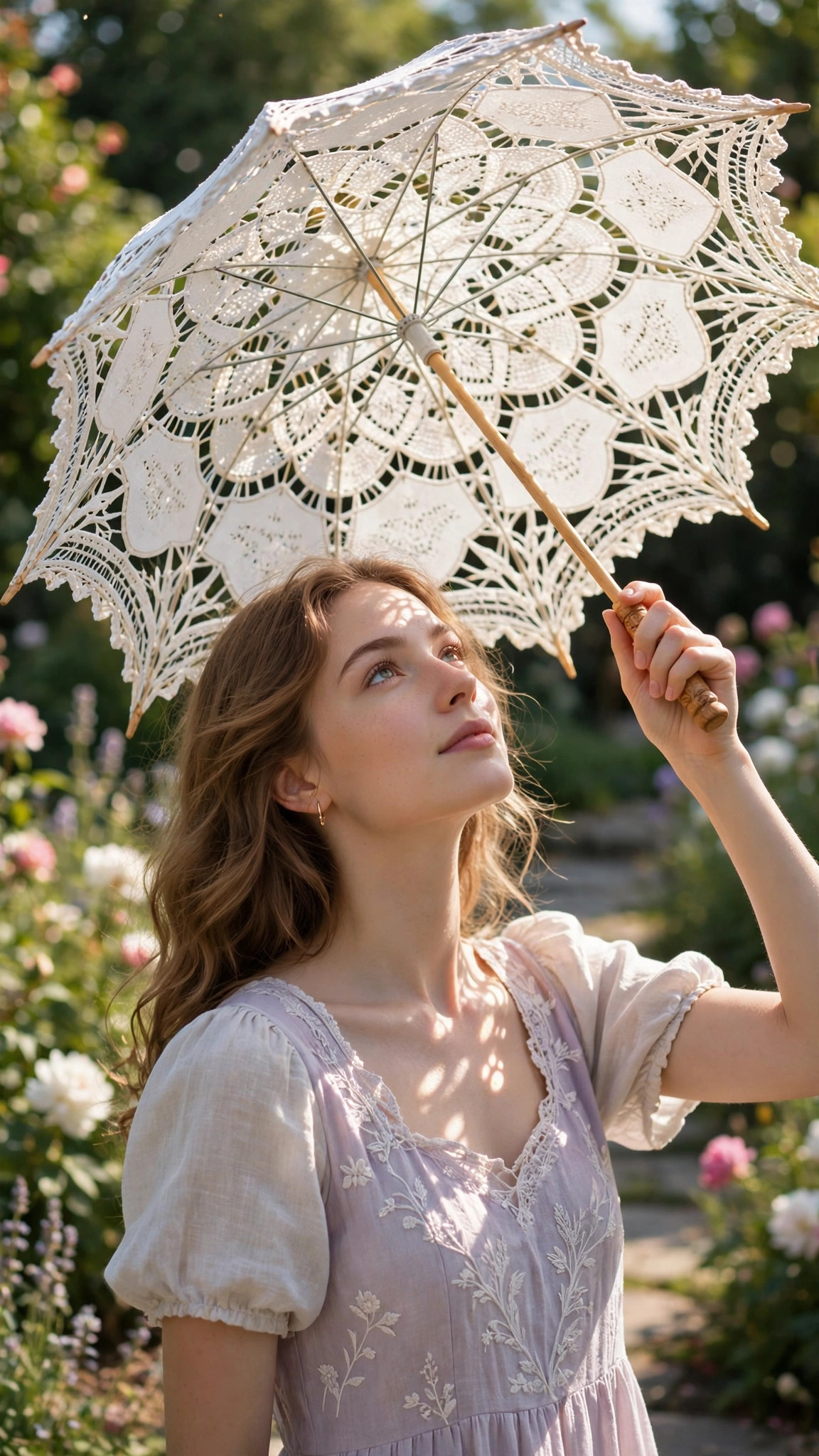
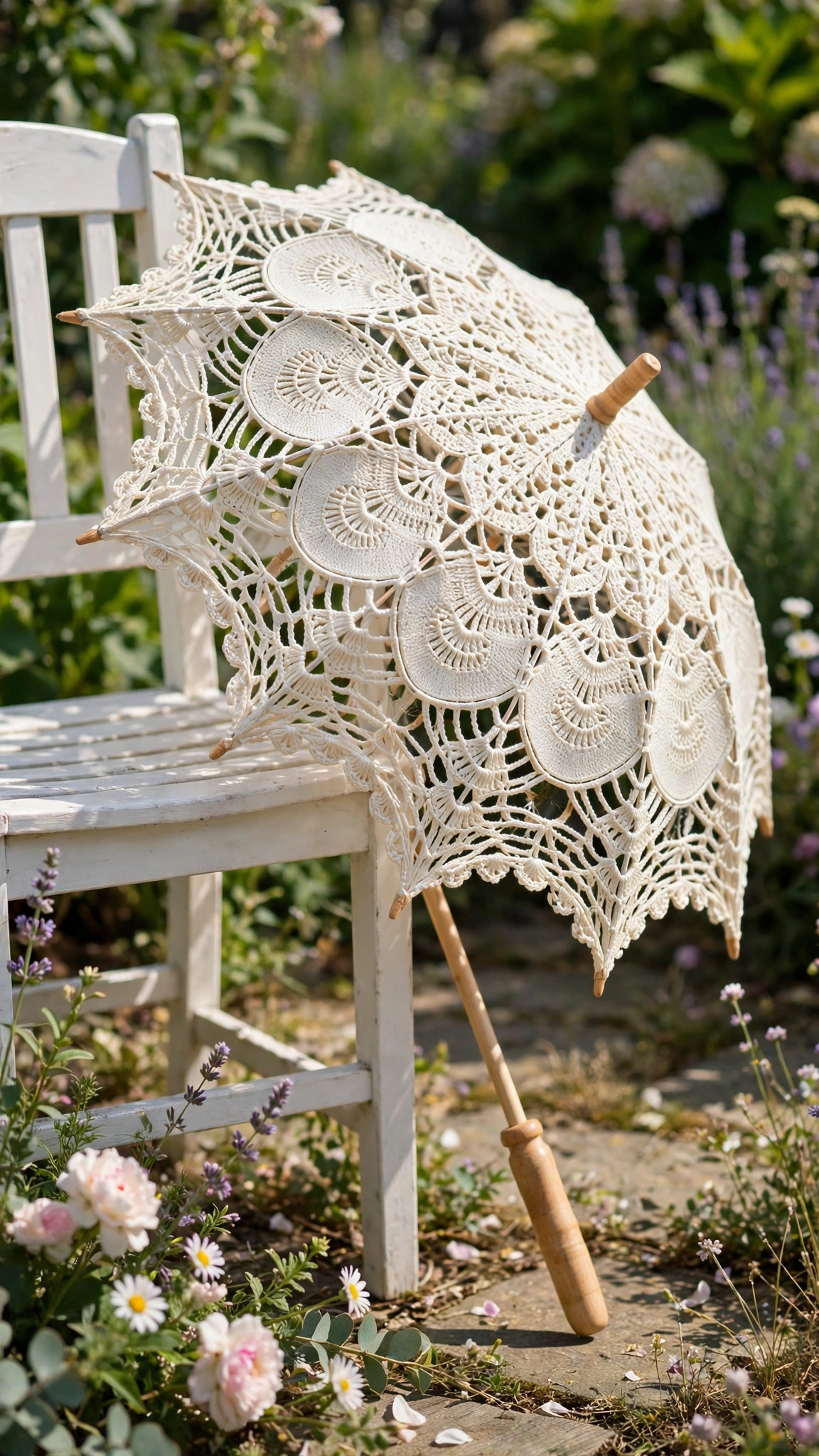
A crochet parasol is the prettiest shade you will ever carry. This free crochet parasol pattern makes a decorative lace sun parasol in fine cotton thread, with eight openwork panels, a scalloped edge, and a slim wooden handle. It gives you soft shade on a sunny day, and it photographs beautifully at weddings, garden parties, and summer picnics.
This is an original Little Loop Finds design, written in US terms and completely free. The parasol is worked as eight identical lace panels in fine cotton thread, joined together and fitted over a plain eight rib parasol frame.
A quick note on scope: this post is about one specific crochet parasol, a decorative lace sun parasol made for shade and photos. It is not a rain umbrella, and it is not made to keep you dry in a storm. If you want a sun hat to go with it, our crochet bucket hat pattern is a good match.
Key Takeaways
- Free original pattern: a Little Loop Finds original design, written in US terms, and completely free.
- A lace sun parasol: eight openwork panels in fine cotton thread with a scalloped edge.
- For shade and photos: soft shade on sunny days, and a beautiful prop for weddings and garden parties.
- Fitted to a frame: the lace cover fits a plain eight rib parasol frame with a slim wooden handle.
- A 12 hour project: one parasol takes about 12 hours, spread over a few evenings.
Table of Contents
- Why You Will Love This Crochet Parasol
- Finished Size, Skill Level, and Time
- Materials You Need
- Abbreviations (US Terms)
- Gauge and Sizing Notes
- Part 1: The Lace Panels
- Part 2: Joining the Panels and Fitting the Frame
- Part 3: The Scalloped Edge, Tip, and Handle
- Variations: Colors, Sizes, and Uses
- Troubleshooting a Parasol That Does Not Sit Right
- Care Instructions
- Frequently Asked Questions
Why You Will Love This Crochet Parasol
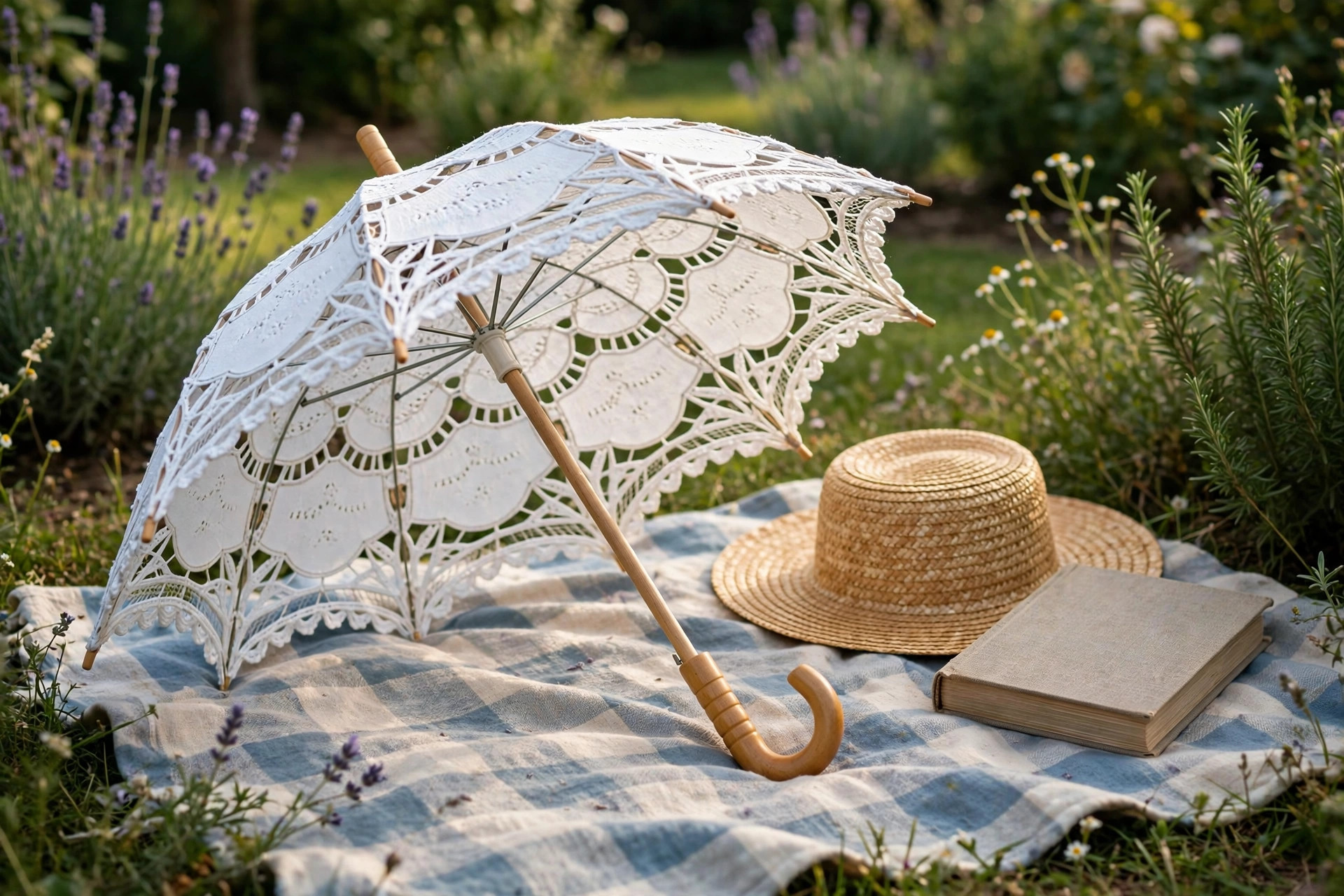
A lace parasol turns an ordinary sunny day into something special. The openwork stitches soften the sunlight into a pretty dappled pattern, the scalloped edge moves gently in the breeze, and the whole thing weighs almost nothing in your hand. Carry it on a garden walk, hold it in wedding photos, or prop it beside a picnic blanket.
A crochet parasol is also a wonderful lace project. Fine cotton thread and a steel hook make stitches that look delicate and old fashioned, like the parasols in vintage photographs, but the pattern itself is simple. Each panel is the same shell stitch repeat, worked from the center out, so once you have made one panel you can make the other seven without looking at the pattern.
The parasol gives real shade on a bright day, enough to keep the sun off your face and shoulders, but the lace lets air through so you never feel hot underneath it.
Finished Size, Skill Level, and Time
- Finished size: about 28 inches across when open, with a 24 inch handle. Each of the eight panels is about 13 inches long from the center tip to the scalloped edge.
- Skill level: Intermediate. You need a foundation chain, double crochet, shell stitches, chain spaces, and simple seaming, all in fine thread.
- Time: about 12 hours per parasol: 8 hours for the eight lace panels, 2 hours for joining and fitting the frame, and 2 hours for the scalloped edge, tip, and handle.
Materials You Need
| Item | What to get |
|---|---|
| Thread, main color | Size 10 cotton thread in white or ivory, 800 yards |
| Thread, contrast color | Size 10 cotton thread in a soft blush, 50 yards, optional |
| Hook | US steel 7 (1.65 mm), or the size that gives you the gauge below |
| Frame | Plain eight rib parasol frame with a slim wooden handle, about 28 inches across |
| Notions | Tapestry needle, scissors, tape measure, stitch markers, pins, fabric stiffener spray |
Fine cotton thread is the best choice for a crochet parasol because it makes crisp, open lace that holds its shape, and it is strong enough to stretch over a frame without sagging. Size 10 thread is the classic choice for doilies and lace, and it works up into a fabric that is light and airy but not flimsy. Avoid very fuzzy yarns, because they hide the openwork and make the lace look muddy.
A plain eight rib parasol frame is the base for this project. You can buy one from a craft supplier, or take the fabric off an old parasol and keep the frame. Check that all eight ribs open and close smoothly, and that the tip and the handle are firmly attached. The crochet cover is fitted to the frame, so measure your frame before you start, because the panel length in this pattern fits a frame about 28 inches across.
Abbreviations (US Terms)
- ch = chain
- sl st = slip stitch
- sc = single crochet
- dc = double crochet
- tr = treble crochet
- shell = 5 dc in the same stitch or space
- ch-sp = chain space
- st(s) = stitch(es)
- rep = repeat
- RS = right side
Gauge and Sizing Notes
Gauge matters on a parasol because all eight panels must be exactly the same size, or the cover will pull to one side on the frame. Work a swatch of one shell and one chain space repeat, 3 shells wide and 4 rows tall, in the main color. It should be about 2 inches wide and 2 inches tall. If it is wider, go down a hook size. If it is narrower, go up a hook size.
Measure your frame before you start, because the panels in this pattern are written for a frame about 28 inches across. If your frame is bigger, add one more repeat row to each panel. If it is smaller, work one fewer repeat row. Count your shells at the end of every panel, because a panel with the wrong shell count will not match its neighbors.
Part 1: The Lace Panels
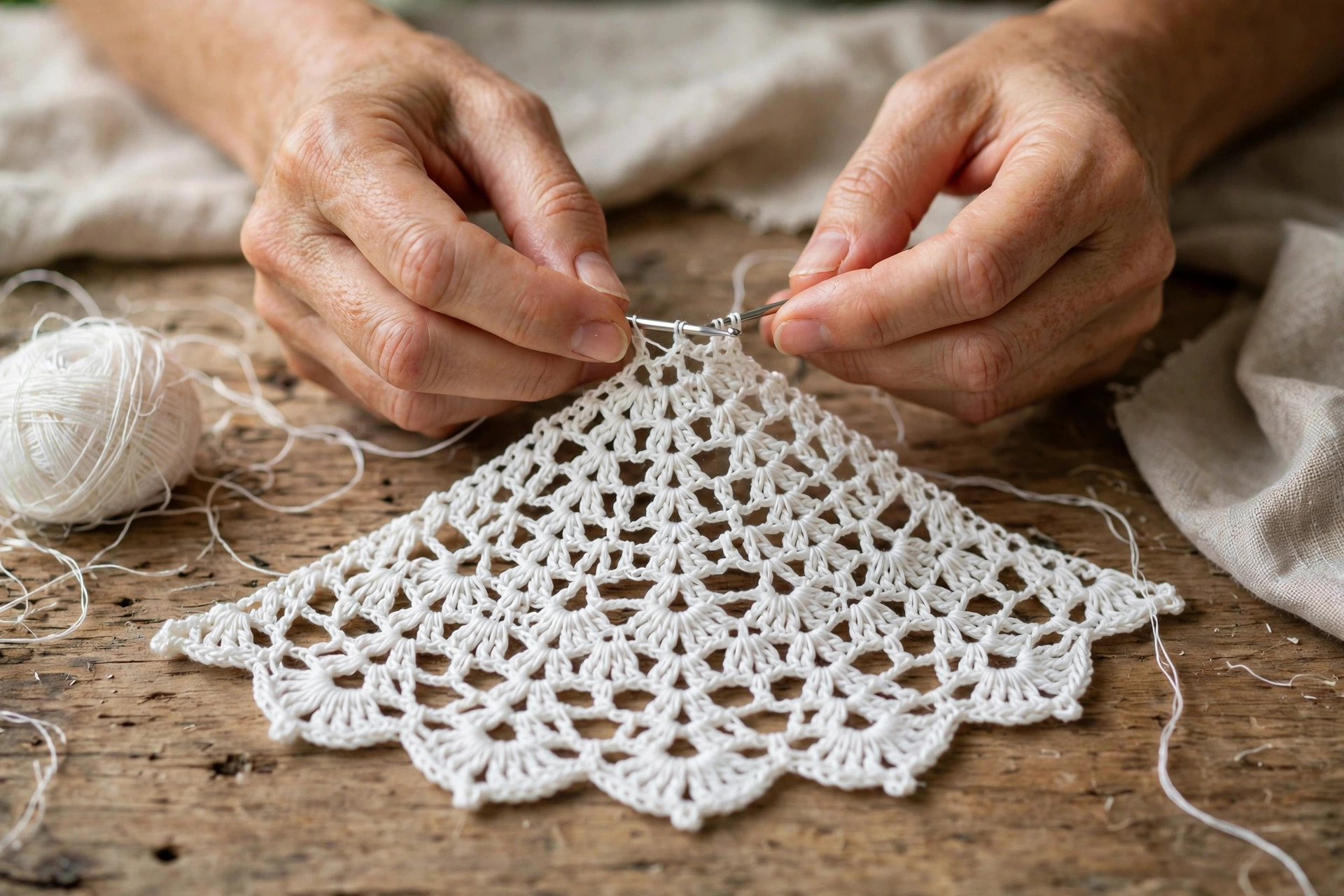
Each panel is a wedge that starts narrow at the center tip and grows wider toward the edge, worked in rows of shell stitches and chain spaces. Make all eight panels the same way, and lay them side by side as you finish them to check that they match.
The Lace Panel (make 8)
With the main color, ch 4, join with a sl st to form a ring.
- Row 1: ch 3 (counts as dc), 2 dc in the ring, ch 2, 3 dc in the ring. Turn. (6 dc, 1 ch-2 sp)
- Row 2: ch 3, 2 dc in the first st, ch 1, shell in the ch-2 sp, ch 1, 3 dc in the last st. Turn. (1 shell, 6 dc)
- Row 3: ch 3, 2 dc in the first st, ch 1, 3 dc in the next ch-1 sp, ch 1, shell in the center of the shell below, ch 1, 3 dc in the next ch-1 sp, ch 1, 3 dc in the last st. Turn.
- Row 4: ch 3, 2 dc in the first st, ch 1, shell in the next ch-1 sp, ch 1, 3 dc in the next ch-1 sp, ch 1, shell in the center of the shell below, ch 1, 3 dc in the next ch-1 sp, ch 1, shell in the next ch-1 sp, ch 1, 3 dc in the last st. Turn.
- Rows 5 to 12: continue in the same way, working a shell in each ch-1 sp and 3 dc in each ch-1 sp between shells, increasing by one shell on each side every other row, until the panel has 7 shells across the widest row.
- Row 13: ch 3, 2 dc in the first st, ch 1, work 1 shell in each ch-1 sp across, with ch 1 between shells, and 3 dc in the last st. Turn.
Fasten off, leaving a long tail for seaming. Each panel should be about 13 inches long and 7 inches wide at the bottom edge. Lay all eight panels side by side and check that they are the same length and the same width. If one panel is shorter than the others, count its rows, because it probably has 12 rows instead of 13. Our crochet lace edgings free patterns use the same shell stitch if you want to practice the repeat on a smaller piece first.
Blocking the Panels
Lace needs blocking to look its best, so block each panel before you join them. Pin each panel to a towel or a blocking board, pulling it gently into a neat wedge shape with straight sides and a flat bottom edge. Spray it lightly with water, or with fabric stiffener if you want a firmer parasol, and let it dry fully. Do not skip blocking, because unblocked panels curl at the edges and the joins will not sit flat on the frame.
Part 2: Joining the Panels and Fitting the Frame
This is the part where eight separate wedges become a parasol cover. Join them with the same thread, fit the cover over the frame, and check the drape before you work the edge. Take your time here, because a cover that is joined neatly sits smoothly on the frame.
Joining the Panels
Lay two panels side by side with the right sides facing up and the long edges touching. With the main color and a tapestry needle, whipstitch the two long edges together, working one stitch into each row end and pulling gently so the seam lies flat. Join the third panel to the second in the same way, and keep going until all eight panels are joined into a circle. Leave the last seam open for now, because you will close it after the cover is fitted to the frame.
Lay the joined circle flat and check that it forms a neat round shape with no puckers. If one seam pulls tight, take it out and re-sew it more loosely. If the circle ripples, one panel is wider than the others, and you should check the shell counts again.
Fitting the Cover to the Frame
Open the parasol frame fully and set it upside down on a table, with the tip pointing down and the ribs spread. Slip the lace cover over the frame, with the center hole at the tip and the panels falling over the ribs. Line up each seam with a rib, so the lace sits evenly and no panel hangs between two ribs.
Sew the cover to the tip of the frame first, working a few firm stitches through the center hole and around the tip fitting. Then sew the last seam closed, joining the first and last panels with the same whipstitch you used for the other seams. Finally, tack the cover to each rib at the outer edge with two or three small stitches, so the lace stays in place when the parasol opens and closes. Our crochet doily patterns free use the same round joining if you want to practice a circle first.
Part 3: The Scalloped Edge, Tip, and Handle
The scalloped edge is the finishing touch that makes the parasol look like a parasol. This is the part people photograph, so keep your stitches even and your picots neat.
The Scalloped Edge
With the main color, join the yarn at any seam on the outer edge of the cover, with the parasol open and the cover fitted to the frame.
- Round 1: ch 1, work 1 sc in each st and each ch-sp around the whole outer edge, working 1 sc in each stitch and 2 sc in each chain space, about 240 sc in total. Join with a sl st to the first sc.
- Round 2: ch 1, sc in the first st, skip 2 sts, work 1 shell in the next st, skip 2 sts, sc in the next st, rep around the whole edge. Join with a sl st to the first sc.
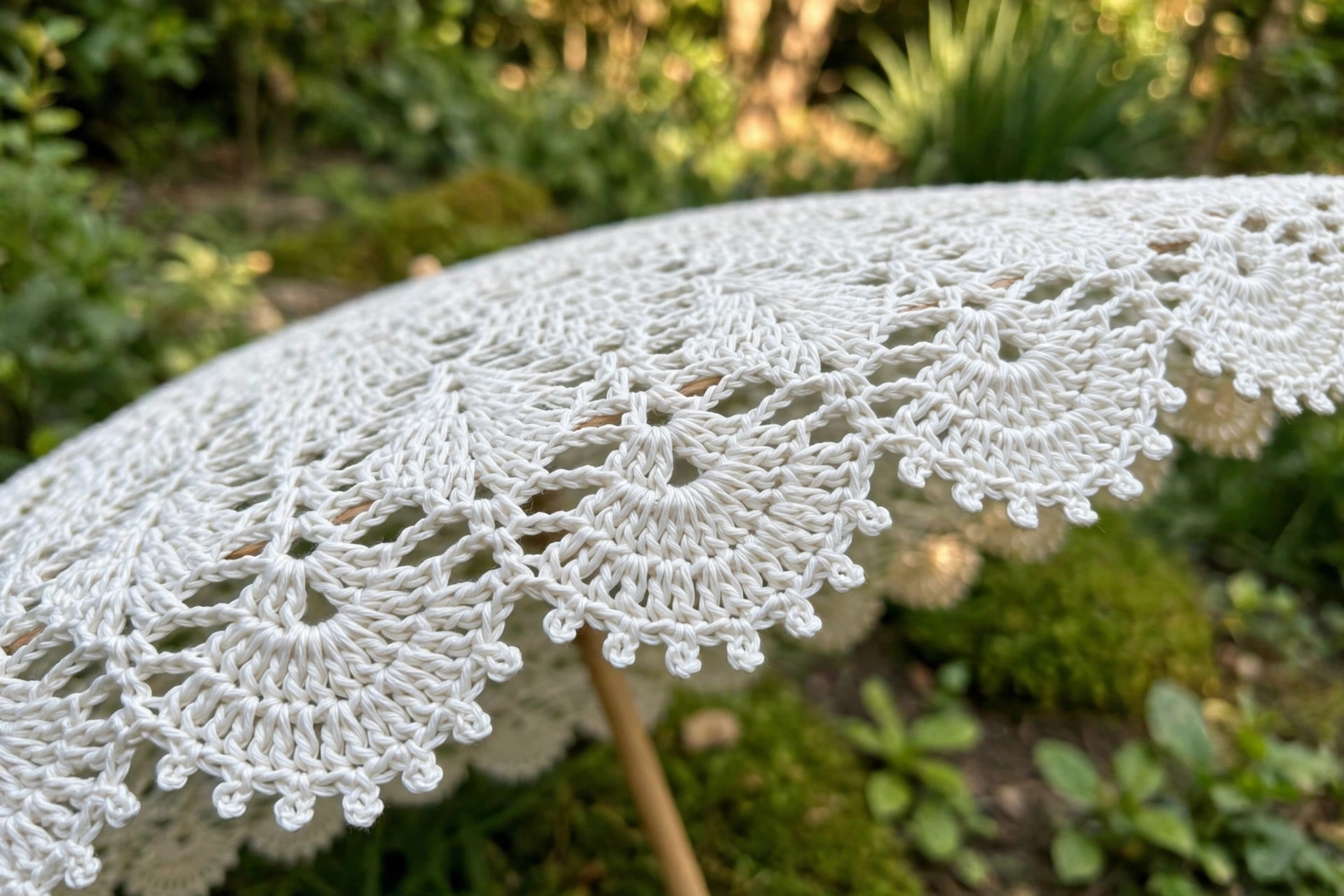
- Round 3: ch 1, sc in the first sc, work 1 picot in the center dc of each shell (ch 3, sl st in the first ch), sc in the next sc, rep around the whole edge. Join with a sl st to the first sc.
Fasten off and weave in the ends. The scalloped edge should fall in even waves all the way around the parasol, with a picot on the tip of each shell. Count your shells as you work round 2, because an uneven shell count makes the scallops bunch up on one side.
The Tip and the Handle
Cover the tip of the frame with a small crochet cap so the bare metal does not show. With the main color, ch 4, join with a sl st to form a ring, then work 8 sc in the ring. Work 2 rounds of sc, decreasing by 2 stitches in each round, until the cap fits snugly over the tip. Fasten off and sew the cap to the tip with a few firm stitches.
Wrap the wooden handle with a narrow strip of crochet for grip and comfort. Chain 6, work rows of sc until the strip is long enough to wrap around the handle from top to bottom, then sew it in place with the long tail, tucking the ends under. Give the finished parasol a light spray of fabric stiffener and let it dry open, so the lace holds its shape.
Variations: Colors, Sizes, and Uses
- Classic white parasol: work the whole parasol in white with a plain wooden handle for a timeless look.
- Ivory wedding parasol: make the cover in ivory and the scalloped edge in a soft blush, with a wrapped handle to match. Our crochet sunflower blanket pattern makes a matching picnic blanket for the photos.
- Smaller child parasol: fit the panels to a frame about 20 inches across, working 10 rows instead of 13 on each panel.
- Pale blue garden parasol: work the panels in pale blue with a white scalloped edge for a fresh summer look.
- Photo prop parasol: skip the stiffener spray and leave the lace soft, so the edge moves gently in the breeze for photos. A matching crochet wallet free pattern in cream makes a lovely accessory for the same shoot.
Troubleshooting a Parasol That Does Not Sit Right
- My cover pulls to one side. One panel is a different size from the others. Count the shells on each panel, because they should all have 7 shells across the widest row.
- My panels curl at the edges. They were not blocked before joining. Take the cover off the frame, block each panel flat, and rejoin the seams.
- My scalloped edge bunches up. The shell count in round 2 is uneven. Count the shells around the edge, and add or remove a shell so they space evenly.
- My cover sags between the ribs. The panels are too long for the frame, or the thread is too heavy. Measure the frame again, and work one fewer repeat row on each panel.
- My parasol will not close. The cover is tacked too tightly to the ribs. Loosen the tacks at the outer edge so the ribs can fold in.
Care Instructions
Keep a crochet parasol dry, and store it open or loosely rolled, never folded tight. If it gets dusty, shake it gently outdoors and brush it lightly with a soft brush. If it needs washing, hand wash it in cool water with a mild detergent, press the water out without wringing, and let it dry open on the frame away from direct heat. Do not put a crochet parasol in the washing machine, and do not leave it out in the rain, because the thread can stretch and the frame can rust.
Frequently Asked Questions
Is this crochet parasol pattern good for beginners?
It is best for an intermediate crocheter. You need double crochet, shell stitches, and chain spaces in fine thread with a steel hook. One parasol takes about 12 hours, so it is a good project to work on over a few evenings.
What thread is best for a crochet parasol?
Size 10 cotton thread is the best choice, because it makes crisp open lace that holds its shape and is strong enough to stretch over a frame. White and ivory are classic parasol colors that go with everything.
Do I need a parasol frame?
Yes, the lace cover is fitted to a plain eight rib parasol frame about 28 inches across. You can buy one from a craft supplier, or take the fabric off an old parasol and keep the frame.
Can the parasol keep me dry in the rain?
No, this is a decorative sun parasol, not a rain umbrella. The openwork lace lets air through and softens the sun, but it will not keep you dry in a storm. Keep it dry and store it indoors.
How do I keep the lace stiff?
Block each panel before joining, and give the finished parasol a light spray of fabric stiffener while it is open on the frame. Respray it lightly after washing.
Can I sell parasols made from this pattern?
Yes, you may sell finished parasols made from this free pattern, with credit to Little Loop Finds. Do not sell or republish the pattern text itself. A parasol in ivory with a matching crochet bucket hat pattern makes a lovely set for a summer market stall.
Happy stitching, and may your little parasol bring you soft shade on every sunny day ahead.