Apache Tears Crochet Pattern (Free Stitch Tutorial)
Learn the Apache Tears stitch and make a lap blanket, scarf, and washcloth with this free original pattern.

Patterns · Crochet
- Finished size
- 36 x 48 in lap blanket
- Making time
- 18 to 22 hours
- Hook
- US I-9 (5.5 mm)
- Set
- Swatch, blanket, scarf, washcloth
- Skill
- Easy
In this post
- Key Takeaways
- Table of Contents
- Why You Will Love Apache Tears
- Finished Size, Skill Level, and Time
- Materials You Need
- Abbreviations (US Terms)
- Gauge and Sizing Notes
- Part 1: Learn the Stitch with a Practice Swatch
- Part 2: Apache Tears Lap Blanket
- Part 3: Scarf, Washcloth, Edging, and Blocking
- Variations: Colors, Yarns, and Projects
- Troubleshooting Apache Tears
- Care Instructions
- Frequently Asked Questions
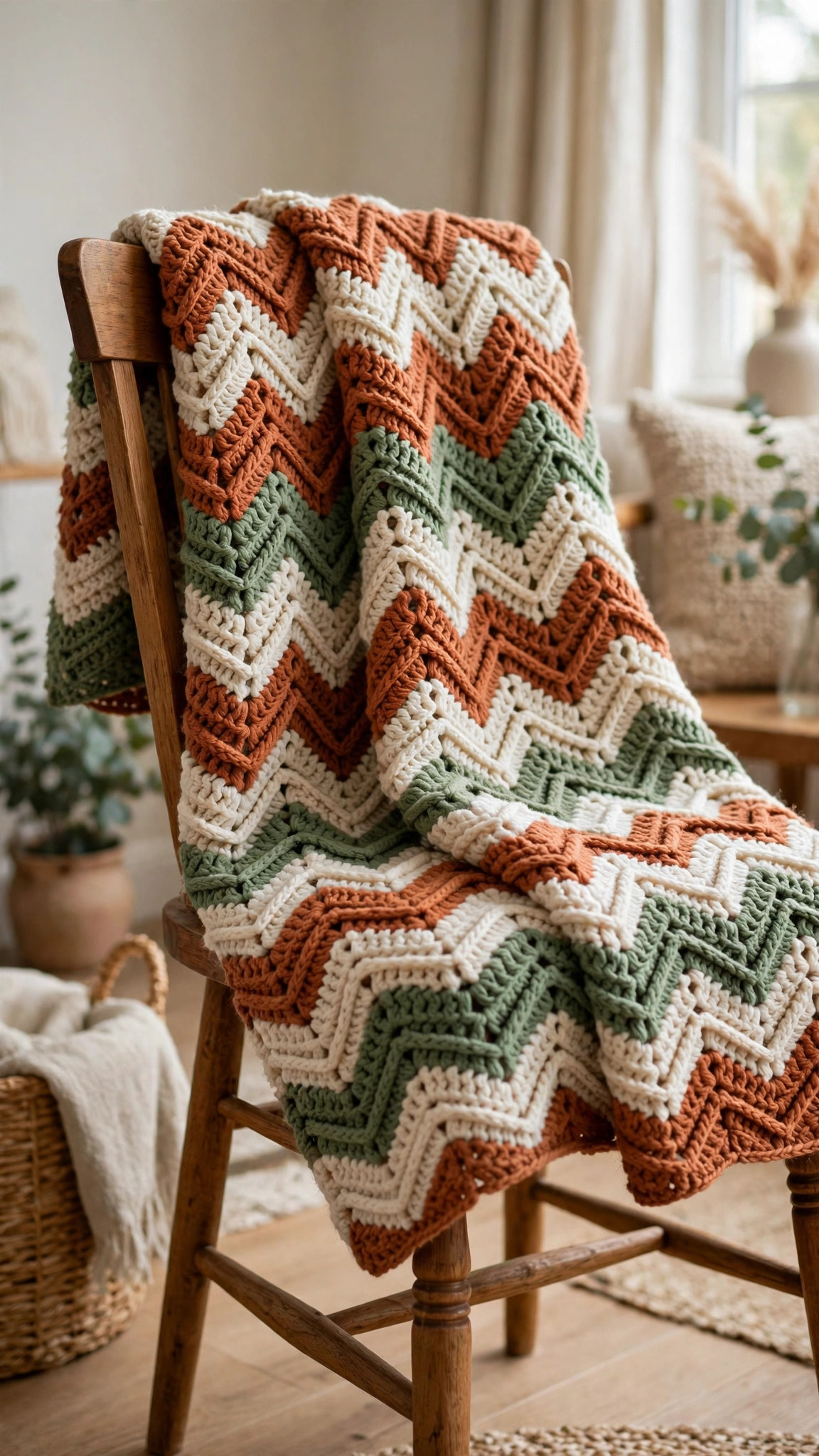
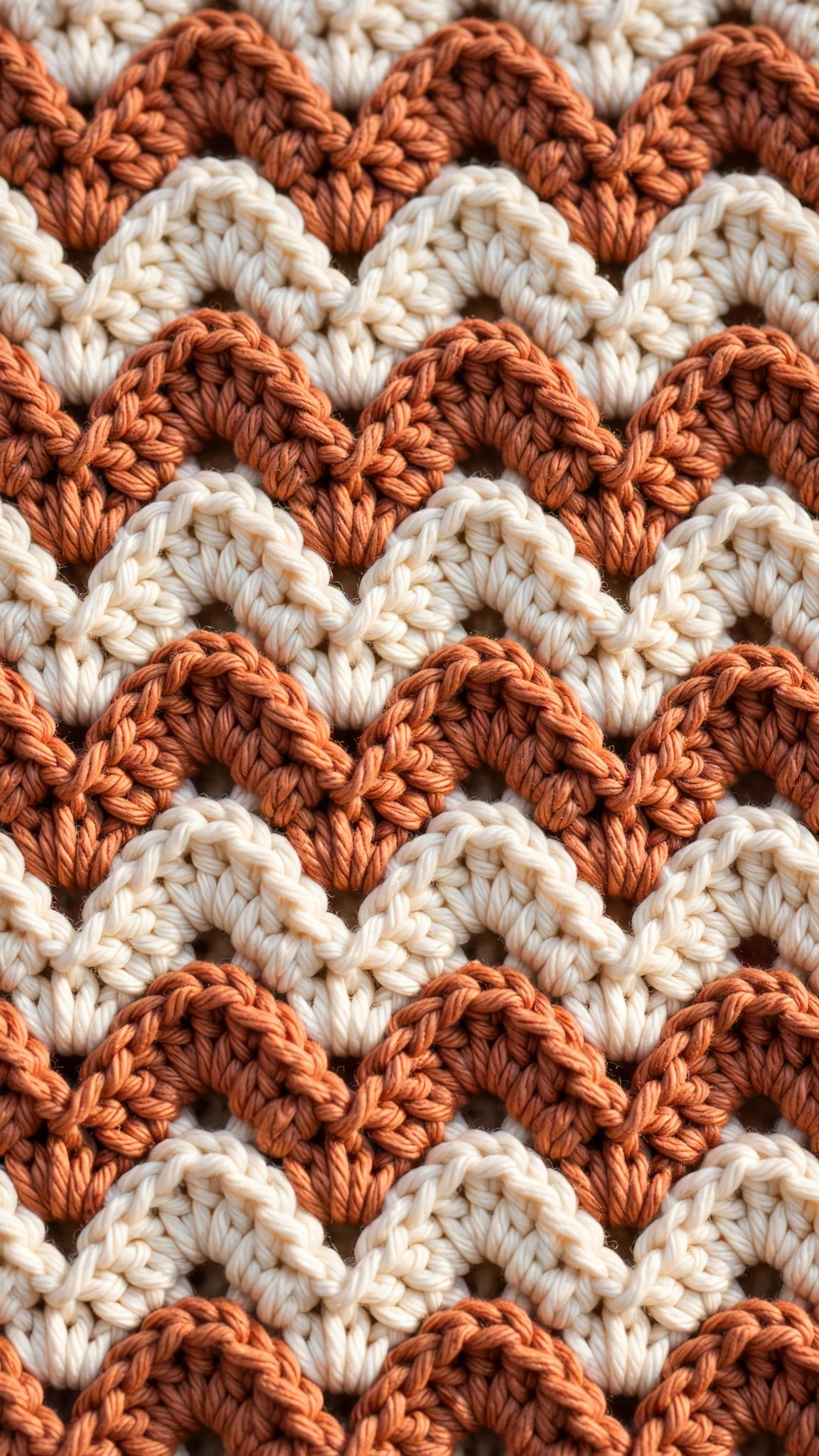
The Apache Tears crochet stitch looks like rows of little teardrops falling down your work, and it is much easier than it looks. The effect comes from one move: long front post stitches worked around stitches two rows below, grouped in threes, so each group leans gently and forms a tear shape. Once you learn the four row repeat, you can stitch it without looking at the pattern.
This free Apache Tears crochet pattern is an original Little Loop Finds design, written in US terms. It starts with a small practice swatch, then gives you three projects: a cozy lap blanket, a quick scarf, and a washcloth. The stitch looks great in stripes or in one color, and the thick, warm texture suits blankets and cold weather accessories. If you can double crochet and work a front post stitch, you can crochet Apache Tears.
A quick note on scope: this post teaches the Apache Tears stitch and projects built from it. It is not corner to corner crochet, which builds fabric diagonally from one corner, though both make great blankets. Our corner-to-corner-crochet-patterns post covers that technique.
Key Takeaways
- Free original pattern: this Apache Tears crochet pattern is a Little Loop Finds original design, written in US terms, and completely free.
- One special stitch: long front post stitches worked two rows below create the signature teardrop texture.
- Easy four row repeat: two plain rows and two tear rows, with a stitch count every row.
- Three projects in one post: a lap blanket, a scarf, and a washcloth, all from the same stitch pattern.
- Great for stripes: change color every two rows for bold bands, or work it in one color.
Table of Contents
- Why You Will Love Apache Tears
- Finished Size, Skill Level, and Time
- Materials You Need
- Abbreviations (US Terms)
- Gauge and Sizing Notes
- Part 1: Learn the Stitch with a Practice Swatch
- Part 2: Apache Tears Lap Blanket
- Part 3: Scarf, Washcloth, Edging, and Blocking
- Variations: Colors, Yarns, and Projects
- Troubleshooting Apache Tears
- Care Instructions
- Frequently Asked Questions
Why You Will Love Apache Tears
Apache Tears is one of those stitches that makes people ask how you did it. The raised groups catch the light, the zigzag gives the fabric movement, and the texture feels thick and squishy. Yet the stitch is built from skills you probably already have: chains, double crochet, and front post double crochet. There is nothing fancy to memorize, just a four row repeat you will know by heart after the first few inches.
The stitch is also wonderfully forgiving. Because the tear rows are separated by plain rows of double crochet, a small mistake is easy to spot and fix, and the plain rows give your hands a rest. It is a great stitch for television crochet and quiet evenings. Work it in stripes and each tear row pops like embroidery, or work it in one soft color and let the texture do the talking.
Finished Size, Skill Level, and Time
- Finished sizes: lap blanket about 36 by 48 inches; scarf about 8 by 60 inches; washcloth about 9 inches square.
- Skill level: Easy to intermediate. You need chains, double crochet, and front post double crochet, which the pattern explains step by step.
- Time: swatch about 30 minutes; washcloth about 2 hours; scarf about 6 to 8 hours; lap blanket about 18 to 22 hours.
Materials You Need
| Item | What to get |
|---|---|
| Yarn, blanket | Worsted weight (size 4) acrylic or cotton blend, about 1,400 yards in 2 to 3 colors |
| Yarn, scarf | Worsted weight (size 4), about 350 yards in 1 to 2 colors |
| Yarn, washcloth | Worsted weight (size 4) cotton, about 90 yards |
| Hook | US I-9 (5.5 mm), or the size that gives you a soft, flexible fabric |
| Notions | Tapestry needle, scissors, stitch markers |
Worsted weight yarn is the best choice for learning Apache Tears, because the stitches are big enough to see clearly. Cotton is best for the washcloth, because it absorbs water. For the blanket, a soft acrylic or blend is a good pick, because it is warm, light, and easy to wash. Choose smooth yarns rather than fuzzy ones, because the crisp raised texture is the whole beauty of this stitch.
Abbreviations (US Terms)
- ch = chain
- sl st = slip stitch
- sc = single crochet
- dc = double crochet
- FPdc = front post double crochet (yarn over, insert hook from front to back around the post of the stitch, finish as a double crochet)
- long FPdc = long front post double crochet (work a FPdc around a stitch two rows below)
- st(s) = stitch(es)
- rep = repeat
- sk = skip
- sp = space
- RS = right side
- WS = wrong side
Gauge and Sizing Notes
Gauge for Apache Tears is measured over the stitch pattern, not plain double crochet, because the tear rows pull the fabric in slightly. Work the swatch in Part 1 and measure it after a few repeats: 14 stitches and 8 rows should measure about 4 inches square. If your swatch is wider, go down a hook size; if narrower, go up one.
The stitch pattern needs a foundation chain that is a multiple of 6, plus 2. That is the rule for every size. Tear rows start with a chain 3 that counts as a double crochet, and tears are worked in groups of three. Keep the groups of three together and the zigzag appears on its own. Tear rows pull the fabric in slightly, which evens out with blocking.
Part 1: Learn the Stitch with a Practice Swatch
The swatch is the whole stitch in miniature. Work it first, even if you are eager to start the blanket, because it teaches your hands the long front post stitch and the offset that makes the zigzag. Every row ends with a stitch count so you can check your work.
The Swatch
Chain 32.
- Row 1 (RS): dc in the 4th ch from the hook, dc in each ch across. Turn. (29 dc)
- Row 2: ch 3 (counts as dc), dc in each st across. Turn. (29 dc)
- Row 3 (Tear Row A): ch 3 (counts as dc), dc in next st, (long FPdc in next 3 sts 2 rows below, dc in next 3 sts) rep 4 times, dc in last 3 sts. Turn. (29 sts)
- Row 4: ch 3 (counts as dc), dc in each st across. Turn. (29 dc)
- Row 5 (Tear Row B): ch 3 (counts as dc), dc in next 4 sts, (long FPdc in next 3 sts 2 rows below, dc in next 3 sts) rep 3 times, dc in last 6 sts. Turn. (29 sts)
- Rows 6 to 9: repeat Rows 2 to 5 once more.
- Row 10: ch 3 (counts as dc), dc in each st across. Fasten off. (29 dc)
Your swatch should now show tears zigzagging across the fabric, with the second set offset from the first. The tears in Row 3 sit in groups of three near the left edge, and the tears in Row 5 sit three stitches to the right, which creates the diagonal movement that gives the stitch its name. If your tears look straight, check that Row 5 starts with five double crochet before the first tear group, not two.
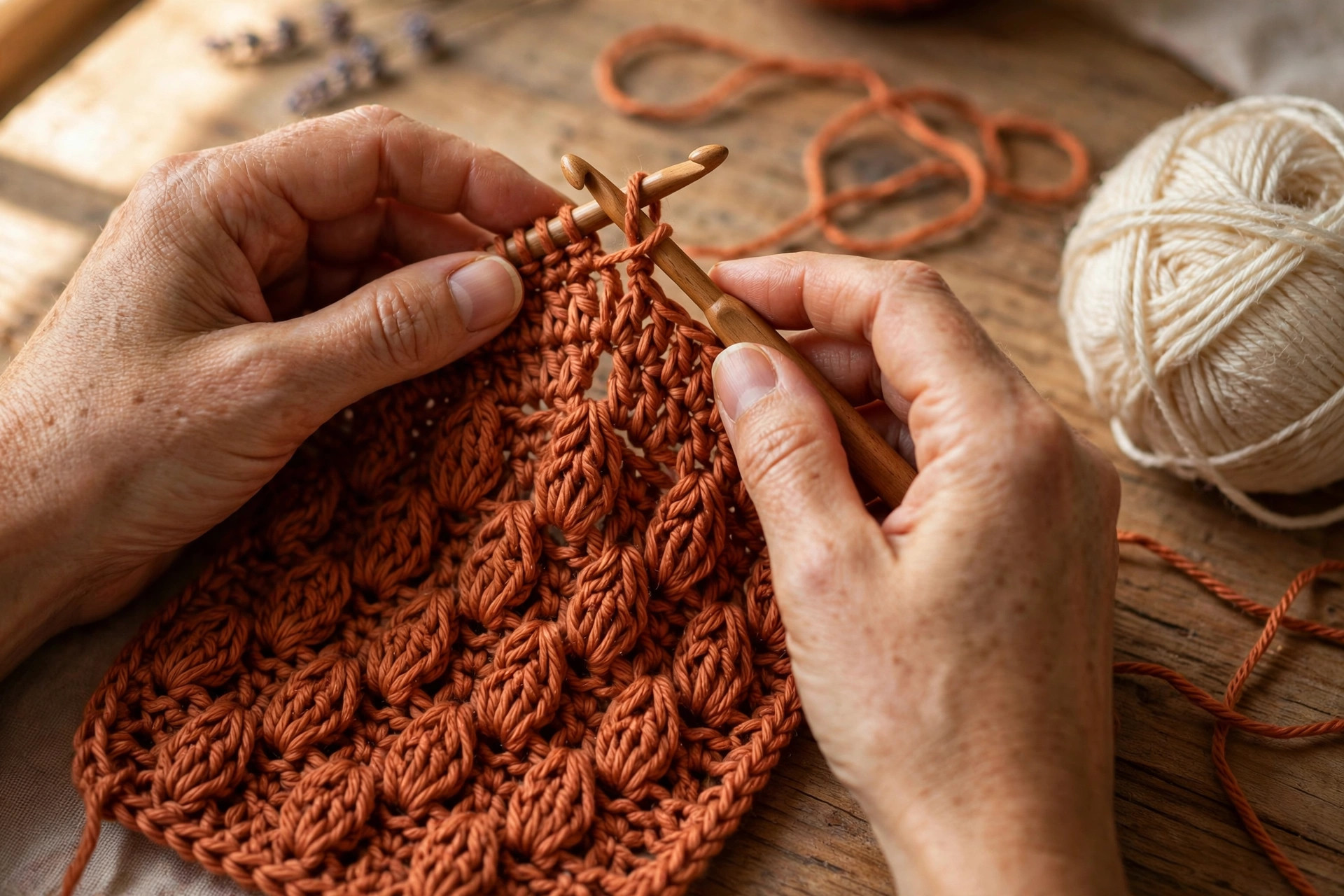
A note on the long front post stitch: reach your hook around the post of the stitch two rows below, and pull the loop up to the height of the current row before you finish the stitch. If the loop is too short, the tear will pucker the fabric. If it is too long, the tear will flop loosely. After a few groups you will find the length that sits flat and proud.
Part 2: Apache Tears Lap Blanket
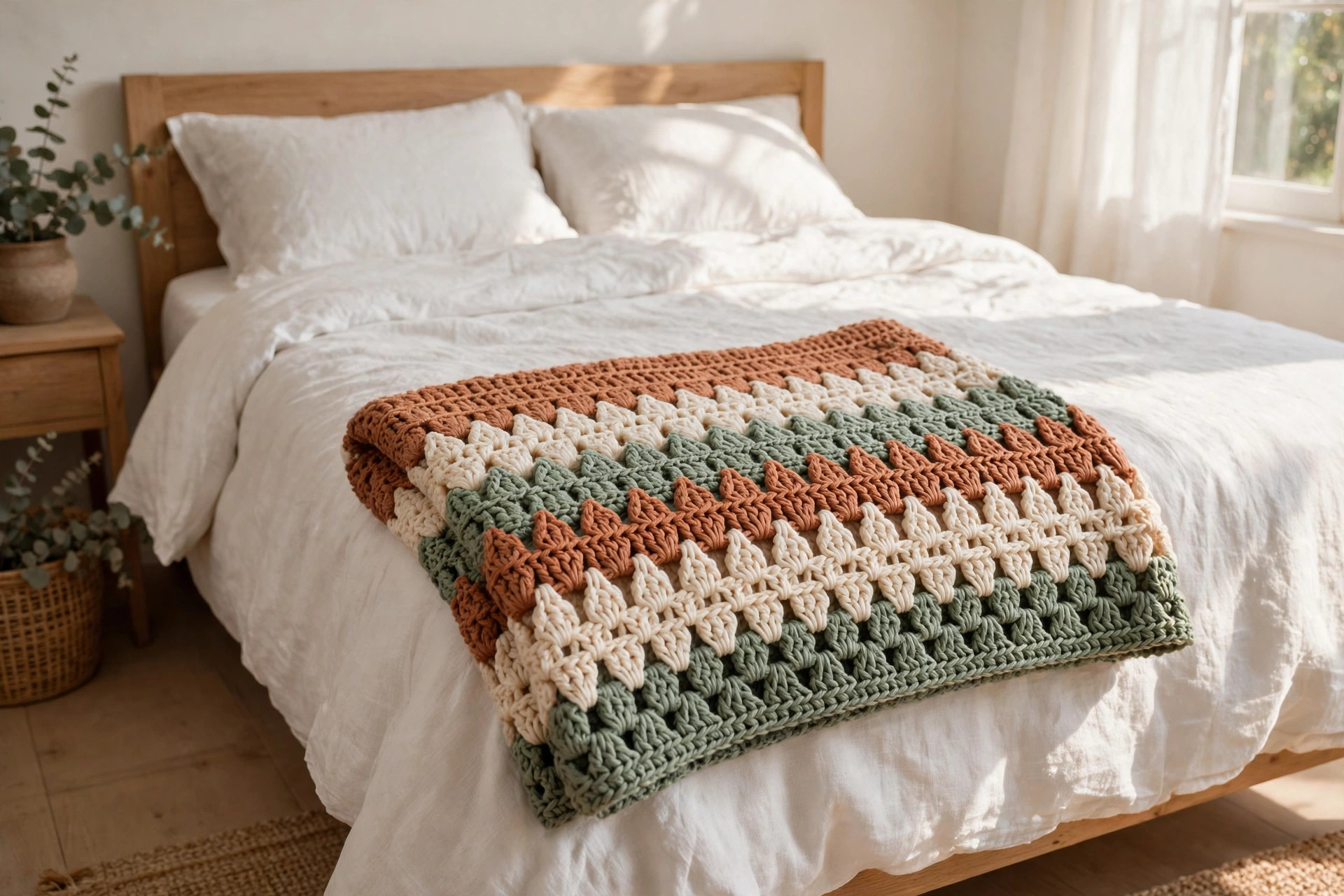
The lap blanket is the same stitch pattern as the swatch, just wider and longer. It uses three colors in stripes, with each color worked for two rows, but one color works too. The blanket is worked flat in rows, and the edges stay straight because every row starts with a chain 3 and ends with a double crochet in the turning chain.
The Blanket
With Color A, chain 122.
- Row 1 (RS): dc in the 4th ch from the hook, dc in each ch across. Turn. (119 dc)
- Row 2: ch 3 (counts as dc), dc in each st across. Turn. (119 dc)
- Row 3 (Tear Row A): ch 3 (counts as dc), dc in next st, (long FPdc in next 3 sts 2 rows below, dc in next 3 sts) rep 19 times, dc in last 3 sts. Turn. (119 sts)
- Row 4: ch 3 (counts as dc), dc in each st across. Turn. (119 dc)
- Row 5 (Tear Row B): ch 3 (counts as dc), dc in next 4 sts, (long FPdc in next 3 sts 2 rows below, dc in next 3 sts) rep 18 times, dc in last 6 sts. Turn. (119 sts)
- Rows 6 to 9: repeat Rows 2 to 5 once more.
- Repeat Rows 2 to 5 until the blanket measures about 46 inches long, ending with a Row 4 or a Row 5, then work one final row: ch 3 (counts as dc), dc in each st across. Fasten off. (119 dc)
Color Plan
Change color every two rows: work Rows 1 and 2 in Color A, Rows 3 and 4 in Color B, Rows 5 and 6 in Color C, then repeat. Tear rows sit in a different color from the plain rows around them, which makes the tears stand out. Carry unused colors loosely up the side edge, and cover the strands with the border. For one color, skip the changes.
Border
The border tidies the edges and hides the carried yarn. Join with a slip stitch in any corner.
- Round 1: ch 1, sc evenly around all four sides, working 3 sc in each corner stitch, and join with a slip stitch to the first sc. Aim for about 2 sc per row end along the side edges so the border lies flat.
- Round 2: ch 1, sc in each st around, working 3 sc in each corner stitch, join. Fasten off and weave in all ends.
The blanket should measure about 36 inches wide by 48 inches long after the border and blocking.
Part 3: Scarf, Washcloth, Edging, and Blocking
The scarf and the washcloth use the exact same rows as the swatch, so once you have made one, you can make the other without reading the pattern again. The only difference is the starting chain and the number of repeats.
The Scarf
With your main color, chain 26.
- Row 1 (RS): dc in the 4th ch from the hook, dc in each ch across. Turn. (23 dc)
- Row 2: ch 3 (counts as dc), dc in each st across. Turn. (23 dc)
- Row 3 (Tear Row A): ch 3 (counts as dc), dc in next st, (long FPdc in next 3 sts 2 rows below, dc in next 3 sts) rep 3 times, dc in last 3 sts. Turn. (23 sts)
- Row 4: ch 3 (counts as dc), dc in each st across. Turn. (23 dc)
- Row 5 (Tear Row B): ch 3 (counts as dc), dc in next 4 sts, (long FPdc in next 3 sts 2 rows below, dc in next 3 sts) rep 2 times, dc in last 6 sts. Turn. (23 sts)
- Repeat Rows 2 to 5 until the scarf measures about 58 inches long, then work one final row of double crochet across. Fasten off. (23 dc)
Add tassels if you like: cut 12 inch strands, fold them in half, pull the folded end through a stitch at the short edge, and pull the loose ends through the loop. Knot three tassels at each end and trim them even. A scarf in this stitch is wonderfully warm, because the raised tears trap air. Our crochet-scarf-patterns-for-beginners collection has more easy scarf ideas.
The Washcloth
With cotton yarn, chain 32 and work exactly as for the swatch in Part 1, repeating Rows 2 to 5 until the piece measures about 9 inches square, which takes about 16 rows. End with a final row of double crochet and fasten off. The raised tears give the washcloth a gentle scrubbing texture, perfect for washing up and the bath. Make a stack in different colors and tie them with a ribbon for a simple gift. Our crochet-dishcloths-free-patterns post has more dishcloth stitches to try.
Blocking
Blocking makes the biggest difference to Apache Tears, because it evens out the pull of the tear rows and opens the texture so the tears stand proud.
- Soak the finished piece in cool water with a drop of mild soap for 10 minutes, then gently squeeze out the water without wringing.
- Lay the piece flat on a blocking mat or a clean towel, and smooth it to the finished measurements, pinning the corners and edges straight.
- Leave the piece to dry completely, usually overnight, then unpin it and admire the even zigzag of tears.
Variations: Colors, Yarns, and Projects
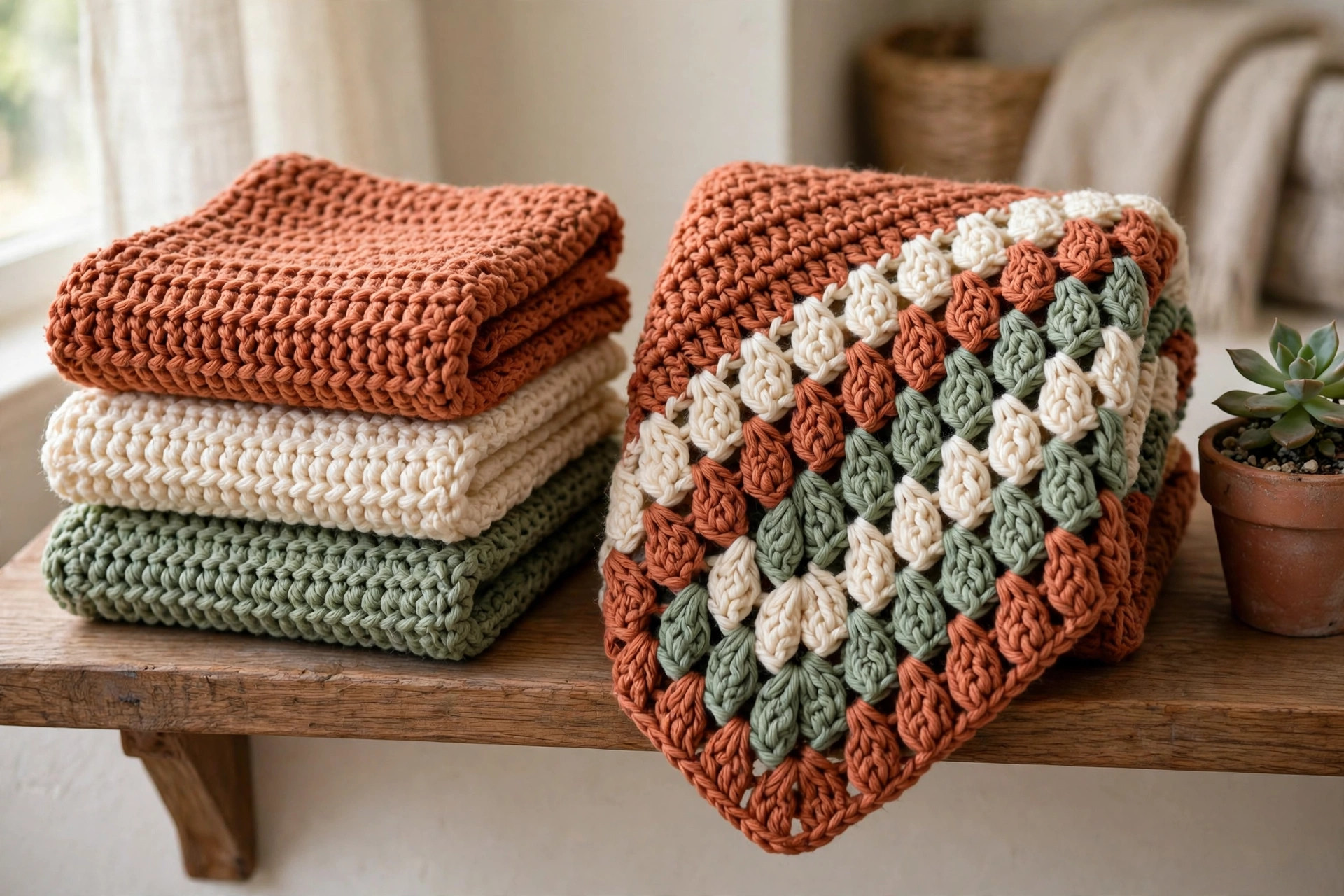
- Bold stripes: change color every two rows, as in the blanket plan, for strong bands that make each tear row pop.
- One color calm: work the whole piece in a single soft color, like cream or sage, and let the texture carry the design.
- Chunky yarn version: work the same stitch in bulky weight yarn with a 6.5 mm hook for a super thick, fast blanket. Chain a multiple of 6 plus 2 to the width you want. Our chunky-yarn-crochet-blanket-patterns post has more bulky blanket ideas.
- Baby blanket: chain 92 for a stroller sized blanket about 27 inches wide, and work until it measures about 30 inches long.
If you enjoy textured stitches, the dragon-scale-crochet-pattern makes another wonderfully touchable fabric, and the chevron-crochet-pattern gives you a zigzag in a different way.
Troubleshooting Apache Tears
- My tears pull the fabric tight and pucker. Your long front post stitches are too short. Pull the loop up to the full height of the current row before you finish each stitch.
- My tears flop loosely and look messy. Your long front post stitches are too long. Pull the loop up only to the height of the current row, and keep your tension even across the group of three.
- My zigzag looks straight, not offset. Check the start of Tear Row B: it begins with five double crochet before the first tear group, while Tear Row A begins with only two. The offset makes the zigzag.
- I lose stitches at the end of tear rows. Count at the end of every row. Tear Row A ends with three double crochet, and Tear Row B ends with six. Mark the last stitch with a stitch marker until the rhythm feels natural.
- My edges are wavy. The border fixes most wavy edges, but if the waviness is strong, check that you work into the turning chain at the end of every row. Missing that stitch pulls the edge inward.
- I cannot find the post two rows below. Look for the stitch directly under the one you just skipped. The post is the vertical bar of the double crochet. Slide your hook around it from the front.
Care Instructions
Hand wash Apache Tears pieces in cool water with mild soap, gently squeeze out the water, and lay flat to dry. The raised texture holds its shape best when it dries flat, and blocking after washing keeps the zigzag even. If you used acrylic, machine wash on a gentle cold cycle and lay flat to dry, but never use a hot dryer, because the heat flattens the raised stitches. Keep finished pieces out of harsh sunlight.
Frequently Asked Questions
What is the Apache Tears crochet stitch?
Apache Tears is a textured stitch pattern made from double crochet and long front post double crochet stitches. The long stitches are worked around posts two rows below, in groups of three, and offset every other tear row, which creates raised teardrop shapes that zigzag down the fabric.
Is Apache Tears good for beginners?
Yes, it is a good next step after you are comfortable with double crochet. The only new skill is the front post double crochet, and the pattern explains it step by step. Work the practice swatch first, and the stitch will click into place.
What is the stitch multiple for Apache Tears?
The stitch needs a foundation chain that is a multiple of 6, plus 2. That rule works for every project, and it is how you resize the stitch for any width.
What yarn is best for Apache Tears?
Worsted weight yarn is the best choice for learning the stitch, because the stitches are big enough to see. Cotton is best for washcloths, because it absorbs water. Soft acrylic or a blend is best for blankets, because it is warm and easy to wash.
Can I make a blanket with the Apache Tears stitch?
Yes, it makes a wonderful blanket. The raised texture is thick and warm, the stitch looks great in stripes, and the four row repeat is easy to memorize, so a large blanket stays relaxing to stitch.
How is Apache Tears different from corner to corner crochet?
Apache Tears is a stitch pattern worked in flat rows, with texture from raised front post stitches. Corner to corner crochet builds fabric diagonally from one corner using blocks of stitches. Both make beautiful blankets, but they look and feel completely different.
Can I sell finished items made from this pattern?
Yes, you may sell finished blankets, scarves, and washcloths made from this free pattern, with credit to Little Loop Finds. Please do not sell or republish the pattern text itself.
Happy stitching, and may your blanket be full of color, texture, and one very satisfying zigzag of tears.