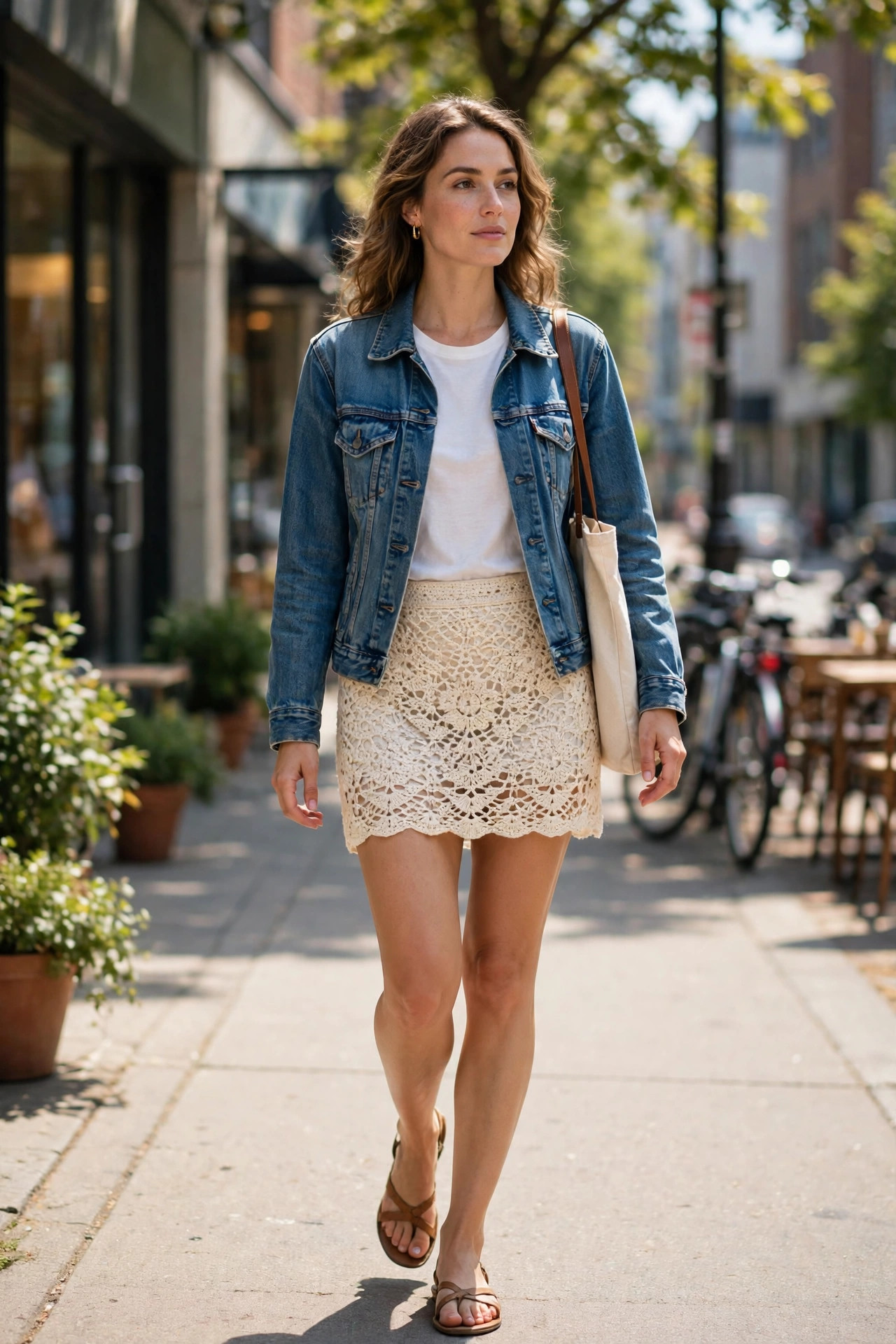
Crochet Mini Skirt Pattern: Flirty Lace Flare Skirt
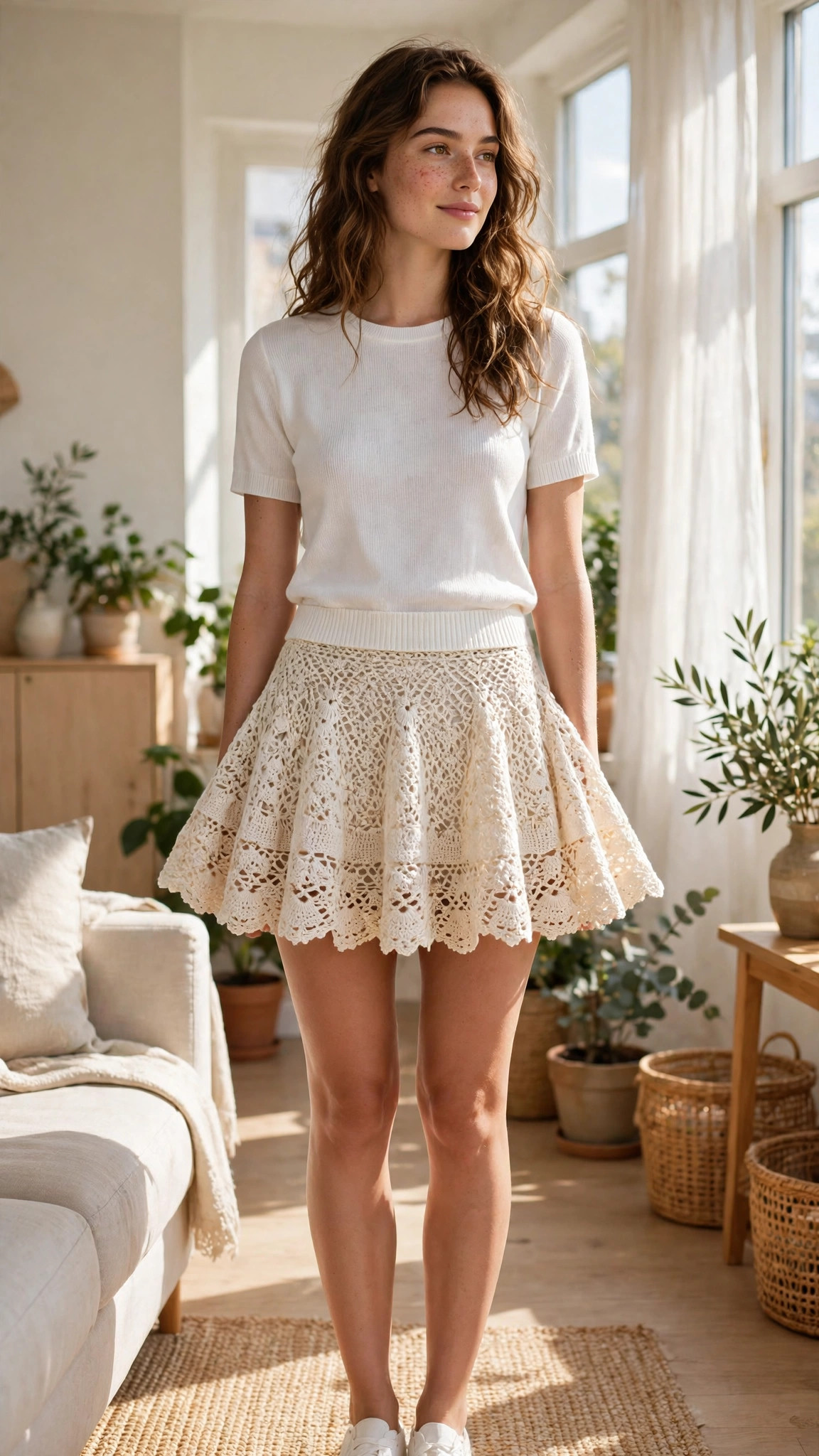
A flirty lace flare skirt worked seamlessly top-down, with a ribbed waistband and growing shells for a natural flare: original design, US terms, three sizes.

Wearables · Crochet
- Finished size
- XS/S to XL, 15-17 in long
- Making time
- About 10 hours
- Hook
- 4.0 mm, DK cotton yarn
- Set
- 3 sizes, original design
- Skill
- Intermediate
In this post
- Table of contents
- Why you'll love this crochet mini skirt pattern
- Materials you'll need
- Size, gauge and skill level
- Abbreviations, US terms
- The crochet mini skirt pattern (US terms)
- Finishing touches and assembly
- Fit-perfect tips and tricks
- Variations to try next
- Troubleshooting tips
- Frequently asked questions
- More free patterns to try
If you have been hunting for a crochet mini skirt pattern that looks like a boutique find instead of a craft project, this flirty lace flare skirt is the one. It is worked top-down in the round with a comfy ribbed waistband, then blossoms into airy shell lace that flares gently over the hips and finishes with a pretty scalloped hem. No zippers, no buttonholes, no sewing the pieces together: it comes off the hook as one seamless piece, ready to wear.
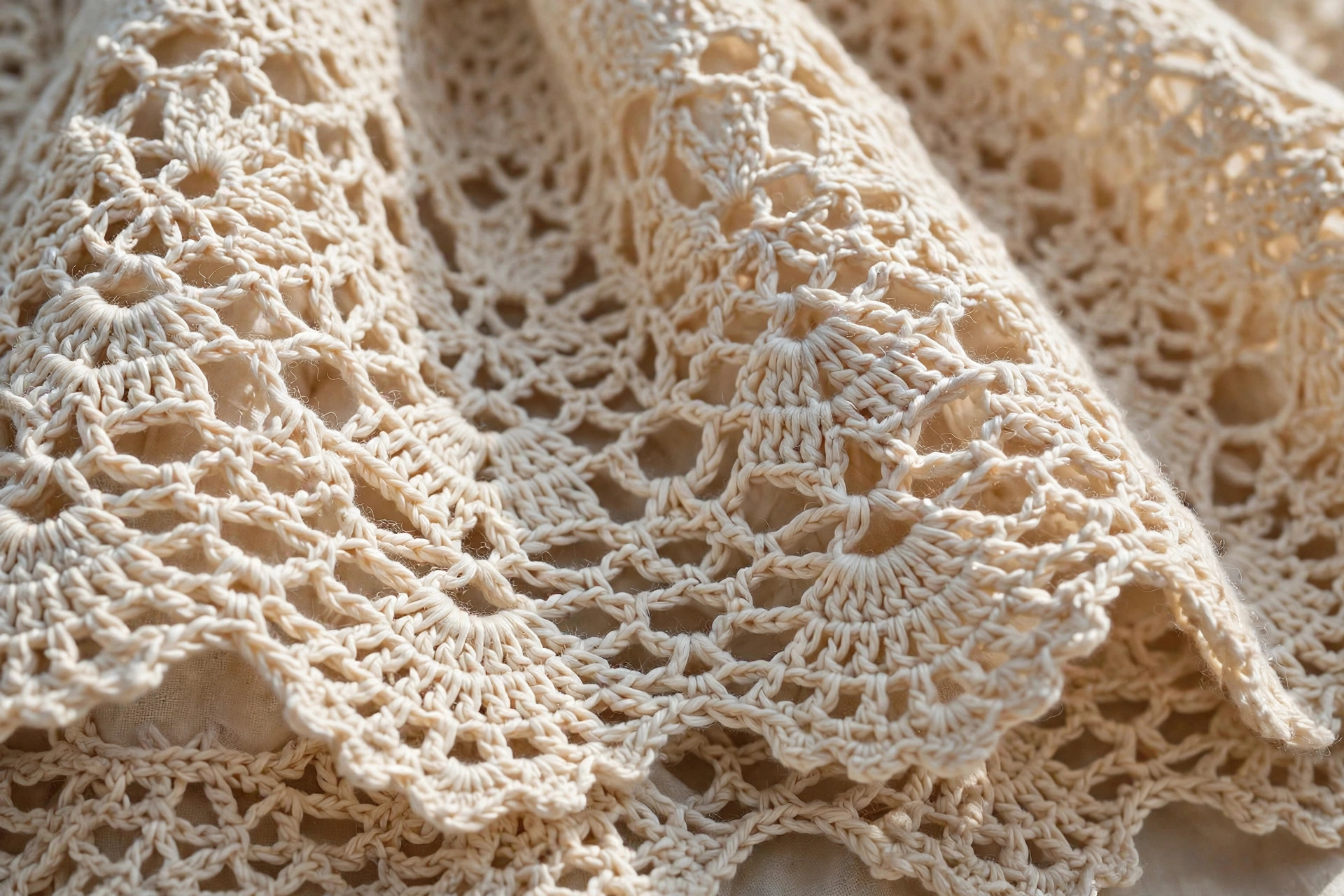
The magic is in the shell progression. You start with neat 5-double-crochet shells at the waist, grow to 6-double-crochet shells through the hips, and finish with lush 7-double-crochet shells at the hem, so the flare is built into the stitch pattern itself. Written in three sizes from XS/S to XL with a forgiving ribbed waistband, this skirt fits like it was made for you, because it was.
Table of contents
- Why you'll love this crochet mini skirt pattern
- Materials you'll need
- Size, gauge and skill level
- Abbreviations, US terms
- The crochet mini skirt pattern (US terms)
- Finishing touches and assembly
- Fit-perfect tips and tricks
- Variations to try next
- Troubleshooting tips
- Frequently asked questions
- More free patterns to try
Why you'll love this crochet mini skirt pattern
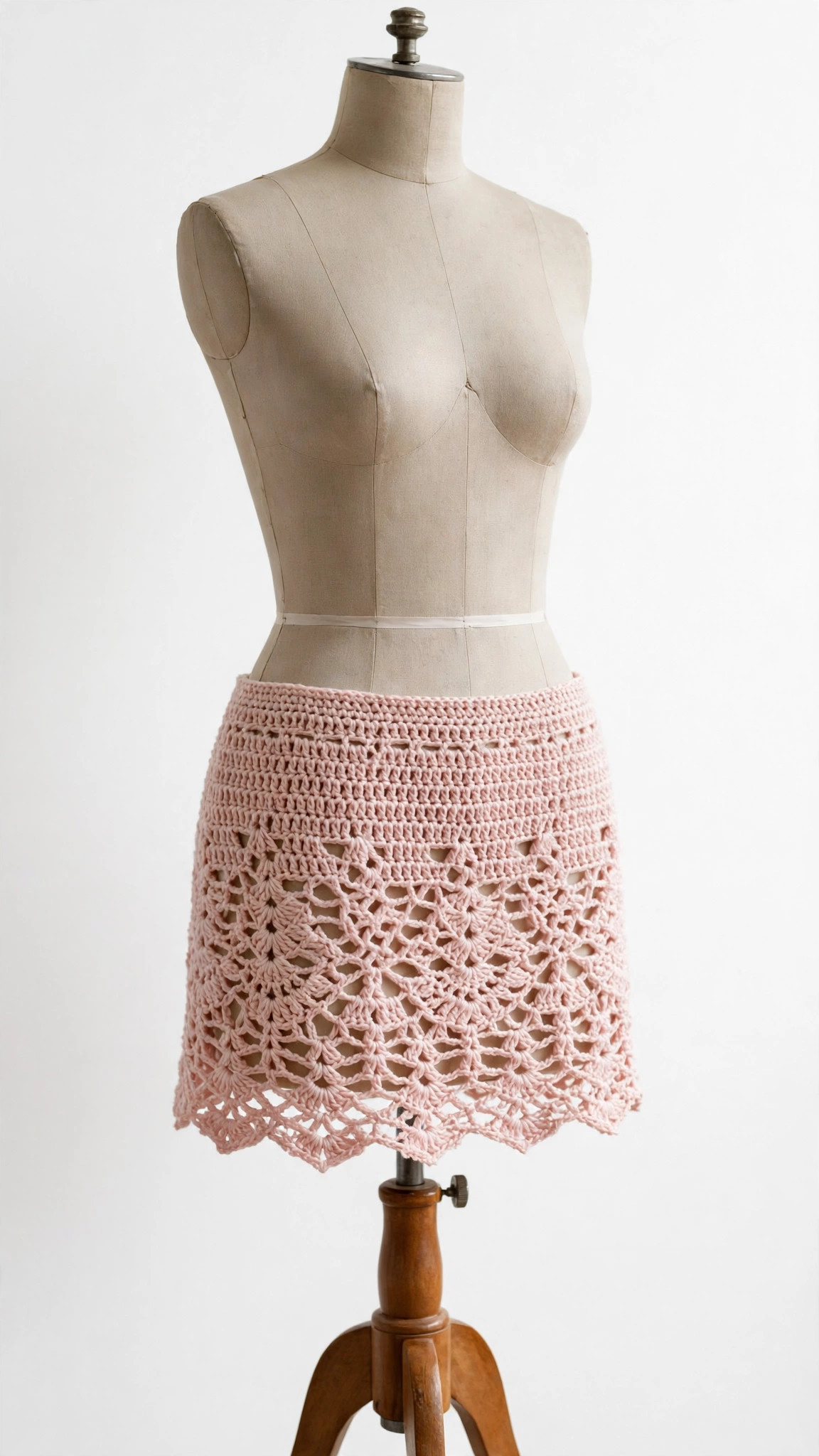
A crocheted skirt can go very wrong or very right, and the difference is all in the drape. This pattern uses DK-weight cotton, which has enough body to hold the shell texture but enough drape to swing when you walk. The result looks like the lace skirts all over summer lookbooks, except yours cost a few skeins of yarn and an enjoyable week of evening crochet.
The top-down construction is the real gift here. You try the waistband on as you go, so there is no finished-object heartbreak: if the band is snug, you add rows before you ever start the lace. And because the flare comes from growing shells rather than increase math, the shaping is automatic. If you can work a shell and count to seven, you can work this skirt. Fans of our hexagon sweater crochet pattern will recognize the same satisfying rhythm of simple repeats building into a garment, and the crochet circle vest pattern is a lovely layering partner for the finished skirt.
It is also a wonderfully wearable make. The ribbed waistband sits flat and comfortable with no digging elastic, the DK cotton breathes on warm days, and the scalloped hem gives just enough coverage to keep it classy. Style it with a tucked-in tee and sandals for daytime, or dress it up with a silky camisole for evening. One tester wore hers to a wedding rehearsal dinner and nobody believed it was handmade until she told them.
Materials you'll need
| Supply | What to get |
|---|---|
| Main yarn | DK-weight (#3) cotton or cotton-blend yarn: about 600 yds / 549 m for XS/S, 700 yds / 640 m for M/L, 800 yds / 732 m for XL |
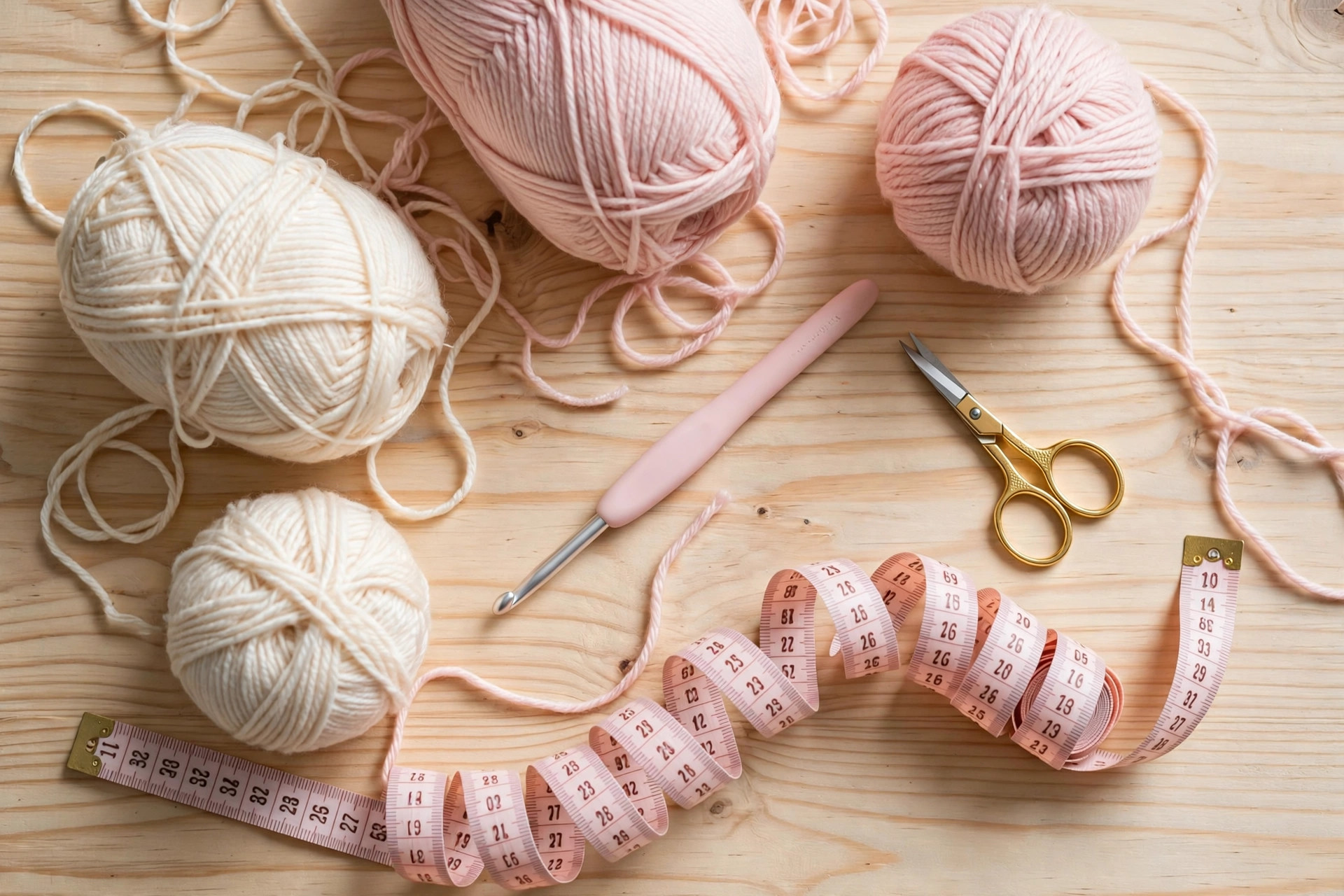
| Crochet hook | 4.0 mm (G) |
| Tapestry needle | For weaving in ends |
| Notions | Scissors, stitch markers, soft measuring tape |
| Optional | Narrow ribbon or a crocheted chain for a drawstring tie |
DK cotton is the star of this pattern. It shows the shell definition crisply, holds its shape through the hips, and softens beautifully with washing. A cotton-acrylic blend is a good second choice with a little more drape. Skip wool and fuzzy yarns here: they blur the lace and make a warm-weather skirt far too hot.
A note on the hook: use the 4.0 mm hook listed even if your DK label suggests smaller. The lace needs a slightly open fabric to drape and flare properly; a tight fabric will stand away from the body like a bell instead of falling in a soft A-line.
Size, gauge and skill level
The skirt is written in three sizes with a ribbed waistband that has about 1 inch of negative ease, so it stays up without elastic. Measure your natural waist and pick the size below; if you are between sizes, size down, because the ribbing stretches.
| Size | Fits waist | Finished waistband | Approx. length | Yarn needed |
|---|---|---|---|---|
| XS/S | 24-26 in (61-66 cm) | 23 in (58 cm) | 15 in (38 cm) | 600 yds |
| M/L | 28-30 in (71-76 cm) | 27 in (69 cm) | 16 in (41 cm) | 700 yds |
| XL | 32-34 in (81-86 cm) | 31 in (79 cm) | 17 in (43 cm) | 800 yds |
- Gauge: 18 sc and 20 rows = 4 in (10 cm) with a 4.0 mm hook in DK yarn, measured on the waistband. For the lace body, one 6-stitch shell repeat should measure about 1.3 in (3.3 cm) wide. Check your gauge before the waistband gets long: it is the foundation everything hangs from.
- Skill level: intermediate. You should be comfortable chaining, single and double crochet, working in joined rounds, and keeping track of shell repeats. The pattern explains the shell progression, but it does not teach the basic stitches.
The length is easy to customize: work more or fewer even rounds in the lace section before the hem round, keeping the additions in pairs so the shell stacking stays aligned.
Abbreviations, US terms
| Abbreviation | Meaning |
|---|---|
| ch | chain |
| sc | single crochet |
| dc | double crochet |
| sl st | slip stitch |
| st(s) | stitch(es) |
| blo | back loop only |
| RS | right side |
| FO | fasten off |
| [ ] | total stitch count at the end of the round |
| shell | 5 dc worked into the same stitch or space (grows to 6, then 7 dc in later rounds) |
Reading the size notation: stitch counts are given as XS/S (M/L, XL). Work the number for your size throughout. Shell counts are 15 (18, 21).
The crochet mini skirt pattern (US terms)
The skirt is worked top-down. First you crochet the ribbed waistband flat and join it into a ring, then you work the lace body in joined rounds, growing the shells from 5 to 6 to 7 double crochets to create the flare. Keep the right side facing you throughout the lace section.
Waistband: ribbed and stretchy
Chain 10.
- Row 1: sc in the 2nd ch from the hook and in each ch across. [9 sc]
- Row 2: ch 1, turn, sc blo in each st across. [9]
- Repeat Row 2 until the band measures 23 (27, 31) in / 58 (69, 79) cm slightly stretched, about 92 (108, 126) rows. Try it around your waist: it should feel snug but comfortable.
Join the short ends: fold the band so the short edges meet, and slip stitch them together through both layers. Do not fasten off; you will continue directly into the lace body. Turn the ring so the seam sits at what will be the back of the skirt.
Lace body: growing shells
- Round 1: ch 1, work sc evenly around the long edge of the waistband, working 1 sc into the end of each waistband row. [92 (108, 126) sc] Join with a sl st to the first sc.
- Round 2: ch 1, (sc in the next st, skip 2 sts, 5 dc shell in the next st, skip 2 sts) around. [15 (18, 21) shells] Join with a sl st to the first sc.
- Round 3: sl st in the next 2 sts to reach the center of the first shell, ch 3 (counts as dc), 4 dc in the same st, (sc in the next sc, 5 dc in the center st of the next shell) around. Join with a sl st to the top of the beginning ch-3.
- Rounds 4-6: repeat Round 3 three more times. The shells stack directly on top of each other.
- Round 7 (first flare): sl st to the shell center, ch 3, 5 dc in the same st (6-dc shell), (sc in the next sc, 6 dc in the center of the next shell) around. Join as before.
- Rounds 8-10: repeat Round 7 three more times.
- Round 11 (second flare): sl st to the shell center, ch 3, 6 dc in the same st (7-dc shell), (sc in the next sc, 7 dc in the center of the next shell) around. Join as before.
- Rounds 12-14: repeat Round 11 three more times.
Check the length: the skirt should measure about 14 (15, 16) in from the bottom of the waistband. For a longer skirt, repeat Round 11 in pairs before moving to the hem.
Scalloped hem
- Round 15: ch 1, (sc in the next sc, skip 2 dc, 7 dc in the next dc, skip 2 dc) around. Join with a sl st to the first sc.
FO, leaving a 6 in tail. Weave in all ends on the wrong side, threading tails through the backs of stitches so they disappear into the lace.
Finishing touches and assembly
There is no seaming in this skirt, so finishing is all about the details that make a garment look store-bought.
Weave in ends invisibly. Work each tail through the backs of nearby stitches on the wrong side for at least 2 inches, changing direction once. In lace, tails love to peek through holes, so take the time to bury them inside a shell where the fabric is densest.
Block the hem. Lay the skirt flat, gently pat the scallops into even curves, and give the whole thing a light steam from a few inches away, never touching the iron to the yarn. Let it cool completely. Blocking opens up the shells and makes the hem hang in a perfect wave instead of curling.
Add the optional drawstring. Crochet a chain about 120 in long, or cut a narrow ribbon to the same length. Thread it through the spaces of Round 2, starting and ending at the front center, and tie a small bow. It is decorative more than functional, but it gives the waist a lovely finished look.
Fit-perfect tips and tricks
Try the waistband on early and often. The band is the foundation of the whole skirt, and it takes two minutes to slip it over your hips mid-project. If it is loose, pull back a few rows now; fixing it after the lace is done means starting over.
Mark the round start. Place a stitch marker in the first stitch of every round and move it up as you go. Shell rounds all look alike after a while, and the marker is the only thing standing between you and a spiral of confusion.
Count shells after every flare round. You should always have 15 (18, 21) shells. If the count drifts, you skipped a single crochet between shells or worked two shells into one center. Catch it within a round or two and the fix is painless.
Keep the right side out. Shells have a distinct front with crisp texture. If you accidentally turn the work, the shells will face inward. Check every few rounds that the pretty side faces you.
Steam, do not press. Cotton lace responds beautifully to steam, but a hot iron pressed directly onto the shells will flatten the texture you worked so hard to create. Hover the iron and let the steam do the work.
Variations to try next
- Two-tone shells. Change color at Round 7 and again at Round 11 so each shell size gets its own shade: cream at the waist, sage through the hips, terracotta at the hem. The color blocking emphasizes the flare beautifully. Our free crochet shrug pattern makes a perfect matching layer in the same two-tone idea.
- High-waisted midi. Work the waistband 2 inches taller (chain 14 instead of 10) and add four extra pairs of Round 11 repeats before the hem for a 22-inch midi length. Gorgeous with ankle boots in fall.
- Beach cover-up version. Hold the DK cotton double-stranded is too heavy; instead, remake the skirt in a cotton-linen fingering yarn with a 4.5 mm hook for an airier, drapier fabric that works as a swimsuit cover-up. Go up one size to compensate for the lighter yarn.
Troubleshooting tips
- The waistband is too loose after blocking. Cotton relaxes with wear and washing. If the band stretched, thread a narrow elastic through the inside of Round 1, or add the drawstring and cinch it. Next time, work the band with 2 inches of negative ease instead of 1.
- The skirt flares like a bell instead of an A-line. Your fabric is too stiff: the hook is too small or your tension is too tight. Go up to a 4.5 mm hook for the lace section, or switch to a softer cotton blend.
- My shell counts keep drifting. You are losing the single crochet between shells. Say the repeat out loud as you work: "single, shell, single, shell." The rhythm locks in after two rounds.
- The hem curls upward. The scallop round is pulling. Work Round 15 with a slightly looser tension, or go up half a hook size for the hem round only.
- The lace looks gappy at the hips. That is the nature of open shell lace, and it is why the pattern suggests wearing the skirt over bike shorts or a slip. If you want more coverage, work Round 3 repeats with 6-dc shells from the start for a denser fabric.
- One side hangs longer. You joined rounds with a visible jog and the rounds drifted. Always join with a slip stitch to the top of the beginning chain and start the next round in the same stitch; the seam will stack in a straight line at the back.
Frequently asked questions
Is this crochet mini skirt pattern really free?
Yes, the complete pattern above is free, with no email signup and no purchase required.
What sizes does the pattern include?
Three sizes: XS/S fits a 24-26 in waist, M/L fits 28-30 in, and XL fits 32-34 in. The ribbed waistband has about 1 inch of negative ease so it stays up comfortably, and the length is easy to adjust by adding or removing lace rounds in pairs.
What is the best yarn for a crochet skirt?
DK-weight cotton or a cotton blend. It shows the shell texture crisply, breathes in warm weather, and holds its shape. Avoid wool (too hot), fuzzy yarns (they hide the lace), and anything without good stitch definition.
How long does it take to crochet the skirt?
About 10 hours at a relaxed pace: roughly 1.5 hours for the waistband, 7 hours for the lace body, and 1.5 hours for the hem, blocking, and finishing.
Do I need to line the skirt?
The shell lace is openwork, so most people wear it over bike shorts, a slip, or high-waisted underwear. If you prefer a built-in lining, a simple sewn cotton half-slip in a matching color works perfectly and takes twenty minutes on a sewing machine.
Can I sell finished skirts made from this pattern?
Yes! You may sell finished skirts made from this pattern in small batches (craft fairs, markets, custom orders). Please credit Little Loop Finds as the pattern designer.
How do I wash a cotton crochet skirt?
Machine wash cold on gentle, then lay flat to dry, reshaping the scalloped hem with your fingers. The cotton will soften with every wash and the lace will bloom beautifully.
More free patterns to try
A handmade skirt deserves handmade layers. Our crochet cardigan sweater pattern makes a cozy topper for cooler evenings over this skirt, and the free crochet frock patterns collection is full of dress ideas if this project gives you the garment-crochet bug. Wear it proudly: you made that.