Free Fidget Crochet Pattern: Sensory Toys to Make
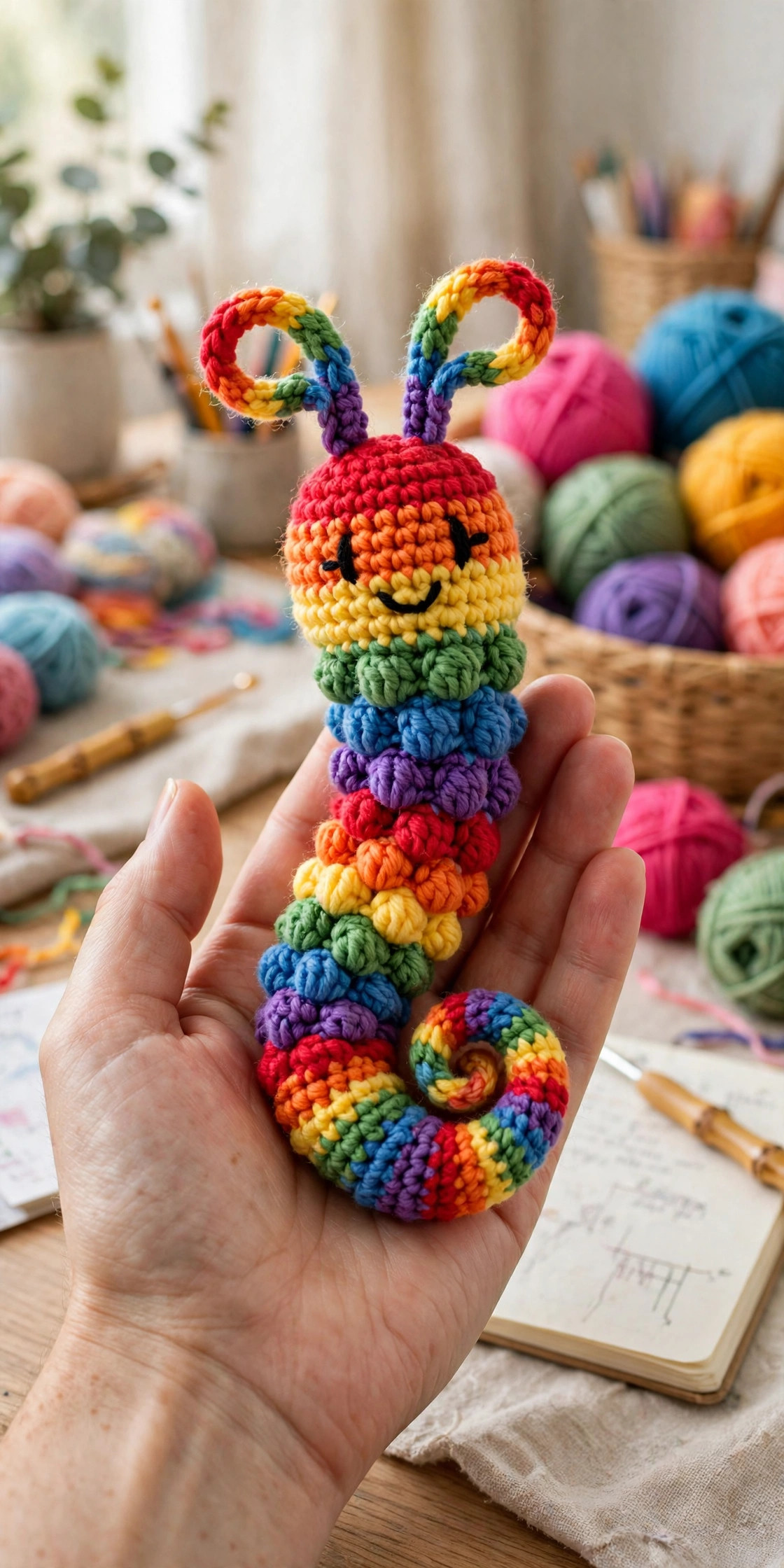
Make your own silent, squishy fidget toys: this original free pattern includes a bobble worm plus two bonus minis.

Toys & Amigurumi · Crochet
- Finished size
- Worm 5 in long
- Making time
- About 1 hour per toy
- Hook
- 3.5 mm (E)
- Set
- Worm + ball + cord
- Skill
- Beginner
In this post
- Table of contents
- Why crochet your own fidget toys
- Materials you'll need
- Size, gauge and skill level
- The fidget worm crochet pattern, US terms
- Bonus 1: sensory textured ball
- Bonus 2: pull and twist fidget cord
- Finishing and assembly
- Tips for the best fidget feel
- Variations to try next
- Troubleshooting tips
- Frequently asked questions
- More free patterns to try
Fidget toys are everywhere right now, and this free fidget crochet pattern lets you make your own in about an hour. It is an original design written in US terms: a squishy little fidget worm with a bobble textured body, looped antennae, and a curly tail, plus two bonus mini fidgets (a sensory ball and a pull and twist cord) so you get three toys from one post. Every one of them fits in a pocket, a pencil case, or a calm down kit.
Crocheted fidgets have a real edge over plastic ones. The yarn is soft and warm in the hand, the textures are endlessly interesting to touch, and they are silent: no clicking, no popping, no annoying the whole classroom. Teachers, parents, and therapists love them for exactly that reason, and kids love them because they are cute enough to double as desk buddies.
If you can single crochet and work in the round, you know everything this pattern needs. The main fidget worm uses basic increases, bobble stitches for the bumpy sensory texture, and a little bit of sewing. The bonus ball and cord are even simpler. This is a perfect stash buster project, a great craft fair make, and a thoughtful handmade gift for any kid or adult who fidgets.
Table of contents
- Why crochet your own fidget toys
- Materials you'll need
- Size, gauge and skill level
- Abbreviations, US terms
- The fidget worm crochet pattern, US terms
- Bonus 1: sensory textured ball
- Bonus 2: pull and twist fidget cord
- Finishing and assembly
- Tips for the best fidget feel
- Variations to try next
- Troubleshooting tips
- Frequently asked questions
- More free patterns to try
Why crochet your own fidget toys
Plastic fidget toys break, get lost, and drive teachers up the wall with clicking and popping. A crocheted fidget solves all three problems at once: it is soft, it is quiet, and if it gets lost you can make another one in an hour from yarn scraps. The bobble texture on this design gives fingers something genuinely interesting to do, which is the whole point of a fidget.
These also make wonderful gifts with a purpose. A set of three in a little pouch is a thoughtful present for a student heading into exam season, a kid starting a new school, or a coworker who shreds pen caps during meetings. They work beautifully in calm down corners, sensory bins, and party favor bags too, and because they are handmade they feel personal in a way a plastic gadget never will.
If you enjoy quick pocket sized makes, our mini amigurumi patterns roundup is full of projects this size. The gummy bear crochet pattern makes another irresistibly squishy desk buddy, and the mini octopus crochet pattern has the same satisfying tentacle texture that fidgeters love.
Materials you'll need
| Supply | What to get |
|---|---|
| DK weight (#3) yarn | Small amounts in 3 to 4 bright colors, about 30 yds / 27 m total per worm |
| Crochet hook | 3.5 mm (E) |
| Safety eyes | Two 8 mm black safety eyes (or black yarn to embroider for young kids) |
| Stuffing | Polyester fiberfill, a small handful |
| Tapestry needle | For sewing pieces and weaving in ends |
| Notions | Scissors, stitch markers |
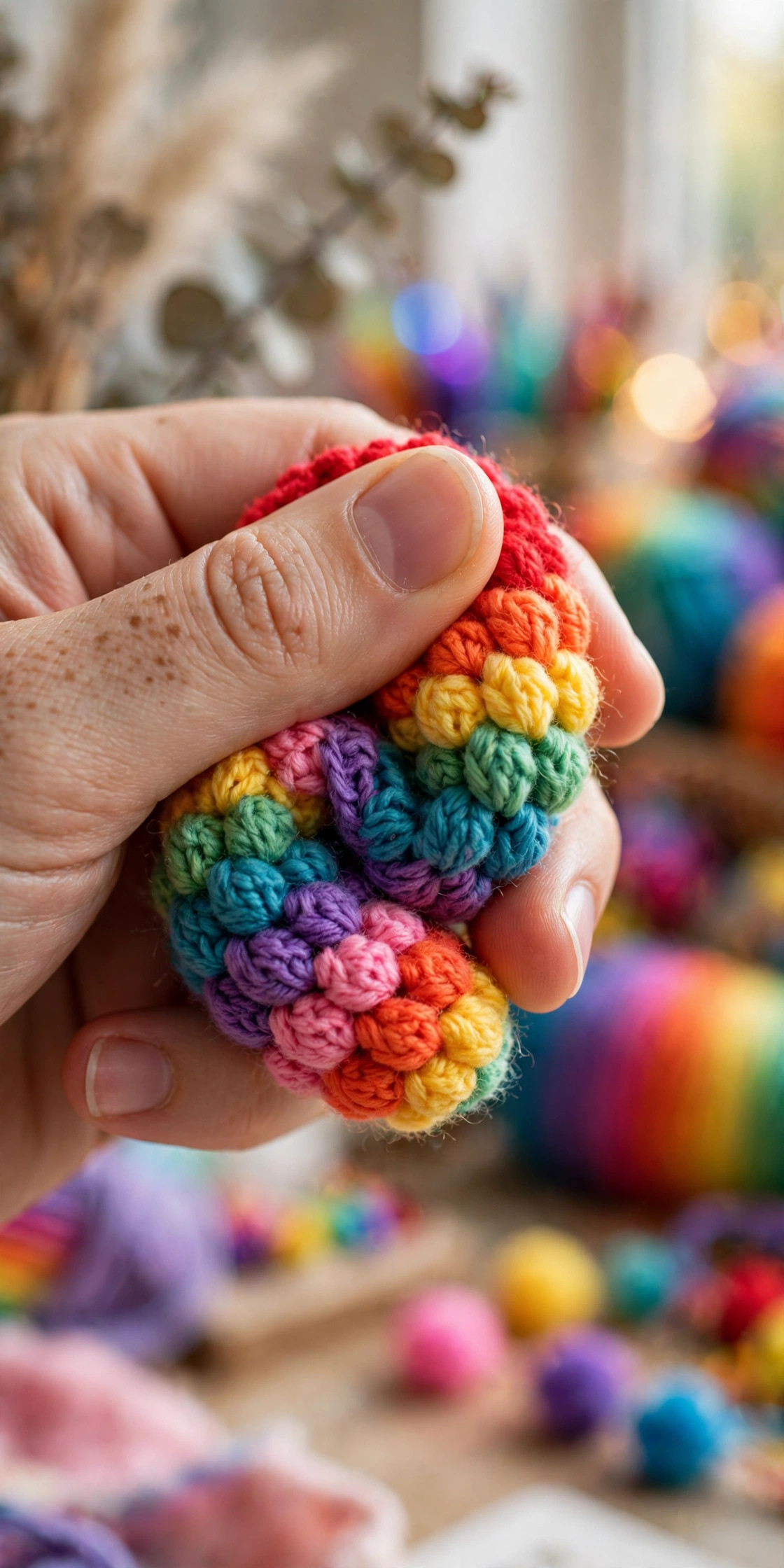
Bright, high contrast colors work best: the whole point of a fidget is visual and tactile interest, so reach for rainbow stripes, neons, or bold color blocks. A smooth DK yarn shows off the bobble texture crisply; avoid fuzzy yarns that blur the bumps. For fidgets destined for very young children, embroider the eyes instead of using safety eyes and skip any small sewn parts.
A note on the hook: 3.5 mm with DK yarn makes a firm fabric that holds the bobbles proud and keeps the stuffing inside. The worm gets squeezed hard, so tight stitches matter more here than in decorative amigurumi.
Size, gauge and skill level
- Finished size: the fidget worm is about 5 in (13 cm) long including the tail, about 1.5 in (4 cm) wide at the body. The sensory ball is about 2.5 in (6 cm) across. The pull and twist cord is about 8 in (20 cm) long.
- Gauge: 22 sc and 24 rounds = 4 in (10 cm) in DK yarn with a 3.5 mm hook. Gauge is not critical, but the fabric must be tight enough that stuffing does not show through.
- Skill level: Confident beginner. You should be comfortable with single crochet, working in the round, and basic increases and decreases. The bobble stitch is explained below and is easier than it looks.
Abbreviations (US terms):
- ch = chain
- sl st = slip stitch
- sc = single crochet
- hdc = half double crochet
- dc = double crochet
- inc = increase (2 sc in the same st)
- dec = decrease (sc 2 together)
- st(s) = stitch(es)
- rnd = round
- BLO = back loop only
- rep = repeat
Special stitch: bobble. Yarn over, insert hook in the st, yarn over, pull up a loop, yarn over, pull through 2 loops. Rep 4 more times in the same st (6 loops on hook). Yarn over, pull through all 6 loops. Push the bobble to the front (right side) of the work as you make it.
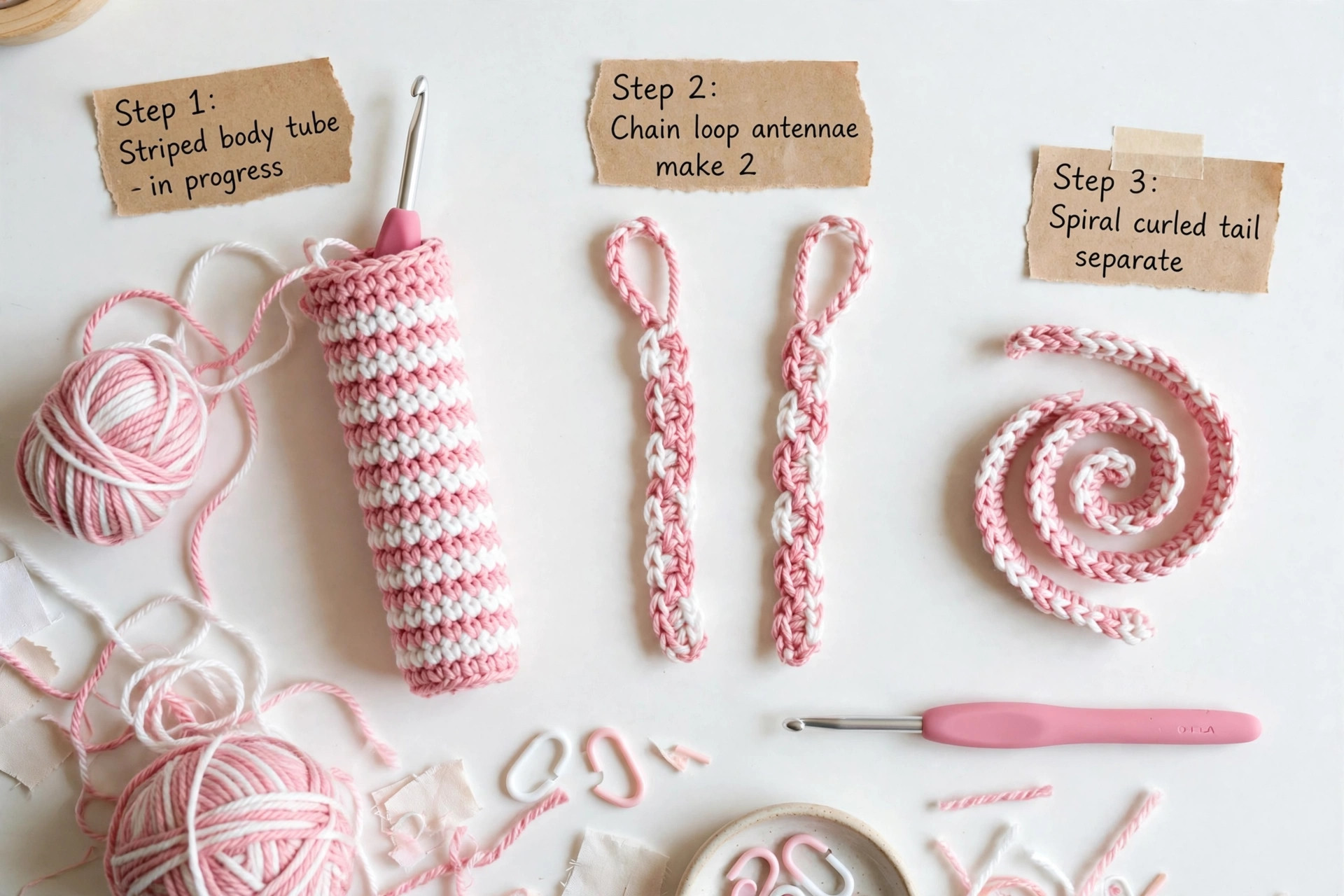
How the fidget worm is built: The body is a simple tube worked in the round, alternating plain rounds with bobble rounds for the sensory bumps. The head is shaped with a few increase and decrease rounds, the antennae are chain loops, and the tail is a tight spiral curl. Everything is stuffed lightly so the worm stays squishy rather than firm.
The fidget worm crochet pattern, US terms
Work in continuous (spiral) rounds: do not join at the end of each round, just keep going and mark the first stitch of each round. Change colors whenever you like for stripes: every 2 rounds makes a classic rainbow worm.
Body
Rnd 1: 6 sc in a magic ring. (6) Rnd 2: Inc in each st around. (12) Rnd 3: (Sc, inc) 6 times. (18) Rnds 4 to 5: Sc in each st around. (18) Rnd 6 (bobble rnd): (Bobble, sc in next 2 sts) 6 times. (18: 6 bobbles, 12 sc) Rnds 7 to 8: Sc in each st around. (18) Rnd 9 (bobble rnd): (Sc in next 2 sts, bobble) 6 times. (18) Rnds 10 to 11: Sc in each st around. (18) Rnd 12 (bobble rnd): Rep Rnd 6. (18) Rnds 13 to 14: Sc in each st around. (18)
You should now have a tube about 3 inches long with three rings of bobbles. The bobbles should all pop out on the same side (the right side). If any bobble sank to the inside, push it through with your finger.
Head
Rnd 15: (Sc in next 2 sts, inc) 6 times. (24) Rnd 16: Sc in each st around. (24) Rnd 17: (Sc in next 2 sts, dec) 6 times. (18) Rnd 18: (Sc, dec) 6 times. (12)
Stuff the body and head lightly now: firm enough to hold the shape, soft enough to squish. Overstuffing kills the fidget factor, so use less than you think.
Rnd 19: Dec 6 times. (6) Fasten off, leaving a long tail. Thread the tail through the front loops of the remaining 6 sts, pull tight to close, and weave in the end.
Antennae (make 2)
Ch 12. Sl st in the 2nd ch from the hook and in each ch across to make a slim cord. Fasten off, leaving a long tail. Fold the cord into a loop and sew the ends together, then sew the loop to the top of the head. Rep for the second antenna, spacing them about half an inch apart.
Curly tail
Ch 25. Work 2 hdc in each ch across: the extra stitches force the strip to spiral into a tight curl. Fasten off, leaving a long tail, and sew the tail end to the back of the body. Give the curl a little twirl around your finger to set the spiral.
Face
Attach the safety eyes (or embroider them) on Rnd 16, about 6 sts apart. Embroider a tiny smile with black yarn if you like: two or three small stitches are plenty. The face is what turns a sensory toy into a character kids get attached to, so do not skip it.
Bonus 1: sensory textured ball
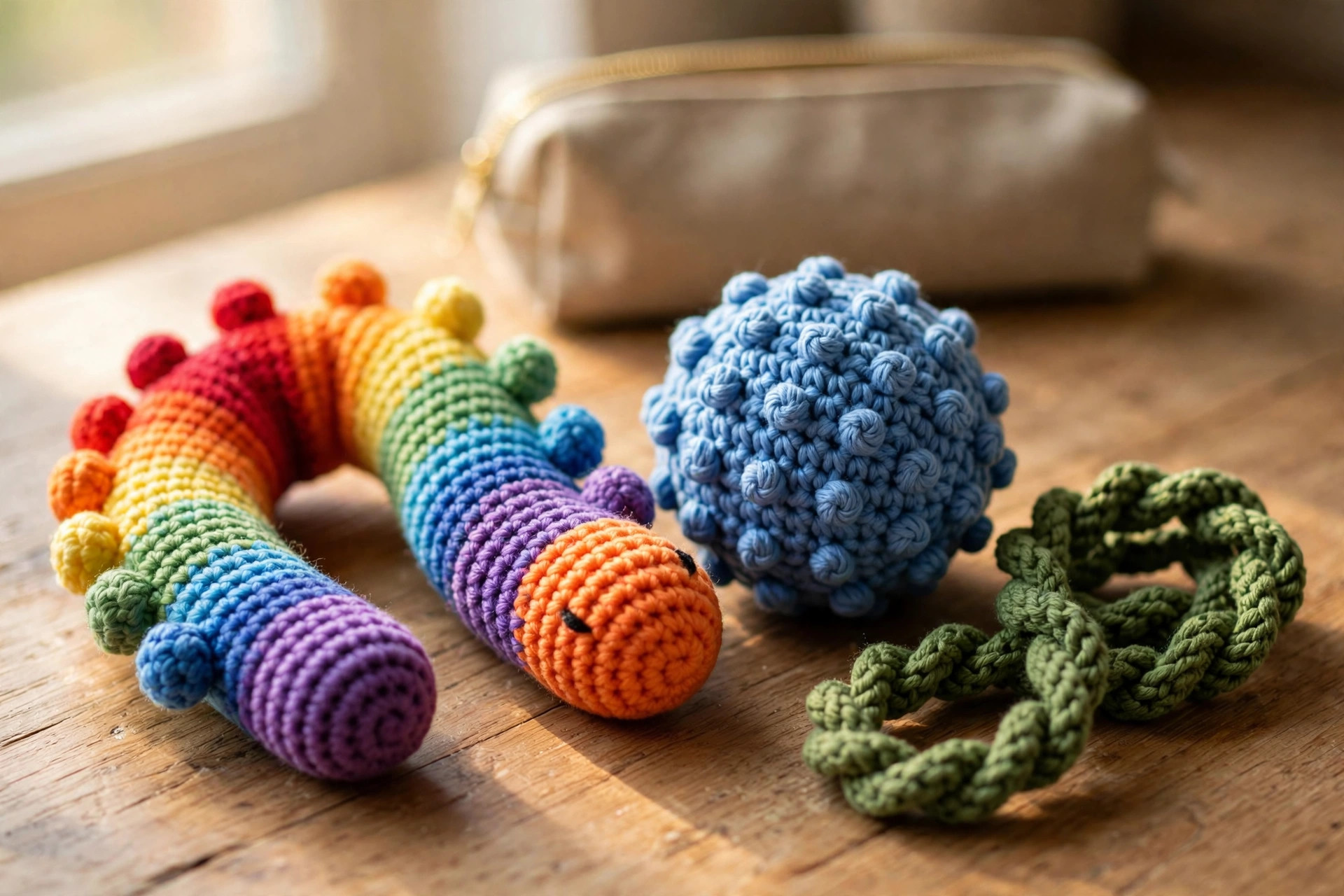
This little ball is all about texture contrast: smooth, bumpy, and ridged bands that fingers can explore.
Rnd 1: 6 sc in a magic ring. (6) Rnd 2: Inc in each st around. (12) Rnd 3: (Sc, inc) 6 times. (18) Rnd 4: (Sc in next 2 sts, inc) 6 times. (24) Rnd 5 (bobble band): (Bobble, sc in next 3 sts) 6 times. (24) Rnd 6: Sc in each st around. (24) Rnd 7 (ridge band): Hdc BLO in each st around. (24) Rnd 8: Sc in each st around. (24) Rnd 9 (bobble band): (Sc in next 3 sts, bobble) 6 times. (24) Rnd 10: Sc in each st around. (24) Rnd 11: (Sc in next 2 sts, dec) 6 times. (18) Rnd 12: (Sc, dec) 6 times. (12) Stuff lightly. Rnd 13: Dec 6 times. (6) Fasten off and close like the worm head. Weave in the end.
Roll the finished ball between your palms to even out the stuffing. It should feel like a stress ball with opinions.
Bonus 2: pull and twist fidget cord
This one is for the pullers and twisters: a sturdy cord with knots to pick at and slide.
Ch 60. Hdc in the 2nd ch from the hook and in each ch across. (59 hdc) Row 2: Ch 1, turn. Working BLO, hdc in each st across. Row 3: Ch 1, turn. Hdc in each st across (through both loops this time). Fasten off, leaving a long tail.
Tie an overhand knot in each end of the cord, then tie 2 more knots spaced evenly along it. Pull each knot tight and trim the tails close. The knots give restless fingers something to worry at, and the ridged texture from the BLO row adds grip.
Safety note: this cord is long enough to be a strangulation hazard for babies and toddlers. Keep it away from children under 3, and supervise young kids with all of these fidgets.
Finishing and assembly
Weave in every end securely: fidget toys get handled hard, and a loose end will work itself out within a week. Give each piece a good squeeze test. The worm's antennae loops should be sewn on firmly enough to survive being pulled, and the tail curl should bounce back when stretched gently.
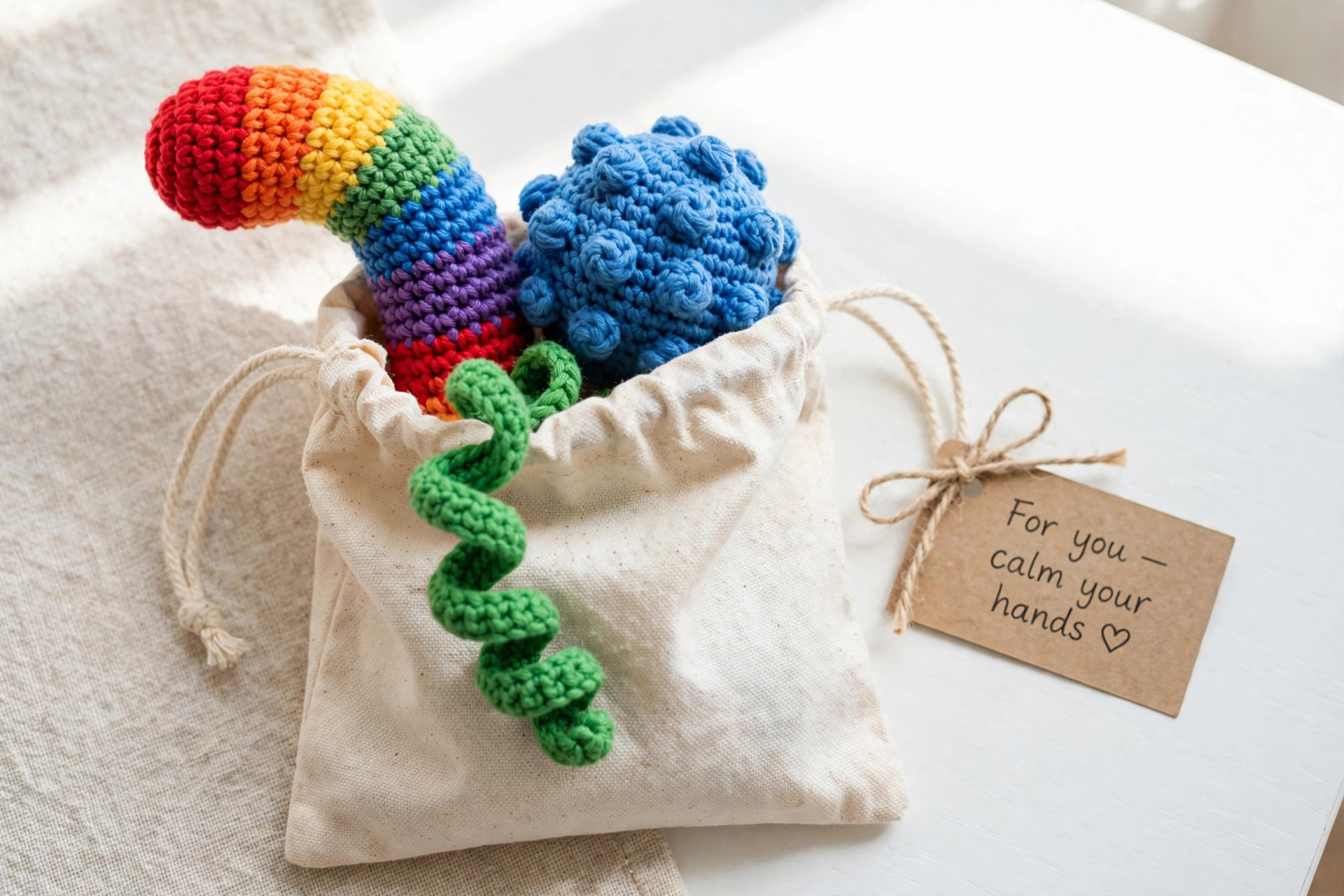
If you are making a set as a gift, present the three fidgets in a small drawstring pouch or zip bag with a handwritten tag. A set in school colors makes a great teacher gift, and a rainbow set in a pencil case is a perfect stocking stuffer.
Tips for the best fidget feel
- Understuff, do not overstuff. A fidget should squish. If the worm feels like a tennis ball, pull out half the stuffing and try again.
- Contrast the textures. Alternate smooth rounds with bobble rounds rather than bobbling every round: the contrast between bumpy and smooth is what keeps fingers interested.
- Keep it silent. That is the whole selling point over plastic fidgets. Avoid adding bells, crinkle plastic, or rattles if the toy is meant for classrooms.
- Make them washable. Kids take fidgets everywhere, including places you do not want to think about. Machine washable acrylic means the toy can go through the laundry and come back good as new.
- Size for the hand. These patterns fit an adult hand comfortably. For small children, work the worm with one fewer bobble round so it fits a little palm better.
Variations to try next
- Worry worm style: Skip the antennae and face, work the body in a single calming color, and add a tiny tag that says "hold me when you worry." Same pattern, different purpose.
- Glow in the dark: Work the bobble rounds in glow in the dark yarn for a bedtime fidget kids will actually keep on the nightstand.
- Keychain fidget: Sew a split ring to the worm's head so it clips to a backpack or pencil case and never gets lost in a desk.
- Emotion faces: Embroider different faces (happy, sleepy, silly) on a batch of worms in different colors for a feelings themed calm down kit.
- Pickle fidget: The crochet pickle pattern has a wonderfully squeezable shape that fidgeters adore: make one in green and add it to the set.
- Heart fidget: A flat free crochet heart pattern in textured stitches makes a sweet pocket fidget for someone who needs comfort more than distraction.
Troubleshooting tips
- My bobbles are sinking inside the work. You are not pushing them through to the right side as you make them. After each bobble, poke it outward with your finger or the blunt end of the hook before moving on.
- The worm is lumpy and uneven. Uneven stuffing is the usual cause. Pull the stuffing apart into thin layers and add it gradually, smoothing as you go, instead of shoving in one big clump.
- The antennae loops will not stay round. Starch is your friend: dab a little fabric stiffener or diluted white glue on the loops and let them dry around a pencil.
- The tail uncurls. You need 2 hdc in every chain, no exceptions: a single stitch per chain makes a straight strip. If it still relaxes, steam it lightly and twirl it around a pencil while it cools.
- The magic ring keeps loosening. Weave the starting tail through the ring twice and knot it before trimming. Fidget toys get squeezed, and a loose magic ring will open up over time.
Frequently asked questions
How long does it take to crochet a fidget toy? The worm takes about an hour, the sensory ball about 30 minutes, and the pull and twist cord about 20 minutes. All three make a great single evening project.
Are crocheted fidget toys good for ADHD? Many people with ADHD find that keeping their hands busy helps them focus, and occupational therapists often recommend tactile fidgets. A crocheted fidget is quiet, portable, and discreet. It is not a medical treatment, but as a focus aid it works well for lots of people.
What is the best yarn for fidget toys? Smooth DK or worsted weight acrylic in bright colors. It needs to be machine washable, hold texture well, and survive heavy handling. Cotton works too but feels less squishy.
Can I sell fidget toys made from this pattern? Yes. This is an original design, and you may sell finished toys made from it. Please credit Little Loop Finds as the pattern designer in your listing. The pattern text itself may not be redistributed or republished.
Are these safe for toddlers? The worm and ball are safe for toddlers if you embroider the eyes instead of using safety eyes and supervise play. The pull and twist cord is not safe for children under 3 because of its length. When in doubt, embroider everything and skip small parts.
How do I wash crocheted fidget toys? Machine wash cold on gentle and air dry, or toss them in a mesh laundry bag with a normal load. They bounce back well. Do not use fabric softener on toys meant for sensory use: it coats the fibers and dulls the texture.
More free patterns to try
If the fidget worm was fun, the mini octopus crochet pattern is the natural next make: those tentacles are prime fidgeting material. The gummy bear crochet pattern gives you another squishy desk buddy, and the mini amigurumi patterns roundup has dozens of quick pocket sized projects. For maximum squeezability, do not miss the crochet pickle pattern.