Temperature Blanket Crochet Pattern (Free Year-Long CAL)
Crochet a temperature blanket, one row a day for a whole year, and watch the weather turn into stripes of color.

Patterns · Crochet
- Finished size
- 60 in wide, 72 in long
- Making time
- One row a day, all year
- Hook
- US I-9 (5.5 mm)
- Set
- 365 rows, chart, border
- Skill
- Intermediate
In this post
- Key Takeaways
- Table of Contents
- Why You Will Love This Temperature Blanket
- Finished Size, Skill Level, and Time
- Materials You Need
- Abbreviations (US Terms)
- Gauge and Sizing Notes
- Part 1: The Plan and the Color Chart
- Part 2: The Daily Rows
- Part 3: The Border and Finishing
- Variations: Colors, Sizes, and Stitch Choices
- Troubleshooting Temperature Blankets That Fall Behind
- Care Instructions
- Frequently Asked Questions
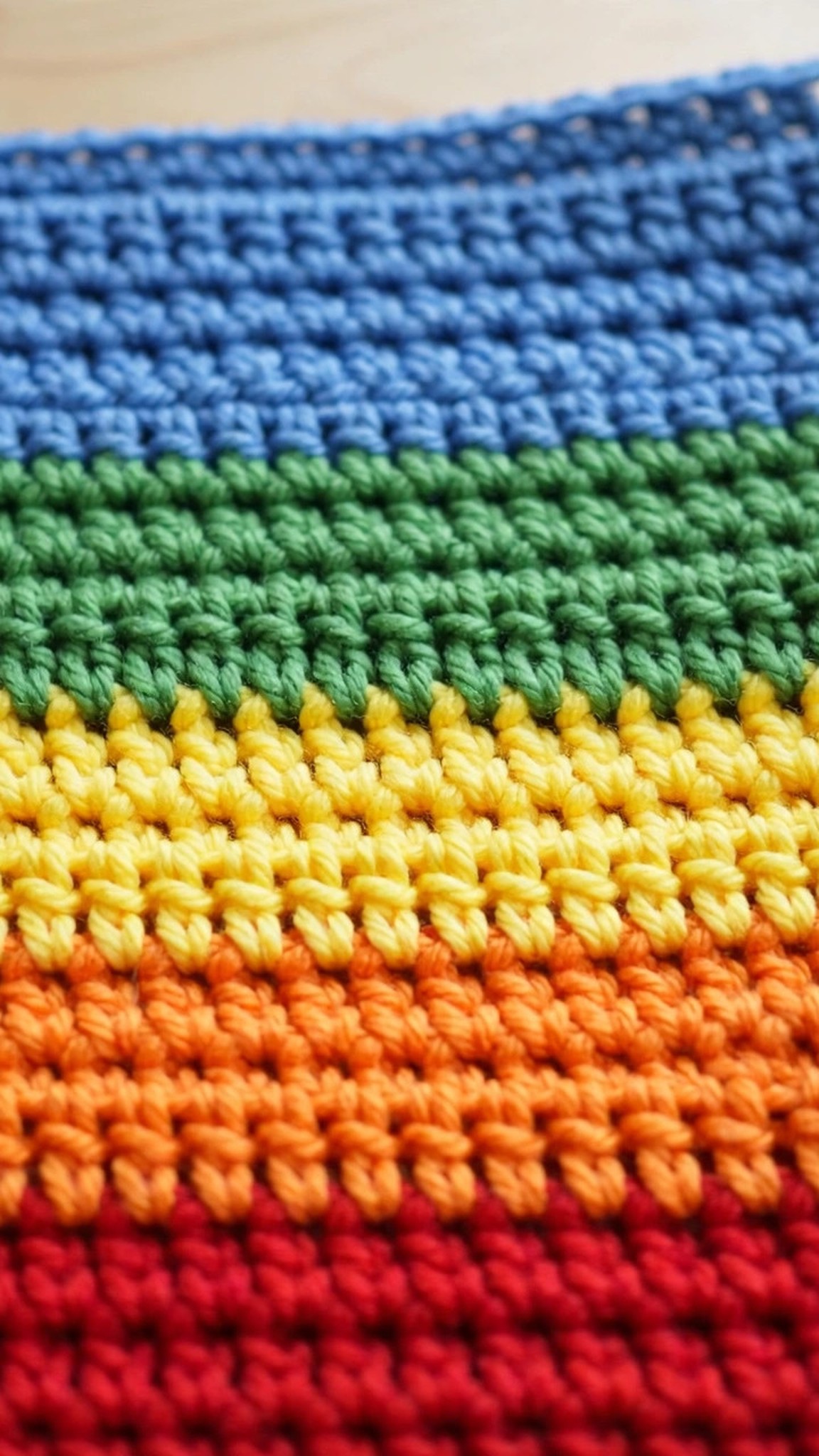
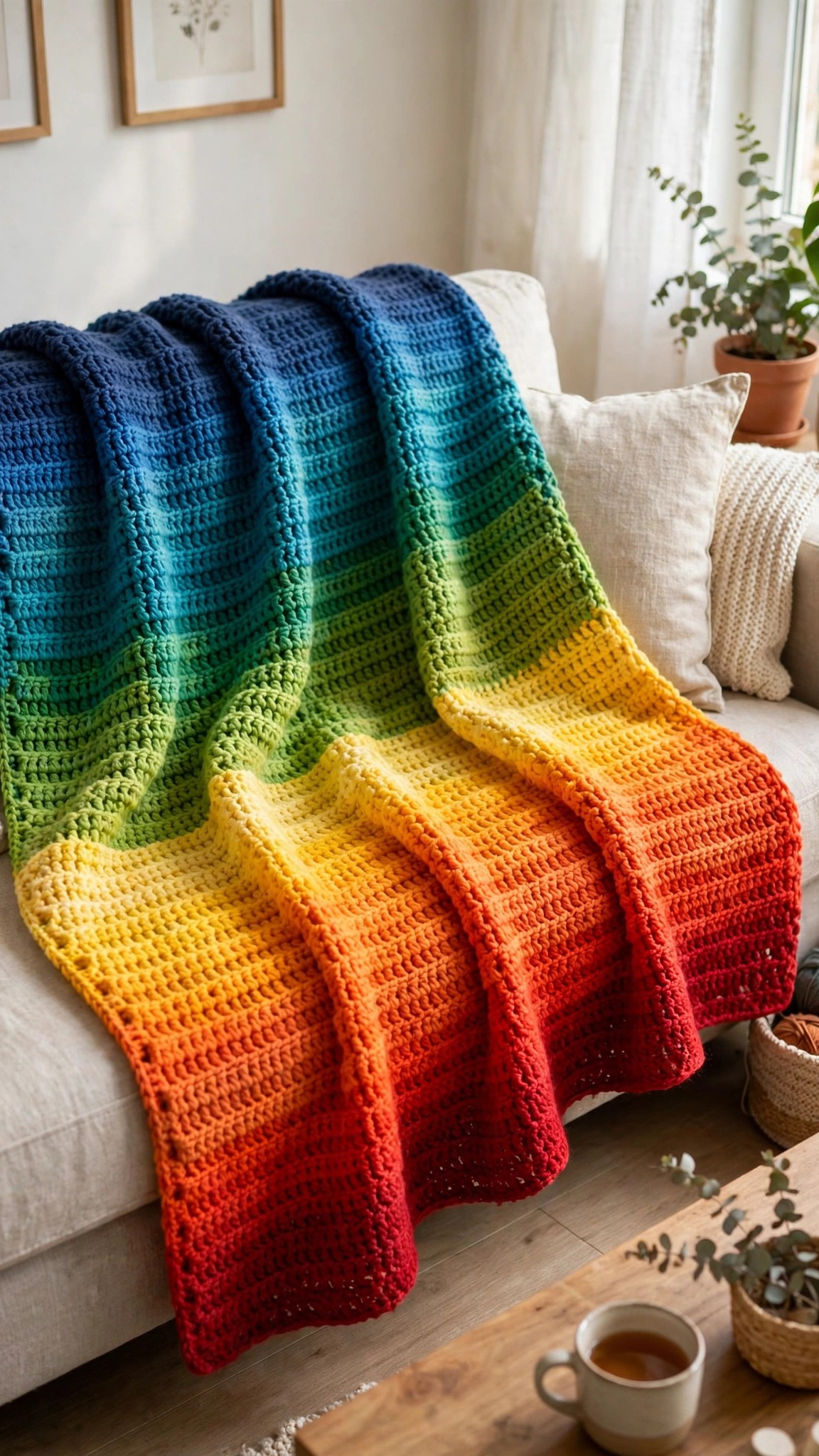
A temperature blanket is a year of weather turned into a blanket, one row of crochet for every day of the year. Each row takes its color from that day's temperature, so a cold January shows up in deep blues and a hot July in reds and oranges. This free temperature blanket crochet pattern gives you the full year-long CAL, with a color chart, a planning guide, and a simple stitch that keeps the blanket even all year.
This is an original Little Loop Finds design, written in US terms and completely free. The blanket is worked in single crochet rows, one row per day, with a color change whenever the temperature moves into a new range, and a neutral divider row between the months. If you can single crochet and change colors, you can make this blanket.
A quick note on scope: this post is about one specific project, a year-long temperature blanket worked in single crochet rows, one row per day, with a color chart based on daily high temperatures. It is not a temperature snake or a granny square blanket. If you like the idea of tracking temperatures in a smaller project, our temperature snake crochet pattern free is a fun year-long tracker in a smaller size.
Key Takeaways
- Free original pattern: this temperature blanket crochet pattern is a Little Loop Finds original year-long CAL, written in US terms, and completely free.
- One row, one day: 365 rows of single crochet, one for each day of the year, with the color set by that day's high temperature.
- A color for every temperature: a 10 color chart from deep blue for freezing days to deep red for the hottest days, plus a neutral divider between months.
- Beginner friendly, year-long commitment: single crochet only, with color changes and a simple border, so the challenge is keeping up.
- A keepsake of your year: the finished blanket is about 60 inches wide and 72 inches long, a true record of the weather where you live.
Table of Contents
- Why You Will Love This Temperature Blanket
- Finished Size, Skill Level, and Time
- Materials You Need
- Abbreviations (US Terms)
- Gauge and Sizing Notes
- Part 1: The Plan and the Color Chart
- Part 2: The Daily Rows
- Part 3: The Border and Finishing
- Variations: Colors, Sizes, and Stitch Choices
- Troubleshooting Temperature Blankets That Fall Behind
- Care Instructions
- Frequently Asked Questions
Why You Will Love This Temperature Blanket
A temperature blanket is the slowest and most satisfying kind of crochet. There is no rush to finish it, because the year itself sets the pace, and every evening you add one small row and watch the colors tell the story of the season. A cold snap shows up as a band of blue, and a heatwave glows orange.
A temperature blanket is also a wonderful way to keep a crochet habit going all year. One row takes about 15 minutes, so it fits into a lunch break or a quiet evening. It makes a beautiful gift for a new baby, a new home, or a wedding, because the blanket holds the weather of a year that mattered.
Finished Size, Skill Level, and Time
- Finished size: about 60 inches wide and 72 inches long after blocking, in worsted weight yarn, not counting the border. Notes cover a smaller 48 inch lap blanket and a larger 72 inch bed sized blanket.
- Skill level: Intermediate, not because the stitches are hard, but because a year-long project needs planning, steady tension, and a system for recording temperatures.
- Time: one row a day, about 15 minutes per row, for 365 days, plus about 4 hours for the border and finishing, 95 hours in total.
Materials You Need
| Item | What to get |
|---|---|
| Yarn, colors | Worsted weight (size 4) yarn in 10 temperature colors, about 150 to 350 yards of each, plus 300 yards of a neutral divider color |
| Hook | US I-9 (5.5 mm), or the size that gives you an even single crochet fabric |
| Notions | Tapestry needle, scissors, stitch markers, a notebook or a printed chart for daily temperatures |
| Optional | A zip bag or basket to keep the 10 yarn colors tidy and easy to reach |
Worsted weight yarn is the best choice for a temperature blanket because it works up quickly, the rows are thick enough to show the colors clearly, and the finished blanket is warm and soft. A smooth acrylic yarn works well, because it comes in many colors, it washes easily, and it is affordable in the 10 colors you need. Choose yarns from the same brand and line for all 10 colors, so the weight and feel stay the same across the whole blanket. Avoid fuzzy or textured yarns, because they hide the clean stripes. Pick a neutral divider color that goes with every temperature color, like cream, soft gray, or warm white.
Abbreviations (US Terms)
- ch = chain
- sl st = slip stitch
- sc = single crochet
- st(s) = stitch(es)
- rep = repeat
- RS = right side
- WS = wrong side
Gauge and Sizing Notes
Gauge for a temperature blanket is about keeping the rows even across a whole year, not about hitting an exact number. Work a swatch of 20 single crochet stitches and 20 rows, and measure it. At the pattern gauge, 20 stitches measure about 5 inches wide and 20 rows measure about 4.5 inches tall. If your swatch is wider than 5 inches, go down a hook size. If it is narrower, go up a hook size.
Your tension will change over the year, and that is normal, so check your width every month against the first month. If the blanket starts to narrow, you are working tighter, so relax your hands and check your stitch count. If it starts to widen, slow down and keep your stitches snug. The blanket should stay 60 inches wide from January to December.
Part 1: The Plan and the Color Chart
A temperature blanket starts before the first stitch, with a plan. Pick a start date, usually January 1, pick your city, and pick your 10 colors. Record the high temperature every day, and work the row for that day in the color for that range. A notebook, a printed chart, or a notes app all work, as long as you record the temperature on the day it happens.
The color chart
This chart uses daily high temperatures in Fahrenheit, with 10 colors from cold to hot. If your city is usually cold, shift the ranges down by 10 degrees. If your city is usually hot, shift them up by 10 degrees.
| Daily high | Color | Yarn to buy |
|---|---|---|
| Below 20F | Deep navy | 150 yards |
| 20 to 29F | Teal blue | 200 yards |
| 30 to 39F | Sky blue | 250 yards |
| 40 to 49F | Leaf green | 250 yards |
| 50 to 59F | Yellow green | 250 yards |
| 60 to 69F | Sunny yellow | 300 yards |
| 70 to 79F | Warm orange | 350 yards |
| 80 to 89F | Coral | 300 yards |
| 90 to 99F | Bright red | 250 yards |
| 100F and above | Deep burgundy | 150 yards |
Buy the full amount of each color at the start, all in the same dye lot if you can. The middle colors get used the most in most places, so buy a little extra of the 60 to 79 degree colors. Keep the yarn in a basket with a label on each ball, so you can grab the right color in seconds.
Recording your temperatures
Check the high temperature each evening, and write it in your notebook next to the date. A weather app or website with daily history works well, and many sites let you look back a few days. Write the temperature and the color, not just the number, so you never have to guess later. For example, write "Jan 3, 41F, leaf green". At the end of each month, count how many rows you worked in each color, and check it against the yarn you have left.
Part 2: The Daily Rows
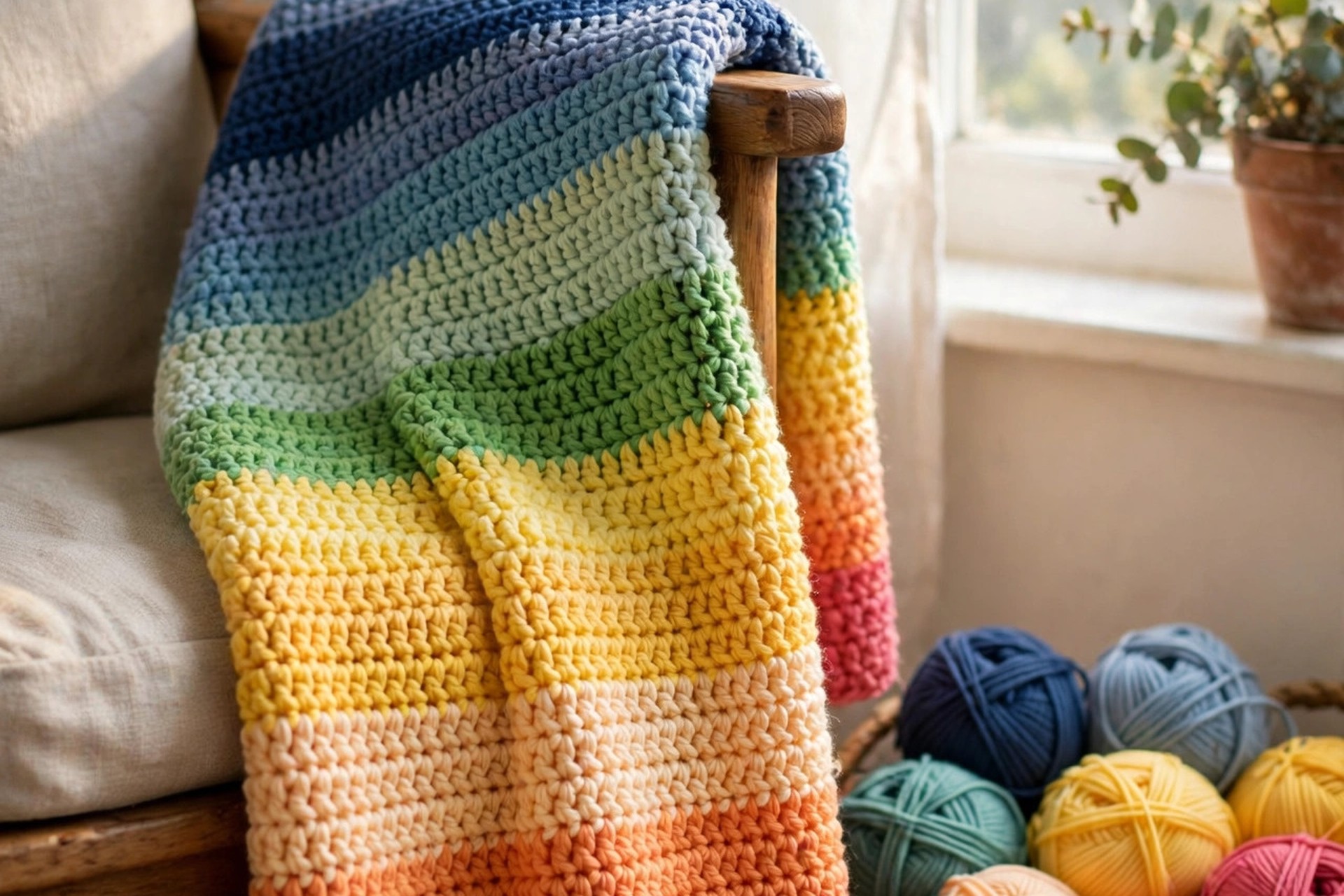
The blanket is worked in rows of single crochet, one row per day, from January 1 to December 31. Each row has the same stitch count, and you change color at the start of a row whenever the temperature moves into a new range. The stripes look the same on both sides of the blanket.
The foundation row
With your January 1 color, chain 200. Work a single crochet in the 2nd chain from the hook and in each chain across. Turn. (199 sc)
Count the stitches before you go on. Every row of the blanket has 199 single crochet stitches, and a missed stitch at the start will make the whole blanket narrow. Place a stitch marker in the first and last stitch of the row, and move them up as you work.
Working a daily row
Each day, look up the high temperature, find its color, and work one row in that color. If the color is the same as yesterday, just keep going with the same yarn. If the color changes, finish the last stitch of the old row with the new color, which keeps the edge clean.
- Daily row: Ch 1 (does not count as a st), sc in each st across. Turn. (199 sc)
Work the row loosely enough that the fabric stays soft, and keep your tension even. A row takes about 15 minutes, and the best habit is to work it at the same time every day. If you miss a day, do not panic. Write the temperature in your notebook and work two rows the next day.
The monthly divider rows
At the start of each month, from February through December, work one row in your neutral divider color before the month's first daily row. The divider rows make the months easy to see, and they give you a built-in place to count your rows: 28 or 29 rows in February, 30 or 31 rows in the other months.
In a leap year, February has 29 days, so the blanket has 366 daily rows plus 11 divider rows, about 2 inches longer than a normal year. If you start your blanket on a date other than January 1, start the divider rows at the start of each new month, and work the border when you reach the date one year after you started.
Part 3: The Border and Finishing
The border frames the year of stripes and gives the blanket a tidy edge. Work it after the last row of December, with the right side facing you, in your neutral divider color. The border is three rounds of single crochet, worked around all four sides, with a simple corner treatment that keeps the corners square.
- Border round 1: With the neutral color, join with a sl st in any corner, ch 1, sc in each st across the top edge, working 3 sc in each corner st, sc evenly down the side edge, about 1 sc per row, and continue around all four sides. Join with a sl st to the first sc.
- Border round 2: Ch 1, sc in each st around, working 3 sc in the center st of each corner. Join with a sl st to the first sc.
- Border round 3: Ch 1, sc in each st around, working 3 sc in the center st of each corner. Join with a sl st to the first sc. Fasten off.
Count the stitches on the two long sides as you work the first round, so the sides stay even. Weave in all ends with a tapestry needle, working each tail through the back of several stitches in the same color and trimming it close. There are many ends in a temperature blanket, one for every color change, so set aside an hour or two, and do it in small batches during the year instead of leaving it all for December. Soak the blanket in cool water with a little mild soap for 20 minutes, press out the water in towels, and lay it flat to dry, patting it back to its finished size.
Variations: Colors, Sizes, and Stitch Choices
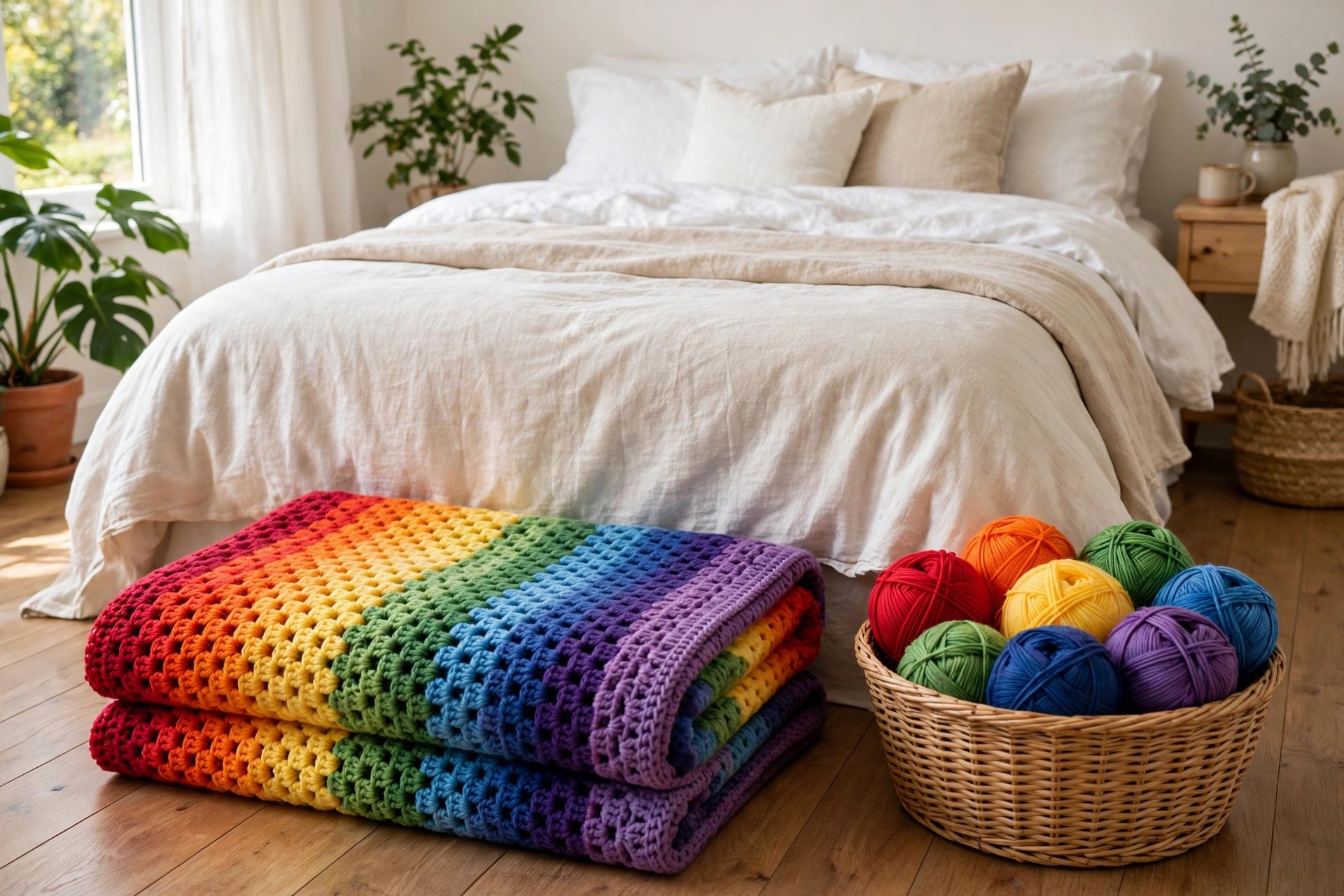
- Cool climate blanket: shift the chart down by 10 degrees, so below 10F is deep navy and 90F and above is deep burgundy, to use all 10 colors in a cold place. Our christmas blanket crochet pattern is another seasonal blanket that uses a simple stripe plan.
- Warm climate blanket: shift the chart up by 10 degrees, so below 30F is deep navy and 110F and above is deep burgundy, to use all 10 colors in a hot place.
- Lap blanket: chain 160 instead of 200, and work the same 365 rows, for a blanket about 48 inches wide and 72 inches long, a good size for a chair or a car. See our chunky yarn crochet blanket patterns for more lap sized ideas.
- Moss stitch blanket: work the daily rows in moss stitch, alternating single crochet and chain 1, instead of plain single crochet, for a lighter fabric with a woven look.
- Granny square temperature blanket: make one granny square per week instead of one row per day, using the color for the average temperature of that week, for a blanket of 52 squares. Our easy granny square pattern is a good square for this version.
Troubleshooting Temperature Blankets That Fall Behind
- I missed a whole week of rows. Do not try to catch up in one sitting. Work 3 rows a day for a few days, or 2 rows a day for a week, until you are caught up. Your notebook has the temperatures, so the rows will be right.
- My blanket is getting wider or narrower. Your tension changed, or you lost a stitch at an edge. Count the stitches across the last row against the 199 you started with, and use the stitch markers at both edges until the count is steady again.
- I ran out of a color in the middle of the year. Check the monthly counts in your notebook, and order more of that color in the same dye lot. If the dye lot is different, use the new ball on a row where the color changes.
- My stripes look messy where the colors change. Finish the last stitch of the old row with the new color, so the new color starts cleanly at the edge and the stripes stay straight.
- I forgot to record the temperatures for a few days. Look up the daily history for your city, which usually keeps a week or more of past highs. Write them in your notebook right away, and work the missing rows in order.
Care Instructions
Hand wash a crochet temperature blanket gently in cool water with a little mild soap, squeeze gently, and roll it in clean towels to press out the water. Lay it flat to dry, patting it back to its finished size, and let it dry fully before you fold it. Do not put a temperature blanket in the dryer on high heat, because the colors can fade and the blanket can shrink. If the yarn label says machine washable, use a gentle cycle in cold water, and lay the blanket flat to dry. Fold the blanket loosely for storage, and keep it out of direct sunlight.
Frequently Asked Questions
How do I start a temperature blanket?
Pick a start date, usually January 1, pick your city, and pick your 10 colors from the chart. Record the high temperature every day, and work one row in the color for that temperature. The first row is the foundation row in the January 1 color.
What temperature should I use, the high or the low?
Use the daily high temperature, because it gives the widest spread of colors across the year and it is easy to find on any weather app or website. Some crocheters use the daily low or the average, and both work, but pick one and use it all year.
How many rows are in a temperature blanket?
365 daily rows in a normal year, plus 11 neutral divider rows, one at the start of each month. In a leap year, there are 366 daily rows. Each row takes about 15 minutes, so the total is about 95 hours spread across the year.
What is the best stitch for a temperature blanket?
Single crochet is the best stitch, because the rows stay short and even, the stripes are clean, and the blanket does not grow too long. Taller stitches like double crochet would make the blanket over 100 inches long. Our crochet coaster pattern uses the same tidy single crochet fabric in a small size.
Can I start a temperature blanket in the middle of the year?
Yes, start on the first of any month, and work one row a day for a full year from that date. You can also start in January using last year's temperatures from a weather history site, and finish the whole blanket in a few months of steady stitching.
Can I sell blankets made from this pattern?
Yes, you may sell finished blankets made from this free pattern, with credit to Little Loop Finds. Please do not sell or republish the pattern text itself. Temperature blankets sell well as custom orders, because each one is a record of a specific year and place.
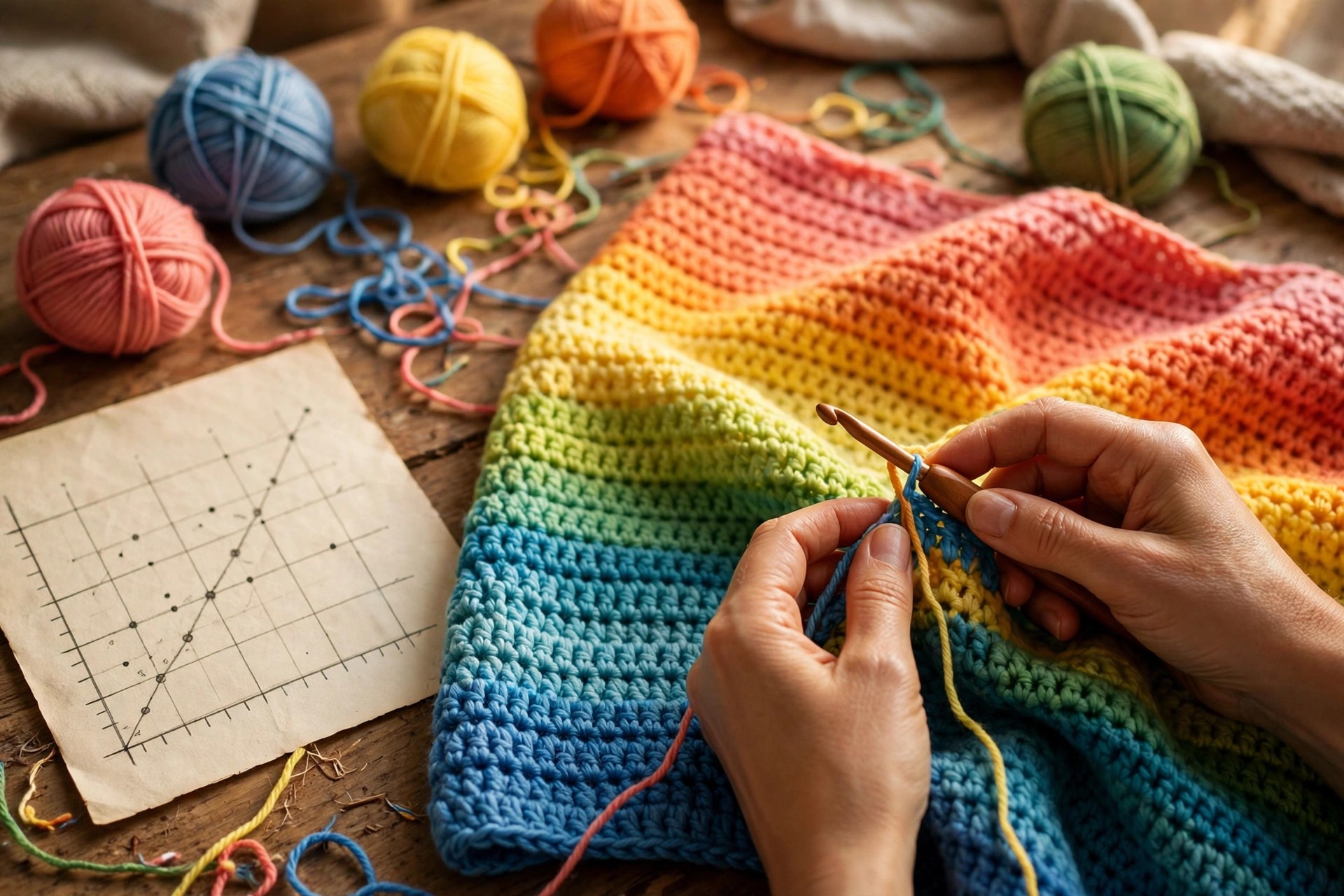
Happy stitching, and may your blanket tell the story of your year, one row at a time.