How to Host the Perfect Friendsgiving
How to host the perfect Friendsgiving: pick a date, plan a potluck menu without duplicates, set a table worth photographing, and keep the evening moving with games, music and good drinks.

Guides · Thanksgiving
- Guests
- 8–12 friends
- Plan ahead
- 2–3 weeks
- Party length
- About 4 hours
- Difficulty
- Easy
- Skill
- Easy
In this post
Friendsgiving is Thanksgiving without the family politics: the same feast, the same gratitude, but with the people you chose. It is usually a potluck, usually a little chaotic, and almost always the best meal of November. The secret to hosting one well is not a perfect turkey or a magazine table. It is a plan that shares the work, a menu that does not depend on one oven, and a house that feels warm the moment people walk in.
This guide covers the whole thing: picking a date, sending invites that actually get replies, planning a potluck menu without ending up with six green bean casseroles, setting a table worth photographing, and keeping the evening moving with games, music and good drinks. It also includes a day-of timeline and a make-ahead checklist, so the host gets to enjoy the party too.
Key Takeaways
- Pick a date two to three weeks out: the weekend before Thanksgiving works best, because most people travel on the holiday itself.
- Make it a potluck with assigned dishes: the host cooks the main and one side, and every guest brings one dish from a list, so nothing is duplicated.
- Plan the menu around one oven: the turkey takes the center, so choose sides that serve at room temperature or finish while it rests.
- Set the table the night before: the table is the centerpiece, and setting it early means the day is for cooking, not scrambling.
- Give the evening a shape: drinks and appetizers first, dinner second, dessert and games after, so nobody wonders what happens next.
- Send leftovers home: have containers ready, because a Friendsgiving with no leftovers to share is a missed opportunity.
Table of Contents
- Pick a Date and Send the Invites
- Plan the Menu Potluck Style
- Set a Table Worth Photographing
- Drinks and a Simple Bar
- Games and Activities
- Music and Atmosphere
- The Day-Of Timeline
- Make-Ahead Checklist
- Mistakes to Avoid
- Frequently Asked Questions
Pick a Date and Send the Invites
Friendsgiving works best on the weekend before Thanksgiving, usually the Saturday or Sunday. Most people travel on the holiday itself, and the weekend before is free for almost everyone. Pick the date two to three weeks ahead, because a group of friends needs more lead time than a family dinner: people have to check calendars, plan dishes and arrange rides.
Send the invite as a group message with three things in it: the date and time, the address, and the potluck list. A paper invite is lovely but slow, and a group chat lets people claim dishes in real time. Ask for replies within a week, and send one gentle reminder to the people who go quiet. Keep the guest list at eight to twelve: small enough to fit around one table, big enough to feel like a party. If the list grows past twelve, plan a second table rather than squeezing everyone around one.
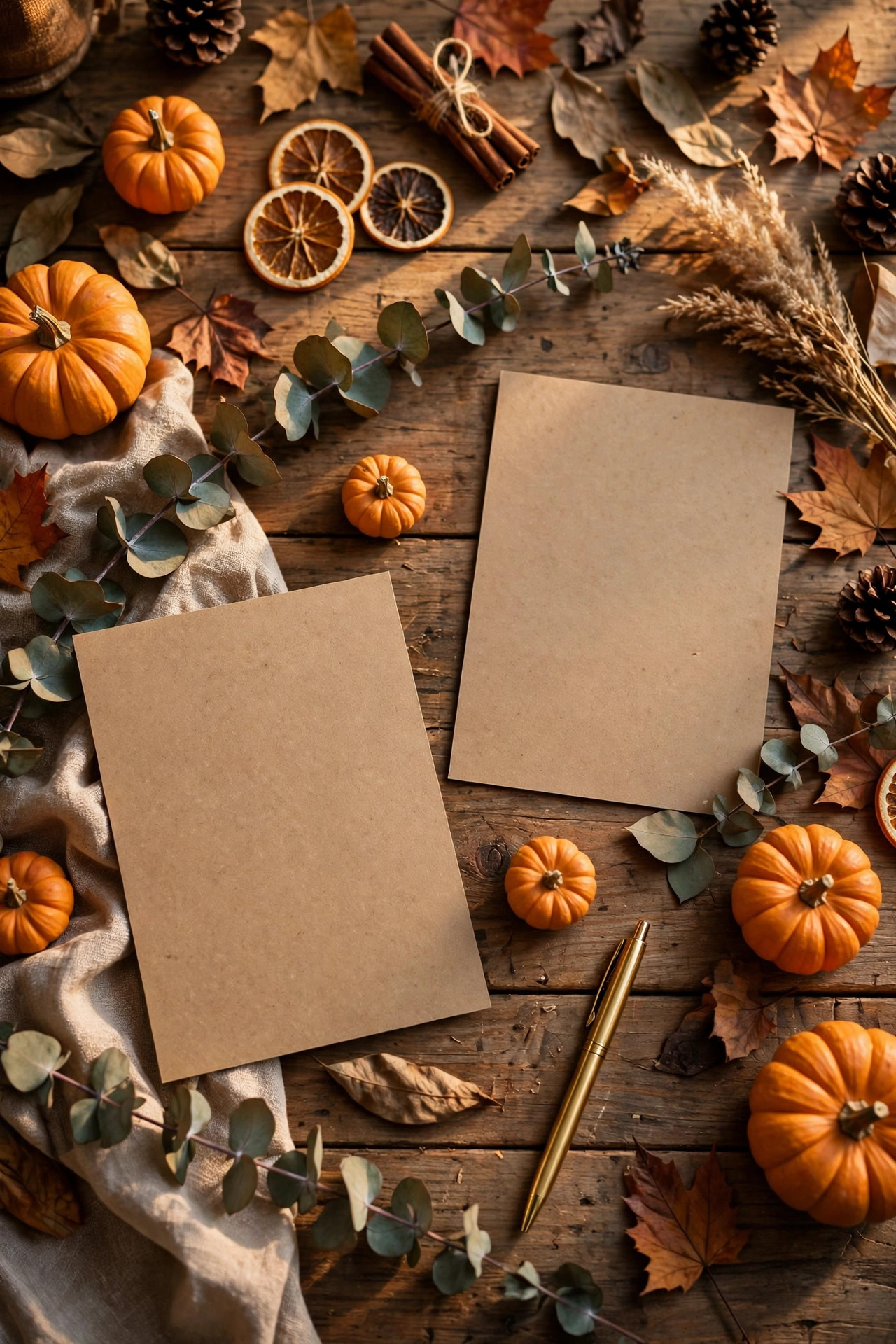
Be clear about the start time and what it means. A 5 PM start means appetizers at five and dinner at six, not dinner at five with guests arriving at six. Put the potluck list in the same message as the invite, so people sign up for a dish when they say yes instead of forgetting about it for two weeks.
Plan the Menu Potluck Style
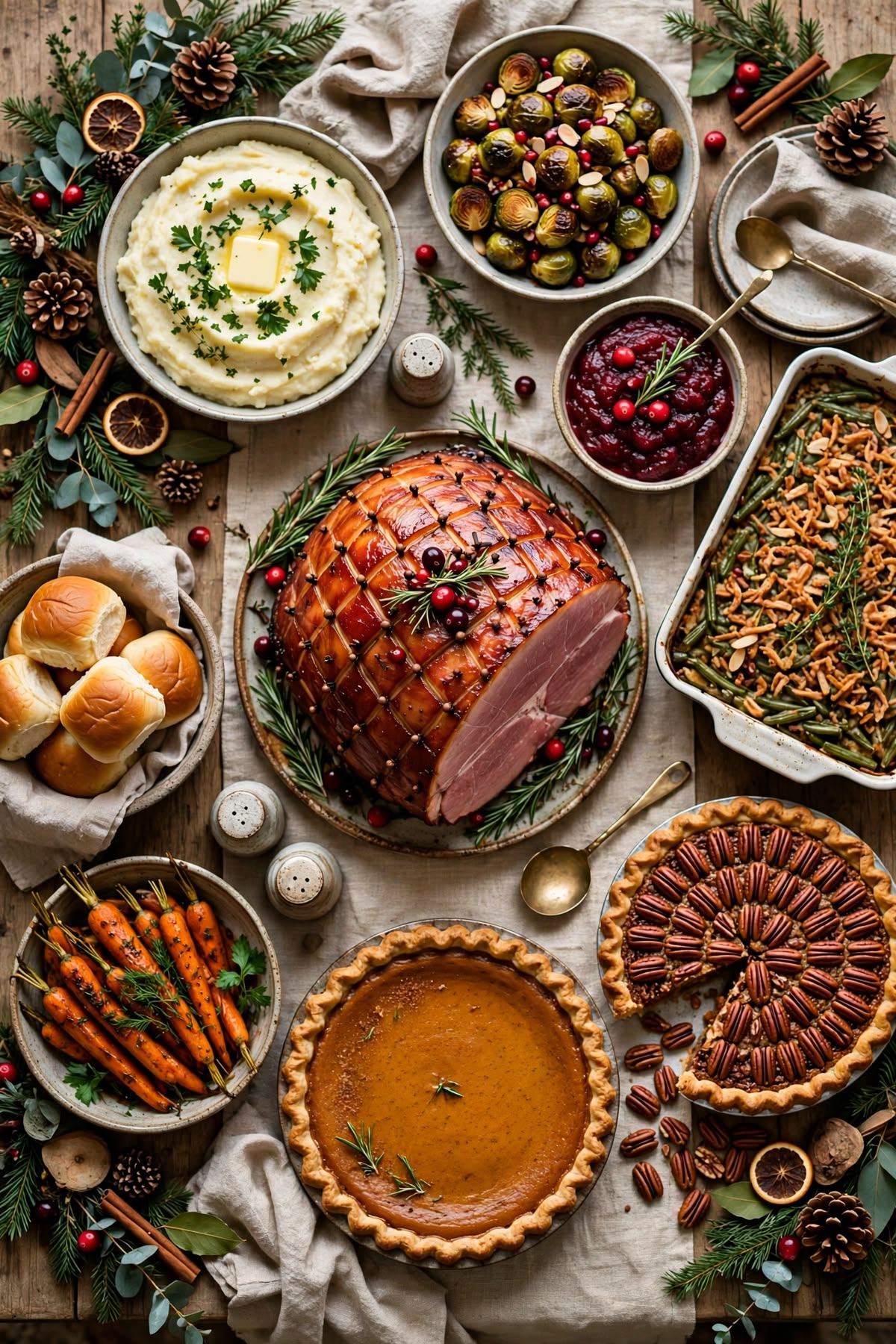
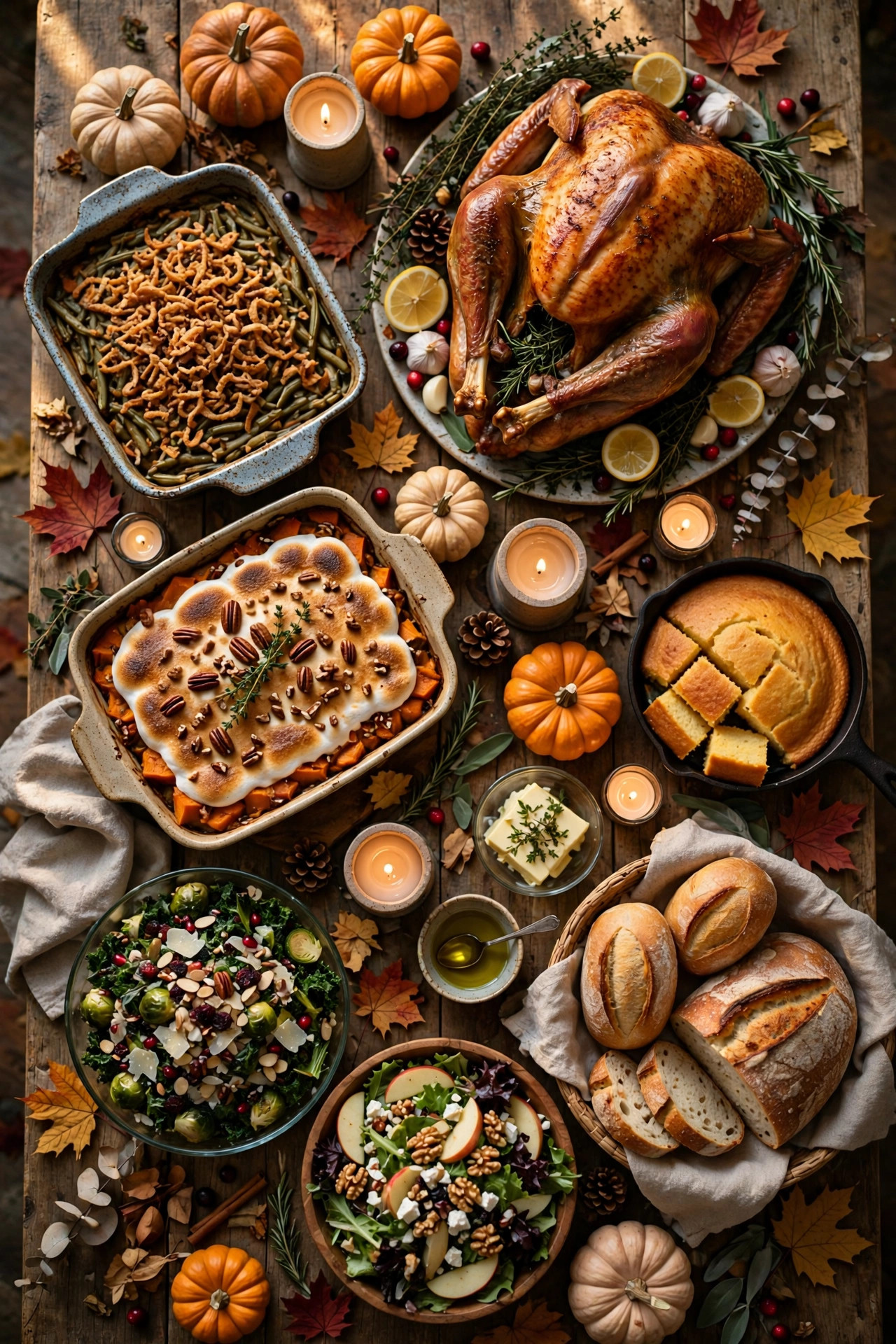
The potluck is what makes Friendsgiving possible. One person cannot cook a whole Thanksgiving dinner for twelve people, but twelve people can each cook one dish. The host takes the main, usually the turkey or a ham, plus one side and the drinks. Every guest brings one dish from a list the host writes, and nobody brings a dish that is not on the list.
Write the list with the whole meal in mind: one or two appetizers, the main, four or five sides, a bread, a salad, two desserts and a drink. If you need ideas, our 50 Thanksgiving food ideas covers every course, and a Thanksgiving charcuterie board is the easiest appetizer on the list. Assign the dishes that need the oven to the host, because the host's oven is the one that is already hot, and give guests the dishes that travel well: salads, cold appetizers, breads, pies and anything that serves at room temperature.
| Course | Who brings it | Travels well? |
|---|---|---|
| Appetizer | Guest | Yes, cold or room temperature |
| Main (turkey or ham) | Host | No, cooked at home |
| Mashed potatoes and gravy | Host | No, best fresh |
| Casseroles and stuffing | Guest | Yes, in the baking dish |
| Cranberry sauce | Guest | Yes, made ahead |
| Bread and rolls | Guest | Yes |
| Salad | Guest | Yes, dressing on the side |
| Dessert | Guest | Yes, pies travel well |
| Drinks | Host | Yes, plus ice |
Ask about dietary needs in the invite, not on the day. If someone is vegetarian, make sure at least one main and two sides work for them, and label the dishes at the table so nobody has to ask. A small card beside each dish with the name and the cook's name turns the buffet into a talking point and makes sure the cook gets the credit.
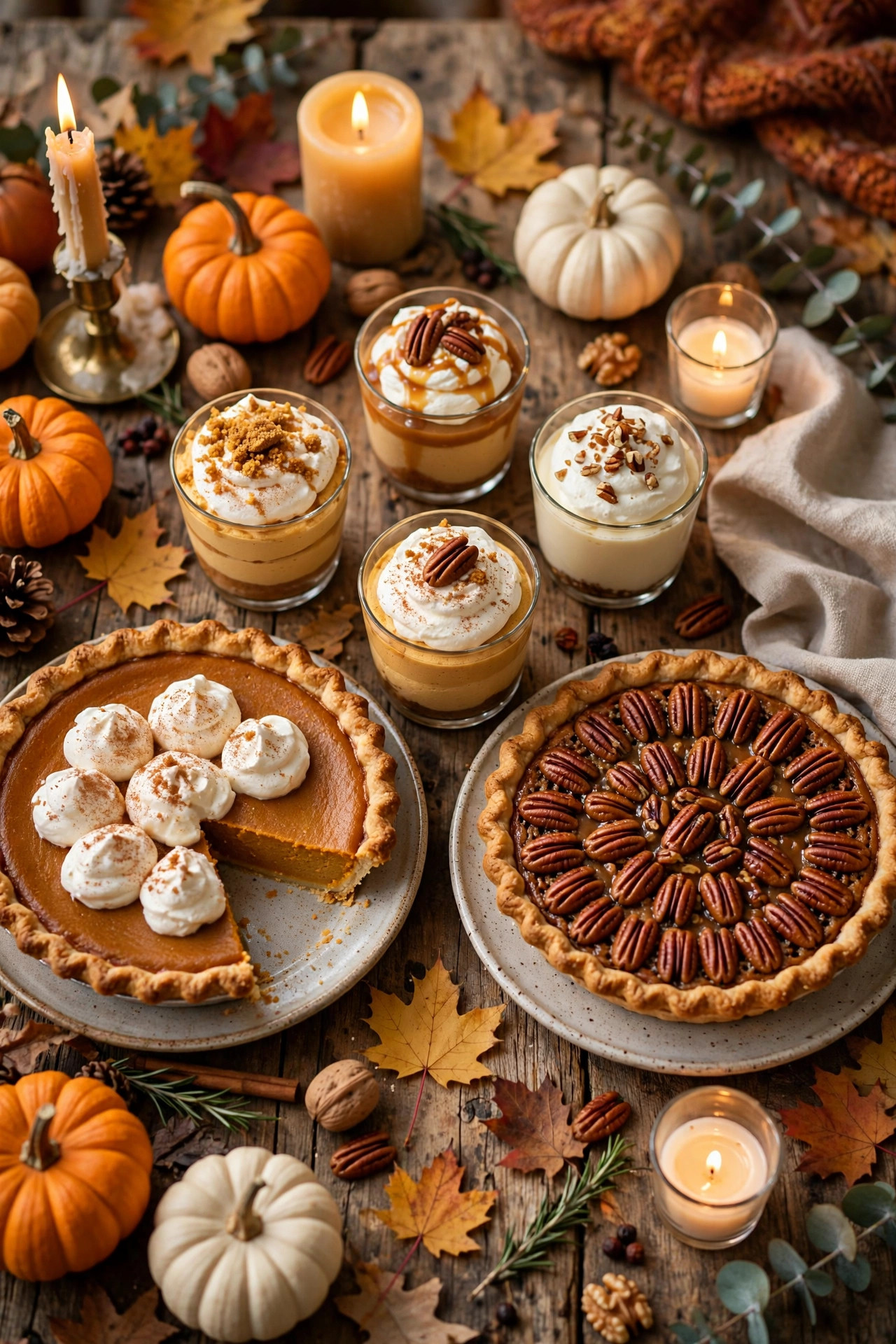
Dessert deserves its own note. Two pies are the classic split, and pumpkin is almost always one of them. Ask one guest for the pumpkin pie and another for a second dessert, and have whipped cream and coffee ready for when the plates clear.
Set a Table Worth Photographing
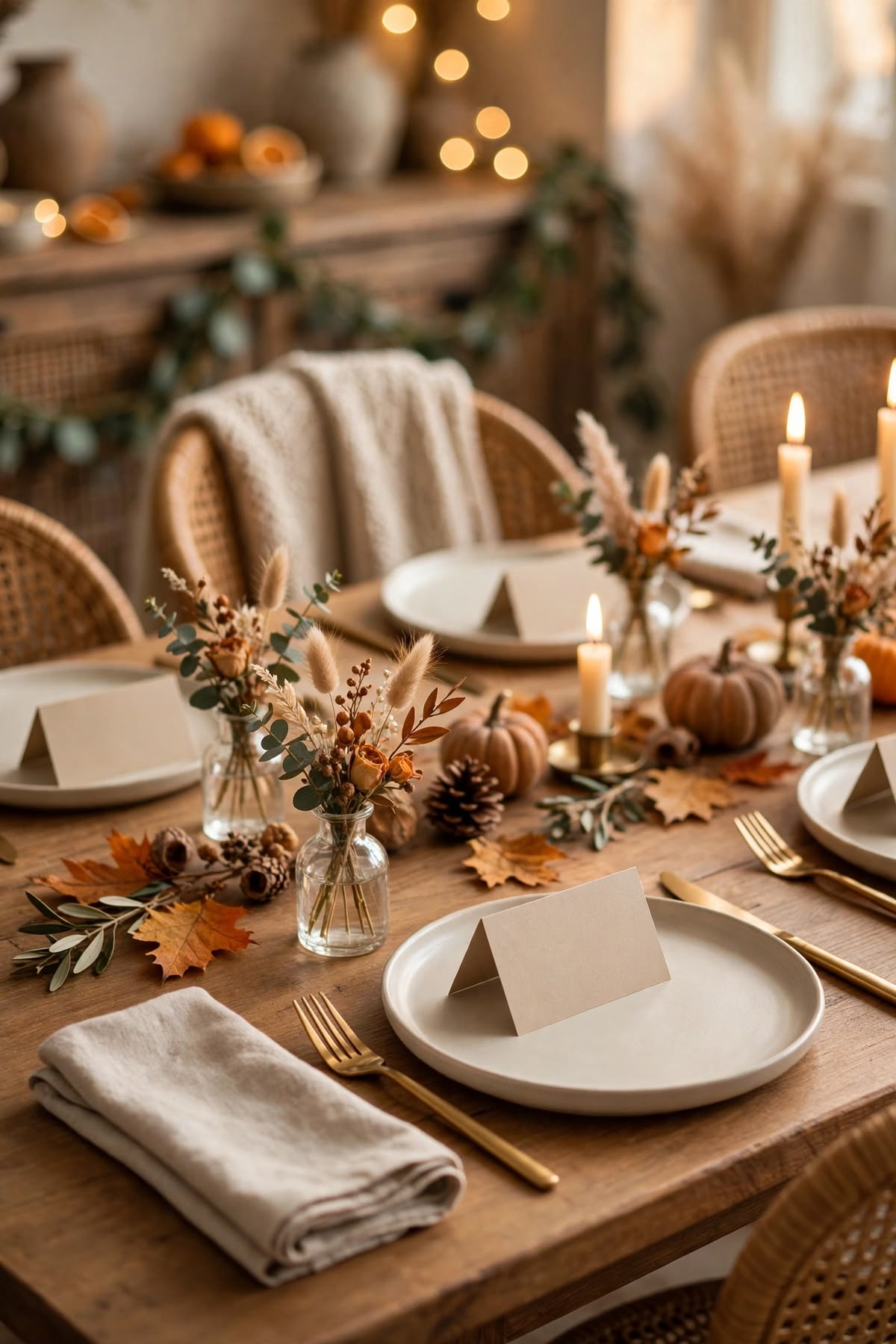
The table is the first thing guests see and the thing they photograph, so it is worth an hour the night before. Start with a tablecloth or a runner: a crochet table runner down the center of a wooden table looks handmade and warm without costing anything. Add crochet placemats at each seat if you have them, or simple linen napkins folded beside each plate.
Place cards are the smallest effort with the biggest payoff. A folded card with each guest's name, propped on the plate, makes people feel expected and solves the awkward question of where to sit. Scatter a few easy crochet pumpkins between the dishes, add candles in odd numbers, and tuck in a few fall leaves or dried eucalyptus. The centerpiece does not need to be tall: keep it low so people can see each other across the table.
Put a crochet coaster under every glass. Cold drinks sweat, and a ring of condensation on a wooden table is the one souvenir nobody wants from Friendsgiving. Set out serving spoons with every dish, small plates for appetizers, and a stack of extra napkins where guests can reach them without asking.
Drinks and a Simple Bar
Drinks are the last thing people plan and the first thing guests ask for, so set up a small bar away from the food table. A sideboard or a kitchen counter works: one alcoholic option, one festive non-alcoholic one, water, and glasses. Sparkling apple cider suits everyone and looks right in a wine glass with a cinnamon stick. A cranberry spritzer, cranberry juice with sparkling water and lime, gives non-drinkers something that matches the table. For wine drinkers, a light Pinot Noir or a dry Riesling pairs with almost everything on a Thanksgiving table.
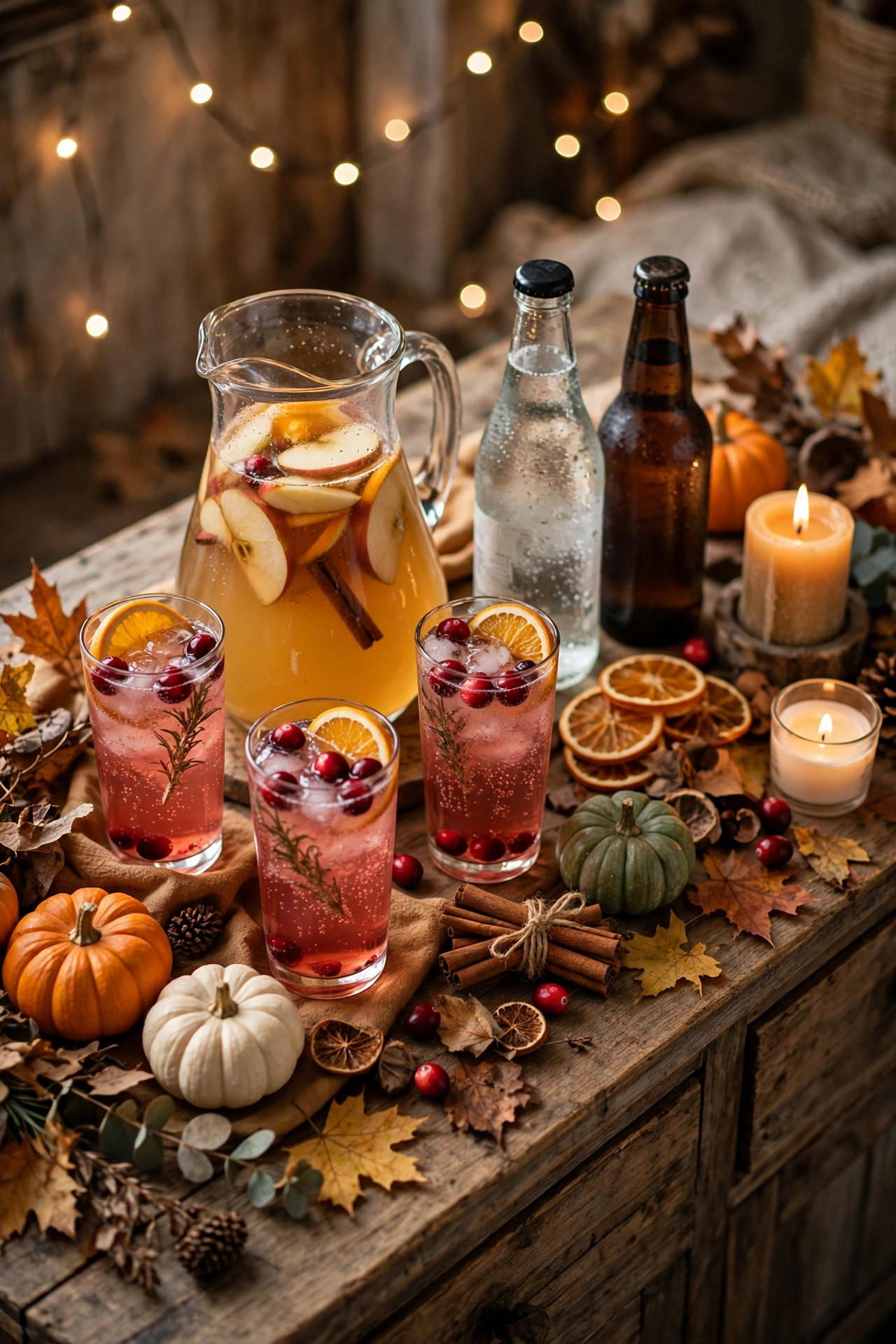
Make one big-batch drink rather than mixing cocktails all evening. A pitcher of apple cider sangria, made the night before, serves itself and tastes better for the overnight rest. Put the ice in a bucket beside the drinks, not in the drinks, so the last glass is as good as the first. And keep a pot of coffee ready for dessert: the evening stretches longer when there is coffee on the table.
Games and Activities
A Friendsgiving without a plan for after dinner drifts. People finish eating, the plates clear, and then everyone looks at their phones. Give the evening a second act. Board games are the easiest: a stack of three or four on the coffee table, from a quick card game to a longer strategy game, lets people choose their level of commitment. A trivia round about the friend group, with questions only this group could answer, gets louder and funnier than any store-bought game.
A gratitude round is the one tradition worth keeping from the holiday itself. Before dessert, go around the table and have everyone say one thing they are grateful for this year. Keep it short, keep it light, and let people pass if they want to. It takes five minutes and it is the part people remember.
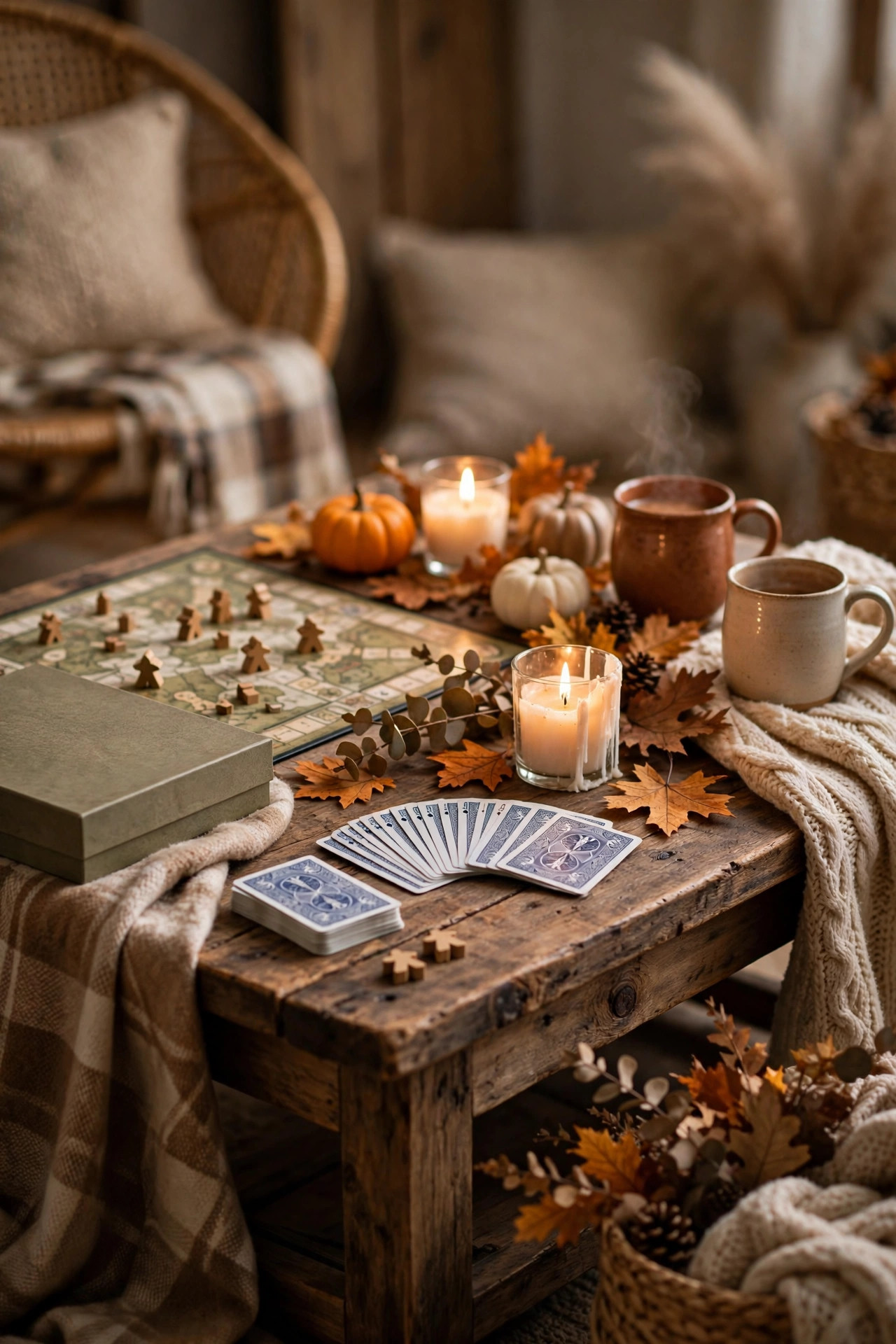
For a group that likes to make things, set out a small craft corner: blank cards and markers for thank-you notes, or a simple fall wreath station with dried leaves and a wire frame. It gives the quieter guests something to do with their hands while the louder ones play games.
Music and Atmosphere
Music is the difference between a dinner and a party. Build a playlist before the day, two or three hours long, and start it when the first guest arrives. Keep it warm and low during dinner, something acoustic or jazzy that sits under the conversation, and let it lift a little after dessert when the games come out. A single playlist that runs itself beats a phone passed around for requests.
Lighting matters as much as music. Turn off the overhead lights and use candles, string lights and lamps instead. Warm light makes the food look better, the table look better and everyone at it look better. Open a window a crack before guests arrive: a house full of people and a hot oven warms up fast, and fresh air keeps the evening comfortable.
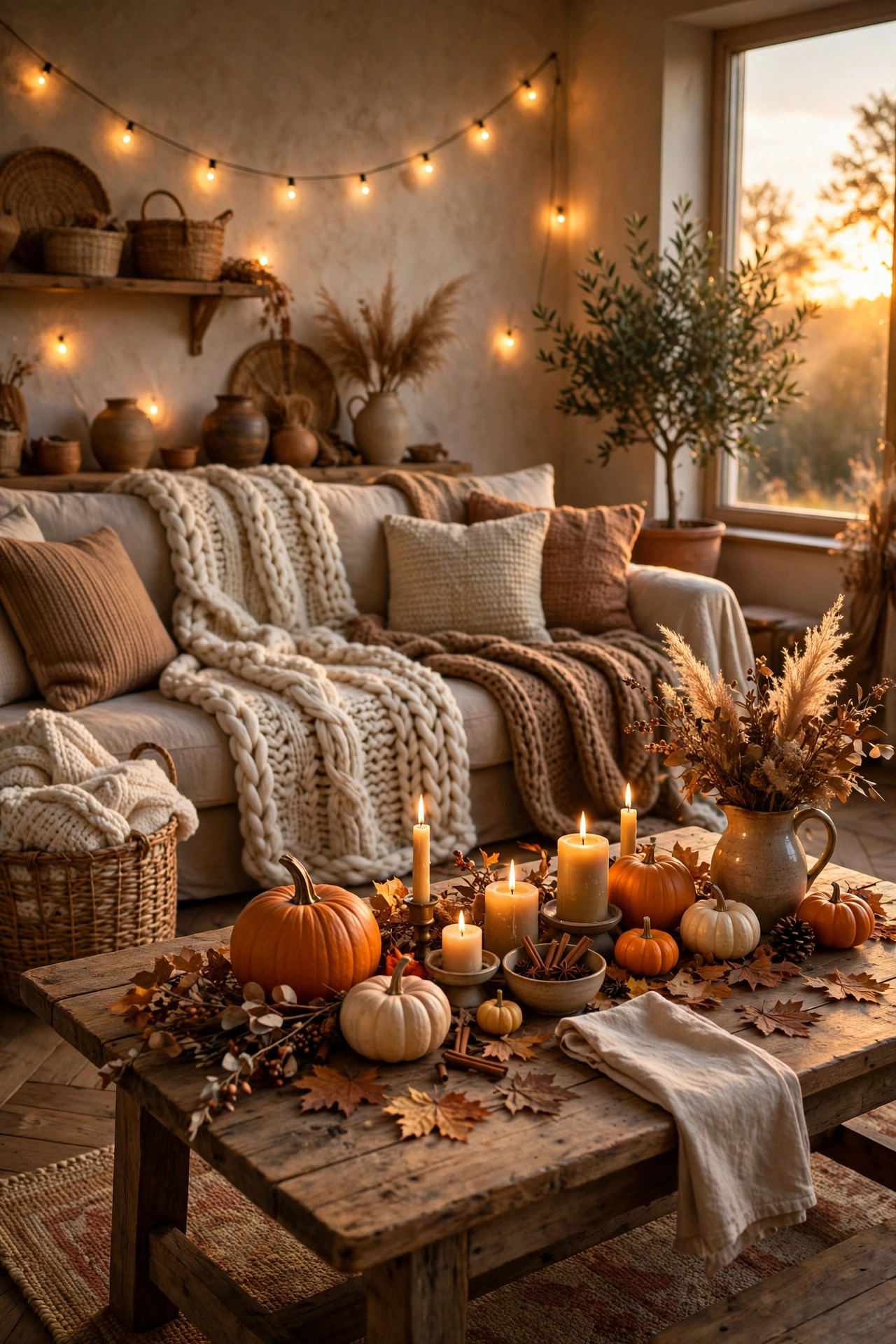
Scent is the finishing touch. A pot of mulled cider simmering on the stove, or a candle that smells like cinnamon and clove, tells guests they are in the right place before they sit down. Keep it to one scent so the house smells like autumn, not like a candle shop.
The Day-Of Timeline
The day runs itself if the work is spread across the hours. The host's job is to cook the main and keep the house calm, and everything else arrives with the guests. This timeline assumes a 5 PM start and a turkey that needs about four hours in the oven.
| Time | Do this |
|---|---|
| 9:00 AM | Put the turkey in the oven. Set out the appetizer plates and the drink station. |
| 11:00 AM | Prep the host's side dishes. Start the playlist and the mulled cider. |
| 1:00 PM | Check the turkey. Lay out serving spoons, extra plates and napkins. |
| 3:00 PM | Set the table if it is not done. Put the pies and desserts on the sideboard. |
| 4:00 PM | Light the candles. Put the appetizers out and chill the drinks. |
| 5:00 PM | Guests arrive. Drinks and appetizers, kitchen is closed to helpers. |
| 5:45 PM | Turkey comes out to rest. Sides go into the oven to finish. |
| 6:00 PM | Carve the turkey, bring everything to the table, sit down to eat. |
| 7:30 PM | Clear the plates. Coffee, dessert and games. |
| 9:00 PM | Leftovers into containers, guests head home with a full bag. |
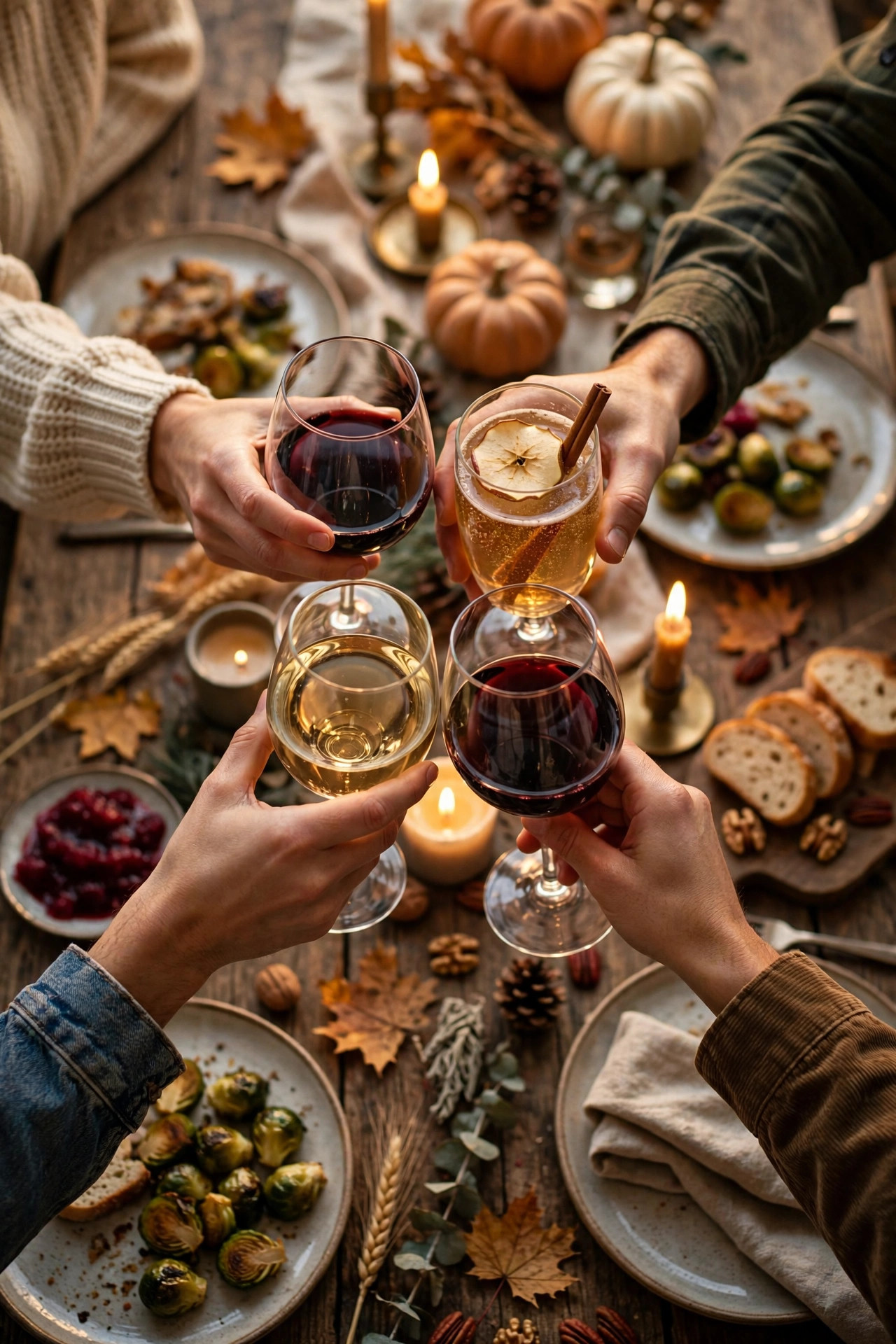
The one rule that saves the host's evening: the kitchen closes when guests arrive. Friends will offer to help, and the answer is to hand them a drink and point them at the appetizers. A host who cooks all evening is not hosting, and the food is already planned to survive without help.
Make-Ahead Checklist
Almost everything on a Friendsgiving table tastes the same or better made ahead. The checklist below spreads the work across three days so the host is not cooking for twelve hours on the day.
| When | Do this |
|---|---|
| Three weeks before | Pick the date, send the invites, share the potluck list. |
| Two weeks before | Confirm replies, fill the gaps in the potluck list, buy the turkey. |
| One week before | Buy drinks, candles, napkins and containers for leftovers. |
| Two days before | Make the cranberry sauce. Bake or buy the pies. |
| One day before | Set the table. Prep the host's sides. Make the sangria. |
| One day before | Build the playlist. Charge the speaker. Clear the coat space. |
| Morning of | Turkey in the oven. Mulled cider on the stove. |
| One hour before | Appetizers out, drinks chilled, candles lit, music on. |
Ask one reliable friend to be the co-host for the day: someone who arrives early, greets guests while the host finishes in the kitchen, and takes charge of the music and the games. It is the single best delegation a host can make.
Mistakes to Avoid
The most common mistake is cooking everything yourself. Friendsgiving is a potluck by definition, and a host who cooks the whole meal is hosting Thanksgiving, not Friendsgiving. Share the menu, trust the dishes people bring, and enjoy the evening instead of spending it at the stove.
The second mistake is no plan for the oven. The turkey takes the center rack for hours, so a menu full of dishes that all need the oven at the same temperature will not work. Give guests the dishes that serve at room temperature, and save the oven for the host's sides while the turkey rests.
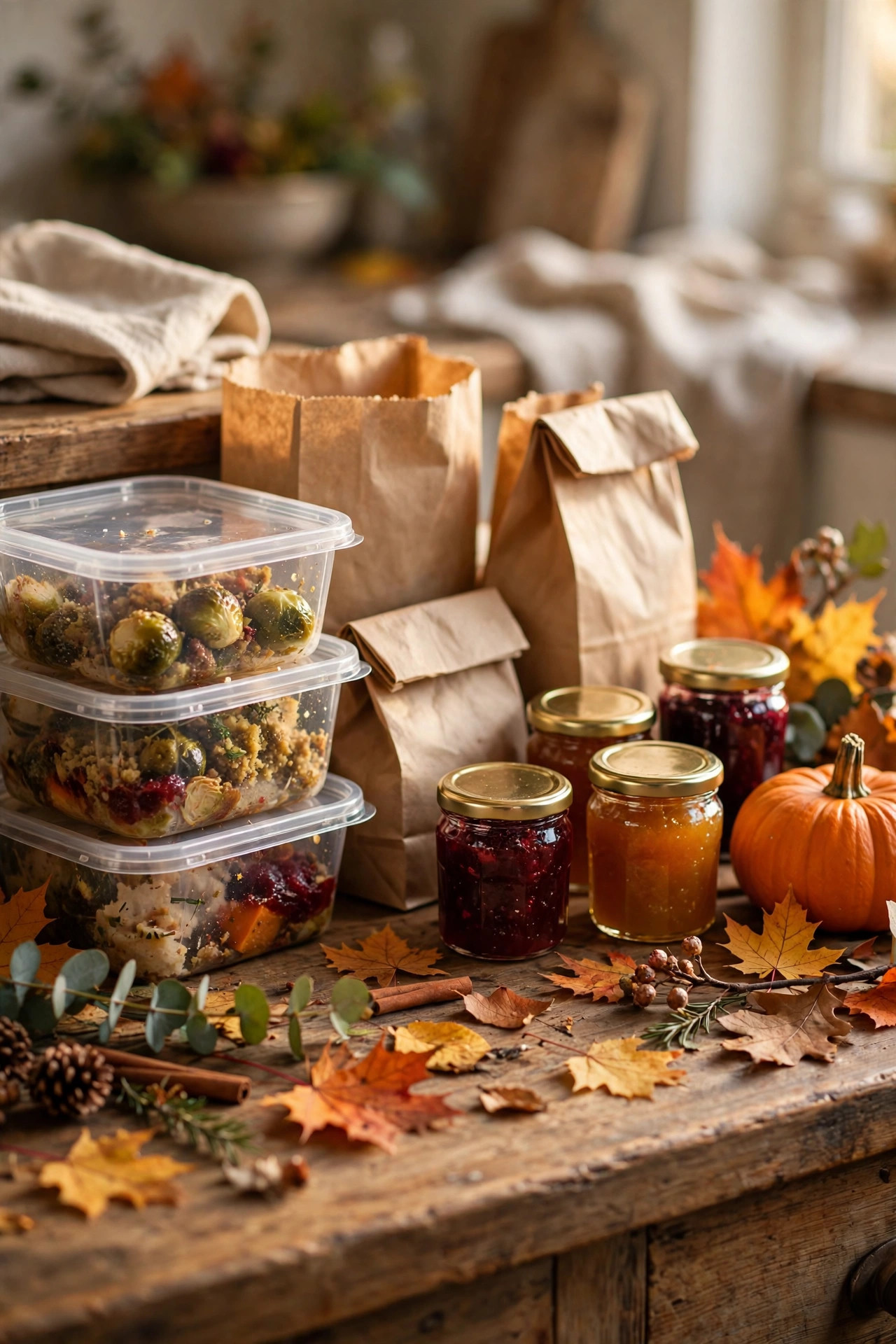
Do not forget the leftovers. Buy containers before the day and set them out after dessert, because guests will want to take food home and nobody wants to wrap a casserole in foil at ten at night. Do not skip the gratitude round either: it is the one moment that makes the evening feel like a holiday rather than just a dinner. And do not let the evening end without a group photo. Take it before dessert, while the table still looks good and everyone is still there.
Frequently Asked Questions
When should I host Friendsgiving?
The weekend before Thanksgiving works best for most groups, usually the Saturday or Sunday. Most people travel on the holiday itself, and the weekend before is free for almost everyone. Pick the date two to three weeks ahead so guests have time to plan a dish and clear their calendars.
How do I plan a Friendsgiving potluck without duplicates?
The host writes the menu list and guests claim dishes from it, first come first served. The list should cover every course: one or two appetizers, the main, four or five sides, a bread, a salad, two desserts and a drink. Nobody brings a dish that is not on the list, and the host fills any gaps that remain a week before the day.
How many people should I invite to Friendsgiving?
Eight to twelve is the sweet spot: small enough to fit around one table, big enough to feel like a party. Past twelve, plan a second table rather than squeezing everyone around one. A cramped table makes serving hard and conversation harder.
What should the host cook?
The host cooks the main, usually the turkey or a ham, plus one side and the drinks. Everything else comes from the guests. The host also provides the plates, cutlery, glasses, napkins and the table itself, and handles the music and the flow of the evening.
What if a guest has dietary restrictions?
Ask about dietary needs in the invite, not on the day. Make sure at least one main and two sides work for every guest, and label the dishes at the table so nobody has to ask what is in what. Most sides can be made vegetarian with a swap of vegetable stock for chicken stock.
How long should a Friendsgiving last?
About four hours is right: an hour of drinks and appetizers, an hour and a half for dinner, and an hour and a half for dessert and games. Guests who want to stay longer will, and guests who need to leave can slip away after dessert without missing the main event.
The takeaway
A perfect Friendsgiving is not a perfect meal. It is a table full of people who chose to be there, a menu that no one person had to carry alone, and an evening with enough shape that nobody wonders what happens next. Pick the date, share the menu, set the table the night before, and let the evening take care of itself. And when the holidays roll on toward Christmas, the same hosting skills work all over again, so browse our 25 free crochet Christmas patterns to start on the handmade side of the season.