Crochet Trivet Patterns Free: Heat-Safe Hot Pads
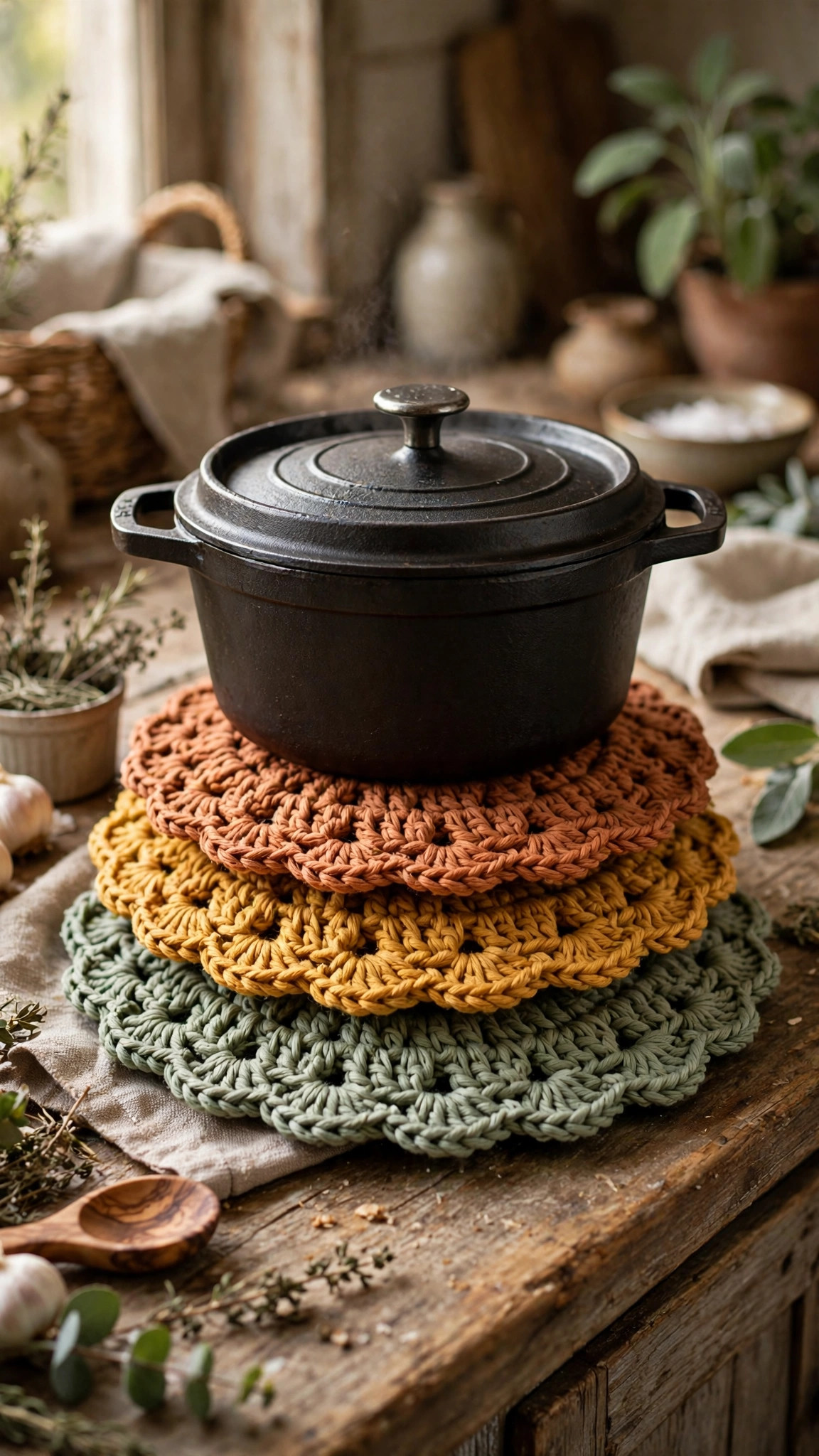
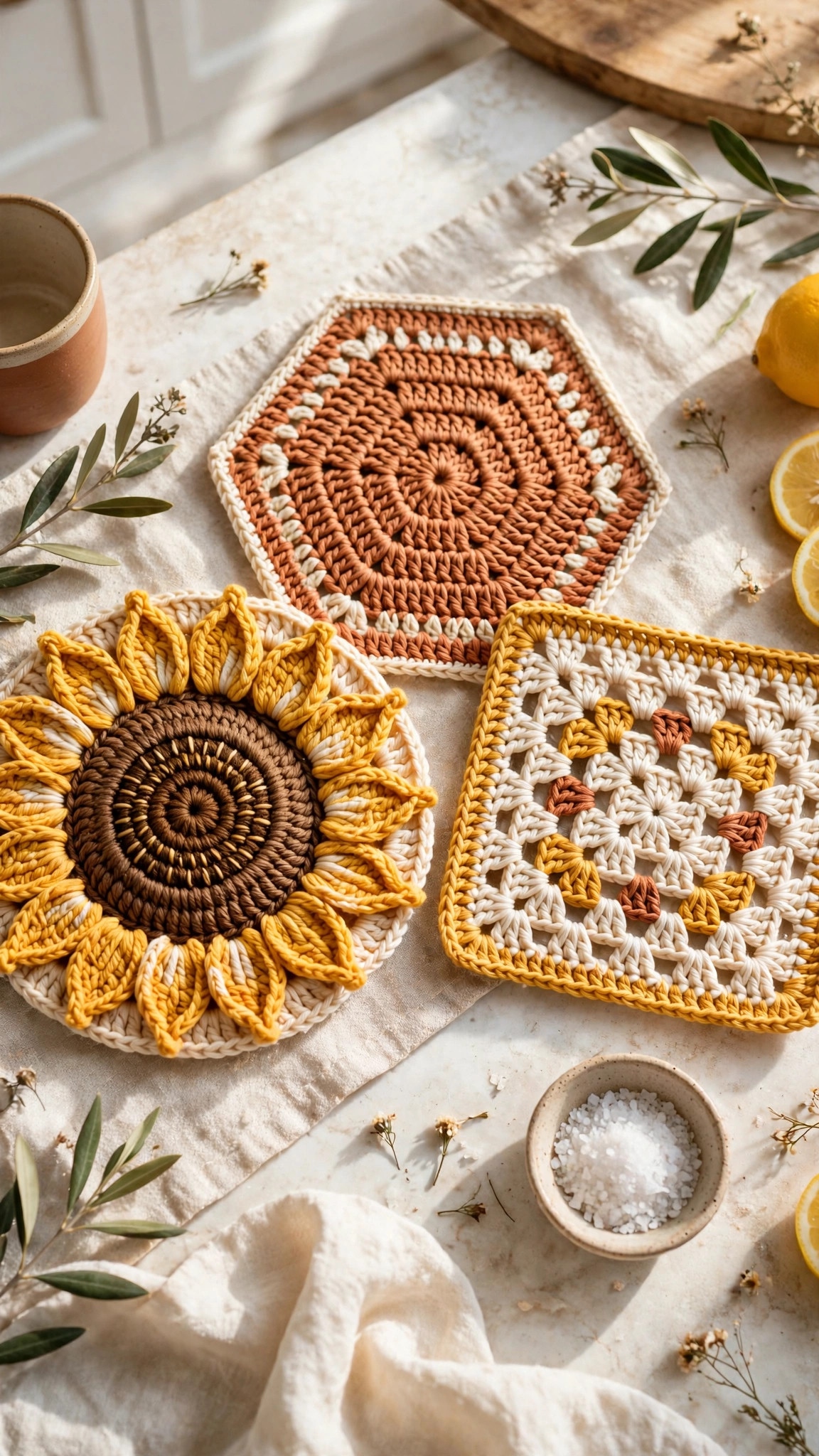
Three heat-safe hot pads in 100% cotton, double thick: a round sunflower, a hexagon and a square waffle trivet, about one hour each.

Kitchen · Crochet
- Finished size
- 7 to 8 in across
- Making time
- About 1 hour each
- Hook
- 4.5 mm, cotton yarn
- Set
- 3 trivets, 3 shapes
- Skill
- Beginner
In this post
If you have been searching for crochet trivet patterns that are free, heat-safe, and genuinely useful in the kitchen, this trio is the one to start with. Each design is worked in 100 percent cotton yarn and built double thick, so a bubbling casserole dish or a just-boiled kettle can sit on it without scorching your table. The set includes a round sunflower trivet, a hexagon trivet, and a square waffle trivet: three shapes, three stitch textures, and one joining method you will have memorized by the second one.
These patterns were written from scratch for this post, in US crochet terms, and they are completely free. One trivet takes about an hour, so the whole set is a satisfying weekend project.
Table of contents
- Why you will love these crochet trivet patterns
- Materials you will need
- Size, gauge and skill level
- Abbreviations, US terms
- The patterns (US terms)
- Finishing touches
- Heat safety guide
- Troubleshooting tips
- Frequently asked questions
- More free patterns to try
Why you will love these crochet trivet patterns
Most free trivet patterns online have one of two problems: they are worked in a single thin layer of acrylic yarn, which melts under a hot pan, or they are so dense and fiddly that finishing one feels like a chore. These patterns dodge both. Every trivet here is double thick: you crochet the same piece twice, then work a round of single crochet through both layers at once. The trapped air between the layers slows heat transfer, and it is much easier than it sounds.
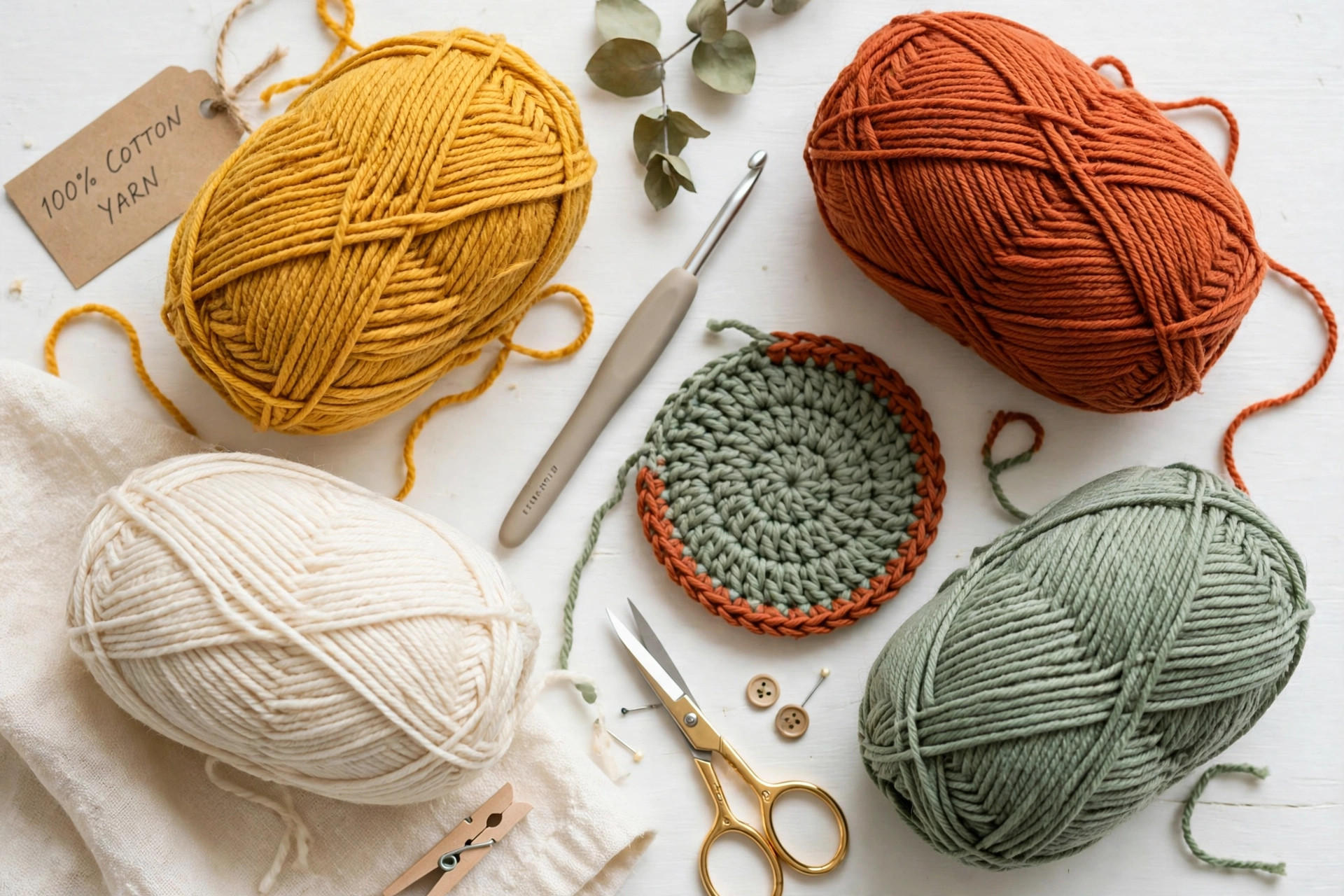
The second big choice is the yarn. All three trivets call for 100 percent cotton, worsted weight. Cotton does not melt, it tolerates high heat, and it washes well. Acrylic yarn softens and melts under a hot pan, so cotton is the only yarn I recommend for anything that sits under hot cookware. Each trivet uses about 100 yards, which makes them perfect stash busters.
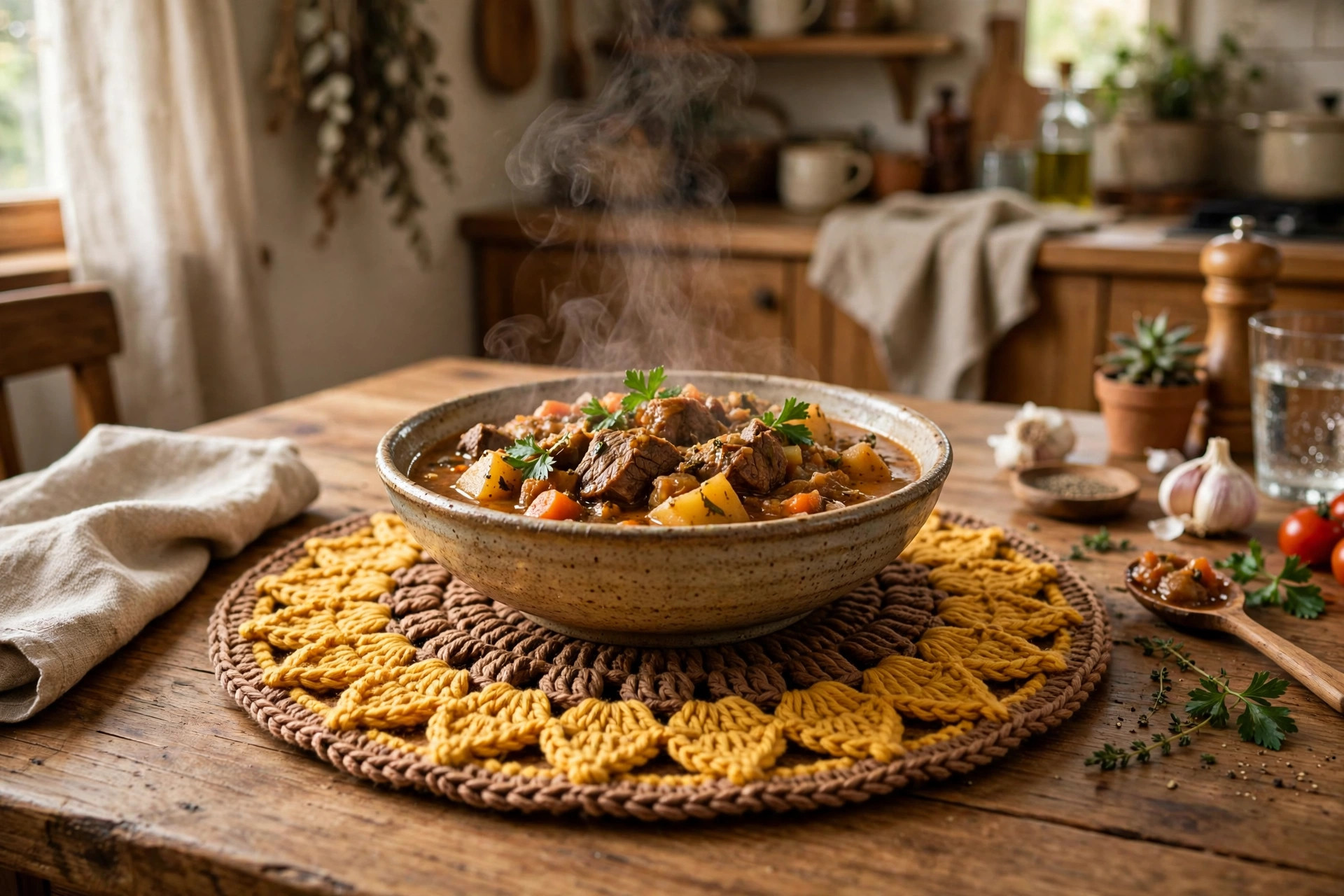
The three shapes give you a real variety of looks and uses. The sunflower trivet is the showpiece: a brown center ringed with yellow petals, pretty enough to leave on the table between meals. The hexagon trivet is the modern one, with clean geometric lines. The square waffle trivet is the workhorse: raised waffle texture that is thick, springy, and grips pots so they do not slide. They pair beautifully with other kitchen makes like our free crochet potholders patterns or the crochet kitchen towel pattern.
Materials you will need
| Supply | What to get |
|---|---|
| Yarn | 100% cotton, worsted weight (#4), about 100 yds / 91 m per trivet |
| Colours | Brown and yellow for the sunflower; 1 to 2 colours of your choice for the hexagon and waffle trivets |
| Crochet hook | 4.5 mm (7) |
| Tapestry needle | For weaving in ends |
| Notions | Scissors, stitch markers, a ruler or tape measure |
Choose a smooth, tightly spun cotton yarn, the kind sold for dishcloths and market bags. Smooth cotton makes a denser, stiffer fabric with fewer air gaps, and dense fabric is a better heat barrier. Avoid cotton blends that contain acrylic or polyester: even a small percentage of synthetic fibre can melt under a very hot pan.
Yarn amounts per trivet (approximate): Sunflower trivet: about 40 yds of brown and 60 yds of yellow. Hexagon trivet: about 100 yds of one colour, or 60 yds of a main colour and 40 yds of a contrast colour for the edge. Square waffle trivet: about 100 yds of one colour. One 100 g ball of worsted cotton makes one trivet with yarn to spare, so three balls in coordinating colours make the whole set.
A note on hooks: the 4.5 mm hook is slightly smaller than many cotton ball bands recommend, and that is deliberate. A smaller hook gives tighter, denser stitches, and dense stitches are the whole point of a trivet. If you can see daylight through the fabric, go down to a 4.0 mm hook.
Size, gauge and skill level
Each trivet is made in two identical or near-identical layers that are joined with a round of single crochet worked through both layers at once. Use a stitch marker in the first stitch of every round for the circular and hexagon pieces.
| Trivet | Finished size | Layers | Main stitches |
|---|---|---|---|
| Round sunflower | 7.5 in / 19 cm across | 2 | sc, dc |
| Hexagon | 8 in / 20 cm across | 2 | dc |
| Square waffle | 7 in / 18 cm square | 2 | dc, FPdc |
- Finished size: the sunflower trivet measures about 7.5 in (19 cm) across, the hexagon about 8 in (20 cm) point to point, and the square waffle trivet about 7 in (18 cm) per side. Each finished trivet is about 0.5 in (1.3 cm) thick once the two layers are joined.
- Gauge: 16 dc and 8 rows = 4 in (10 cm) with a 4.5 mm hook. Gauge is not critical for fit, but loose fabric makes a poor trivet: if the fabric feels floppy, go down a hook size.
- Skill level: beginner. You should know how to chain, single crochet, half-double crochet, and double crochet. The waffle trivet adds the front post double crochet, which is just a double crochet worked around the post of a stitch instead of into the top.
If you have never made a trivet before, start with the hexagon: it is the simplest of the three, a straightforward shape in double crochet, and it teaches you the double layer joining method used on the other two.
Abbreviations, US terms
| Abbreviation | Meaning |
|---|---|
| ch | chain |
| sc | single crochet |
| hdc | half-double crochet |
| dc | double crochet |
| FPdc | front post double crochet: yarn over, insert hook from front to back around the post of the stitch below, complete as a dc |
| sl st | slip stitch |
| inc | increase: 2 stitches in the same stitch |
| st(s) | stitch(es) |
| sp | space |
| RS | right side |
| WS | wrong side |
| FO | fasten off |
| [ ] | total stitch count at the end of the round or row |
A note on FPdc: for the waffle trivet, you work front post double crochet around stitches from the previous row. Push your hook in from the front, behind the post of the stitch, and out the front again, then complete a double crochet. Work the first one slowly and the rhythm will click.
The patterns (US terms)
All three trivets use the same double layer method. Crochet two layers, hold them with wrong sides together, and join with a round of single crochet worked through both layers at the same time. The joining round also gives every trivet a neat, firm edge.
Round sunflower trivet
Work the sunflower face first, then a plain backing disc, then join.
Sunflower face: with brown yarn and a 4.5 mm hook.
- Round 1: magic ring, ch 1, 8 sc in ring, join with sl st to first sc. [8]
- Round 2: ch 1, inc in each st around, join. [16]
- Round 3: ch 1, *sc, inc; rep from * around, join. [24]
- Round 4: ch 1, *2 sc, inc; rep from * around, join. [32]
- Round 5: ch 1, *3 sc, inc; rep from * around, join. [40]
- Round 6: ch 1, sc in each st around, join. [40]
FO brown. Join yellow yarn in any stitch.
- Round 7 (petals): ch 1, sc in same st, *skip next st, 5 dc in next st, skip next st, sc in next st; rep from * around, join with sl st to first sc. [10 petals]
The petal round uses 4 stitches per petal (sc, skip, petal dc group, skip) across 40 stitches, which gives exactly 10 petals with no leftover stitches. FO, leaving a 6 in tail.
Backing disc: with brown yarn, work Rounds 1 to 6 of the sunflower face (no petals). FO, leaving a 6 in tail.
Join the layers: hold the sunflower face and the backing disc with wrong sides together, sunflower face on top. Join yellow yarn with a sl st through both layers at the outer edge. Ch 1, then sc in each st around through both layers, working into the base of the petals so the edge catches both layers together. Join with sl st to first sc, FO, and weave in all ends.
Hexagon trivet
Make two identical hexagons, then join them together.
Hexagon (make 2): with your main colour and a 4.5 mm hook.
- Round 1: magic ring, ch 2 (counts as first dc), 11 dc in ring, join with sl st to top of starting ch 2. [12 dc]
- Round 2: ch 2, dc in same st as join, *(dc, ch 2, dc) in next st, dc in next st; rep from * 5 more times, join. [6 corner ch-2 spaces, 18 dc]
- Round 3: ch 2, *dc in each st to the next corner ch-2 sp, (dc, ch 2, dc) in the corner sp; rep from * 6 times, join. [6 corners, 30 dc]
- Round 4: repeat Round 3. [6 corners, 42 dc]
- Round 5: repeat Round 3. [6 corners, 54 dc]
- Round 6: repeat Round 3. [6 corners, 66 dc]
Each round adds one double crochet to each side of the hexagon, so the shape stays flat. After Round 6 the hexagon measures about 8 in across. FO both hexagons, leaving a 6 in tail on each.
Join the layers: hold the two hexagons with wrong sides together. Join your edge colour (main colour or a contrast colour) with a sl st through both layers at any corner ch-2 space. Ch 1, *2 sc in the corner sp, sc in each st across the side through both layers; rep from * 6 times, join with sl st to first sc. FO and weave in ends.
Optional hanging loop: ch 12, sl st back into the same corner stitch to form a loop, FO and weave in the end. A loop lets the trivet hang on a kitchen hook between uses.
Square waffle trivet
Make two identical squares, then join them together.
Waffle square (make 2): with your chosen colour and a 4.5 mm hook. Chain 29.
- Row 1: dc in 4th ch from hook and in each ch across. [26 dc]
- Row 2: ch 2 (counts as first dc), turn, *FPdc around each of next 2 sts, dc in next st; rep from * across, ending with dc in last st.
- Row 3: ch 2, turn, *dc in next st, FPdc around each of next 2 sts; rep from * across, ending with dc in last st.
- Rows 4 to 13: repeat Rows 2 and 3 alternately, ending after a Row 3 repeat. [13 rows total, about 7 in square]
Join the layers: hold the two squares with wrong sides together, matching corners. Join yarn with a sl st through both layers at any corner. Ch 1, *3 sc in the corner, sc in each st across the side through both layers; rep from * 4 times, join with sl st to first sc. FO and weave in ends.
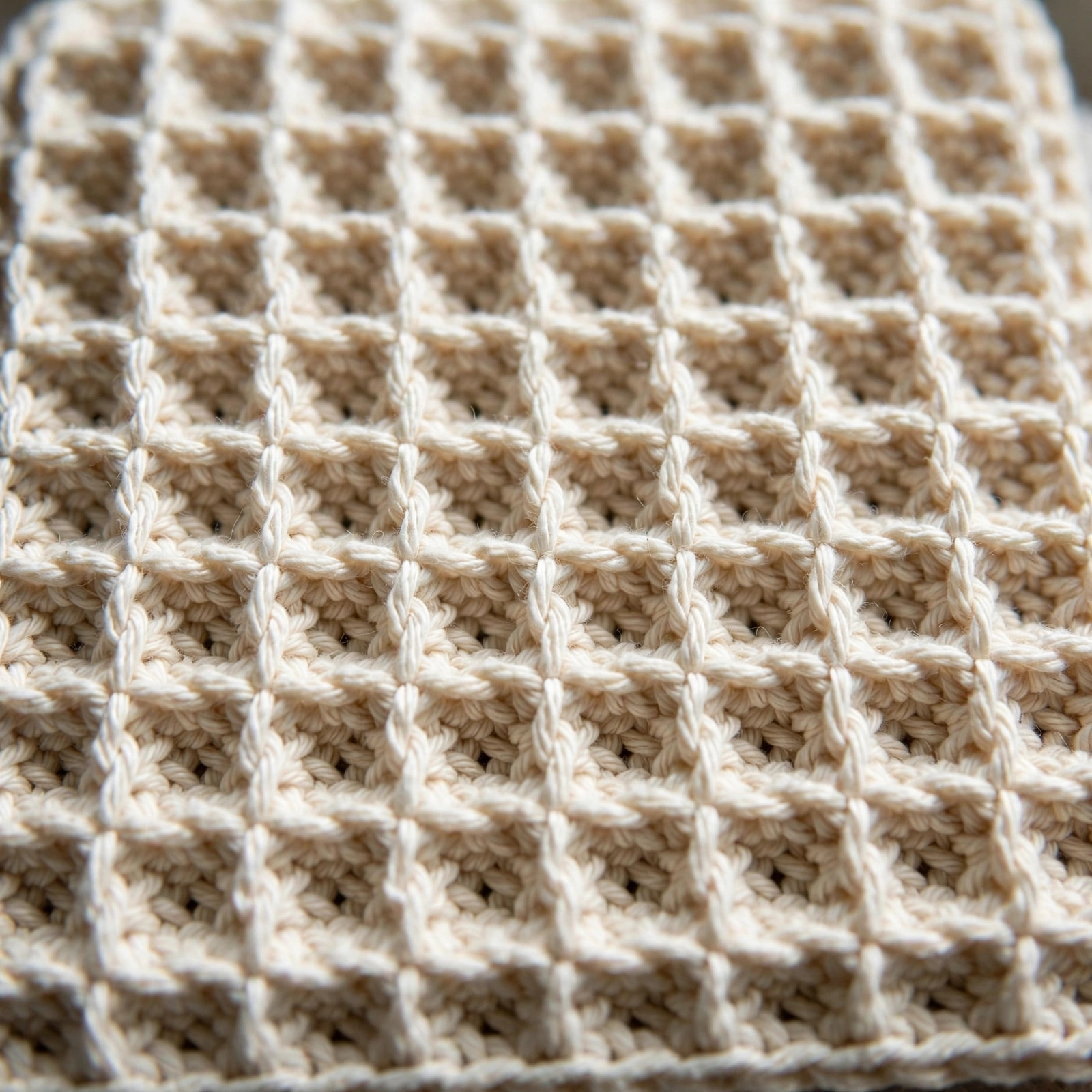
A note on the waffle texture: the front post stitches make the fabric noticeably thicker than plain double crochet, so this trivet is the thickest of the three even before doubling. The raised ridges also stop a heavy stockpot from sliding.
Finishing touches
Weave in every end securely. Cotton ends can work loose with washing and heat, so weave each tail through the base of the stitches for at least 2 in, changing direction once, then trim flush. On the double layer pieces, bury the tails between the two layers.
Block the trivets flat. Dampen each finished trivet, press it flat on a towel, and let it dry completely. Blocking evens out the stitches and gives the trivet a crisp, professional shape.
Check the joined edge. Run your finger around the joining round. If you spot a gap where you missed the back layer, add one small stitch through both layers with your tapestry needle.
Test before trusting. Place a hot pot on the trivet for 30 seconds, lift it, and feel the underside. It should feel warm, not hot. If the underside feels hot, your stitches are too loose: use a smaller hook and tighter tension on the next one.
Heat safety guide
Use 100 percent cotton, always. Cotton tolerates high heat without melting. Acrylic, polyester, and other synthetics soften and melt under hot cookware, and the melted fibre can bond to the pot. Wool can scorch. If you are unsure what a yarn is made of, check the ball band.
Double thickness matters more than stitch choice. Two layers of cotton with a thin pocket of air between them slow heat far better than any single layer, no matter how dense. All three patterns in this post are double thick for exactly this reason.
Work tightly. Gaps in the fabric let heat pass straight through. Your stitches should sit snugly together with no visible holes. If you can see through the fabric when you hold it up to the light, go down a hook size.
Respect the limits. These trivets are for hot dishes, pots, and kettles fresh from the stove or oven. They are not for direct flame, not for the inside of an oven, and not for resting on a hot burner. Do not use a trivet that is damp: steam conducts heat.
Retire worn trivets. Cotton compresses and thins with use and washing. When a trivet feels noticeably thinner than when you made it, move it to light duty (warm plates only) or replace it. Making a fresh one takes an hour, which is a small price for protecting your table.
Troubleshooting tips
- The hexagon curls up instead of lying flat. You missed a corner increase. Count your stitches: each round should add exactly 6 double crochet, one per side. If the shape cups, try a 5.0 mm hook.
- The petal round of the sunflower does not come out even. Round 6 must have exactly 40 stitches for 10 petals to fit. Count before you start the petals, and fix Round 5 if needed.
- The two layers shift when you join them. Pin the layers together with stitch markers before you start the joining round, and work the joining round through both layers on every stitch.
- The waffle square is not square. Waffle stitch pulls in widthwise. If the width is much less than the height after Row 5, work the turning chains a little looser, or add two chains to the starting chain.
- The joined edge looks wavy. You are working more joining stitches than the layers have. For the sunflower, work exactly one sc per stitch of the backing disc. For the hexagon, one sc per stitch plus 2 in each corner. For the square, one sc per stitch plus 3 in each corner.
- The trivet feels flimsy, not protective. The fabric is too loose, or the yarn is a soft loosely twisted cotton. Switch to a smooth dishcloth cotton and go down half a hook size. A good trivet should feel stiff and substantial.
Frequently asked questions
Are these crochet trivet patterns really free?
Yes, the complete patterns above are free, no email signup and no PDF purchase required.
What yarn should I use for a crochet trivet?
100 percent cotton, worsted weight. Cotton tolerates high heat without melting, while acrylic and polyester yarns soften and melt under hot cookware. Use a smooth, tightly spun dishcloth cotton for the densest fabric.
Why do the patterns call for double thickness?
Two layers of cotton with a small air pocket between them slow heat transfer far better than a single layer. The double layer method also gives every trivet a neat finished edge and hides all the yarn ends.
How long does it take to make one trivet?
About one hour for the hexagon or waffle trivet, and about an hour and a quarter for the sunflower with its petal round.
How much yarn do I need?
About 100 yards of worsted weight cotton per trivet. One standard 100 g ball makes one trivet with yarn to spare, so three coordinating balls make the complete set.
Can I wash crocheted trivets?
Yes. Machine wash warm with like colours and lay flat to dry, or tumble dry low. Retire a trivet to light duty when it feels noticeably thinner than when you made it.
Can I sell the finished trivets I make?
Yes! You may sell finished trivets made from these patterns in small batches (craft fairs, markets, gifts). Please credit Little Loop Finds as the pattern designer with a link back to this page.
More free patterns to try
If these trivets were fun, keep the hook moving in the kitchen. The free crochet potholders patterns use the same heat-safe cotton rules, the crochet kitchen towel pattern matches the set, the free crochet dishcloths patterns are the classic cotton stash buster, and the free crochet tea cozy pattern keeps the whole teapot warm.